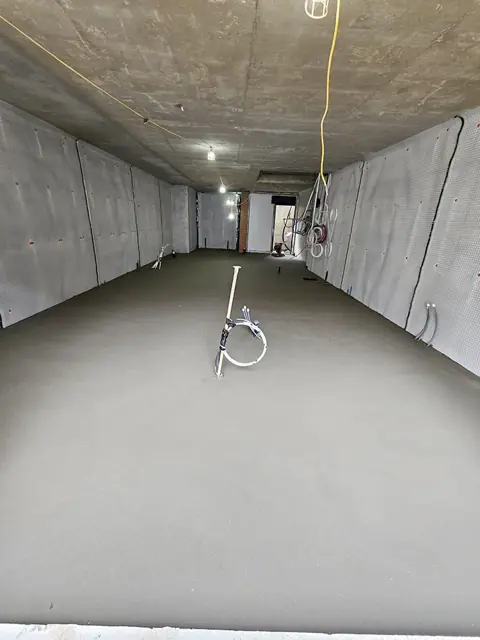
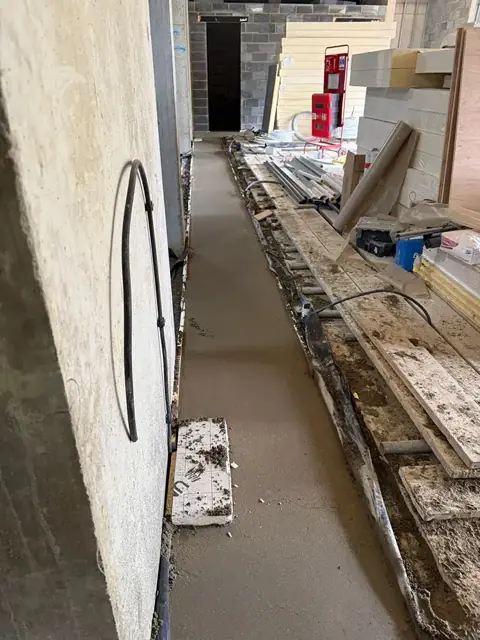
Most screeds are separated from the concrete below by a membrane or insulation. A bonded screed is different. It is laid directly onto a prepared concrete slab and fixed to it with a bonding agent, so the two act together as a single, stronger floor. K & B Screeding lays bonded screeds on prepared slabs across London and the Home Counties.
Because it works with the slab rather than on its own, a bonded screed can be laid much thinner and still carry substantial loads. That makes it invaluable on refurbishments and commercial floors where build-up height is limited by thresholds, stair rises, lift pits or services.
When to use a bonded screed
- Heavy loading. Industrial floors, loading areas, plant rooms and workshops.
- Restricted height. Where only 25 to 40mm is available above the slab.
- Level corrections. Bringing an uneven slab back to a true, level surface.
- Repairs. Replacing defective areas of screed with a thin, strong, permanent section.
- Refurbishments. Upgrading an existing floor without raising it significantly.
If there is insulation or a damp proof membrane between the slab and the floor finish, the screed cannot be bonded and an unbonded or floating screed is used instead. Our sand and cement screed page covers these.
Everything depends on the bond
A bonded screed is only as good as its bond. If the screed does not adhere fully to the slab it will sound hollow when tapped, and in time it will crack and lift under load. Almost every bonded screed failure comes from preparation, not from the screed.
That is why our process starts with the slab:
- Assess the base. The slab must be sound and strong enough. Weak or contaminated concrete is removed.
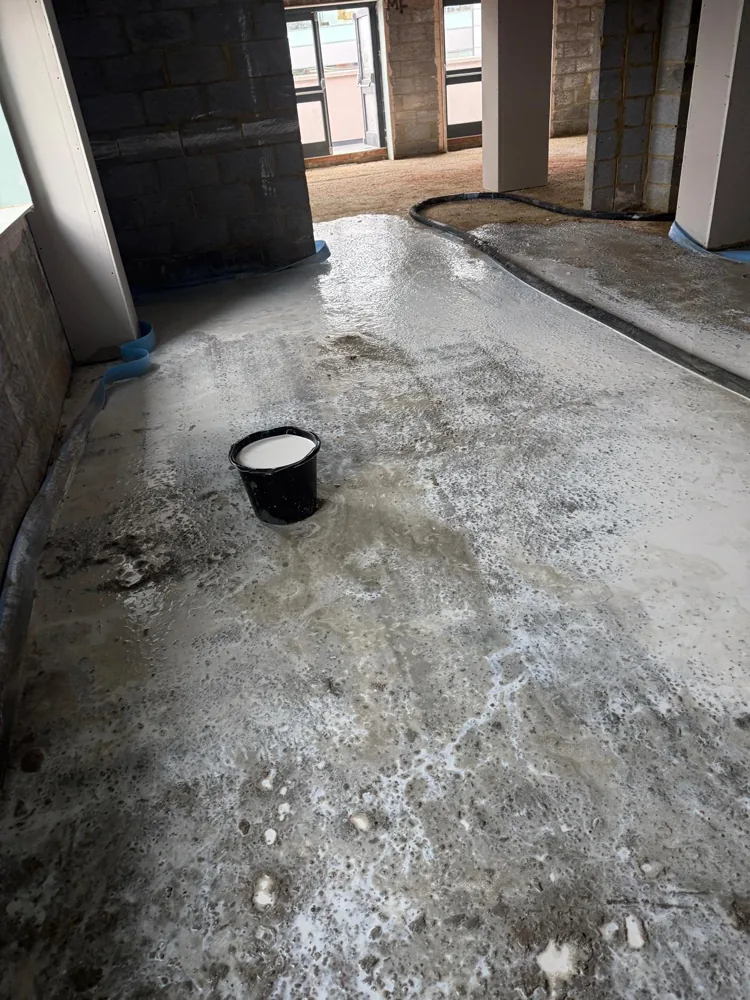
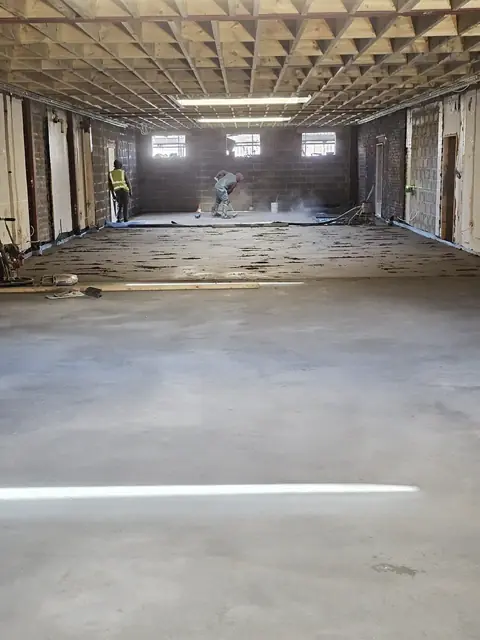
- Mechanical preparation. We shot blast, grind or scabble the slab to remove laitance and expose a clean, sound, textured surface. Surface preparation methods are covered on our floor preparation page.
- Clean. All dust, debris, oil and contamination is removed.
- Bonding agent. A bonding slurry or primer is applied to the prepared surface.
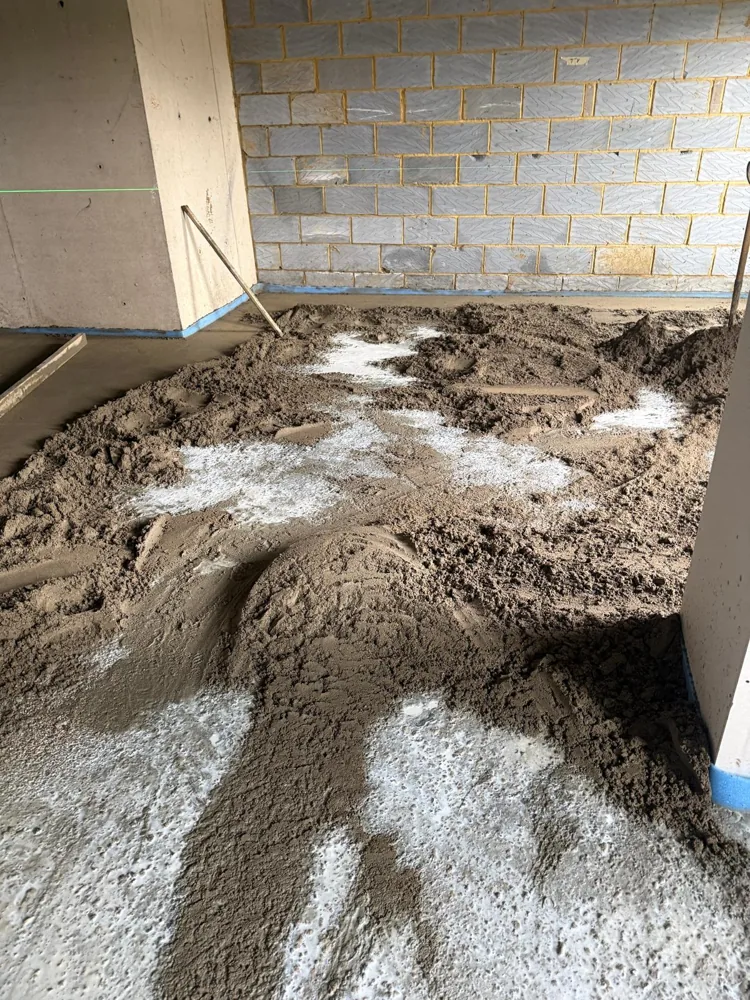
- Timing. The screed is placed while the bonding agent is still tacky and active. If it dries before the screed goes on, it acts as a release layer rather than a bond.
- Compaction and curing. The screed is thoroughly compacted onto the bonding coat, finished and protected while it cures.
Thickness of a bonded screed
Bonded screeds are the thinnest cement based screeds. Typical thicknesses are 25 to 40mm, although local build-ups for level corrections can vary. Too thin and the screed is fragile; too thick and the advantages of bonding reduce and the risk of debonding from shrinkage increases. Our screed thickness guide compares bonded, unbonded and floating screeds.
Bonded screed for repairs
Bonded screed is also our standard method for repairing localised damage in a slab or screed: cracked and hollow areas, broken edges around joints and doorways, and old service trenches. The defective material is cut out square, the base prepared and bonded, and new screed placed flush with the surrounding floor. See screed repairs for more.
What a bonded screed costs
Published figures put a bonded sand and cement screed at about £12 to £18 per m², supplied and laid, excluding VAT (trade2base, June 2026), less than a floating screed because it is thinner. Preparing the base is usually the bigger variable, so we price each floor once we have seen it. Our floor screeding cost guide covers the rest.
Bonded, unbonded or floating?
Choosing between the three main types of cement screed comes down to what is beneath the screed and what the floor has to carry.
| Bonded | Unbonded | Floating | |
|---|---|---|---|
| Laid onto | Prepared concrete slab | Membrane over a slab | Insulation or acoustic layer |
| Fixed to the base | Yes, with a bonding agent | No | No |
| Typical thickness | 25 to 40mm | From 50mm | From 65mm, 75mm commercial |
| Load capacity | Highest | Good | Depends on insulation and depth |
| Best for | Heavy loads, thin sections, repairs | Slabs with a DPM | Insulated floors, underfloor heating |
Swipe the table sideways to see every column.
If the floor needs insulation or has a damp proof membrane, a bonded screed is not possible, and we will recommend an unbonded or floating screed instead. Our screed thickness guide goes into more detail.
Signs a bonded screed is failing
If you are inheriting an existing floor, these are the warning signs that the bond has gone:
- A dull, hollow sound when the floor is tapped with a hammer or dragged with a chain.
- Fine cracks that trace a rough circle or rectangle around a hollow area.
- Edges that lift or break away at joints, doorways and around drainage.
- Tiles or resin above the screed cracking in one area while the rest of the floor is fine.
Small debonded areas can be cut out and relaid. Widespread debonding usually means the floor needs replacing.
Bonded screeding near you
We lay bonded screeds across London and the Home Counties from our base in Slough, including Uxbridge, Northampton, Cambridge and the rest of London.
“From start to finish, K & B Screeding Ltd demonstrated exceptional expertise and a commitment to customer satisfaction. I am extremely impressed with the service that they provide.”
Part of our screeding and floor screeding services, laid by our own team across London and the Home Counties.