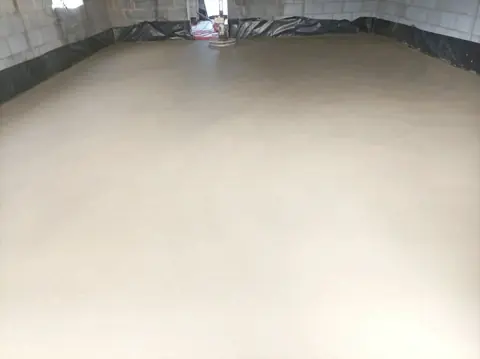
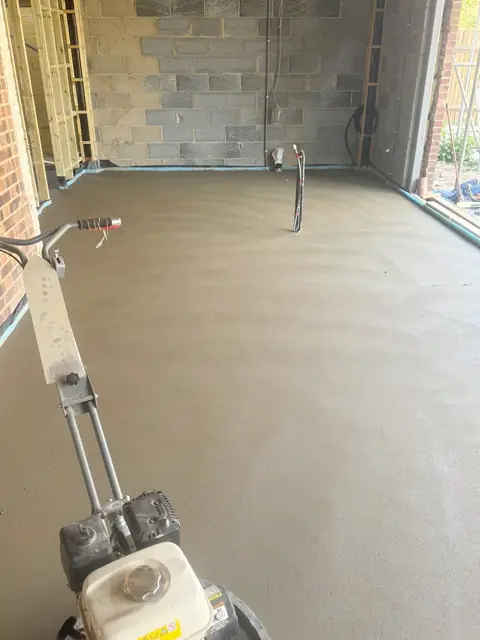
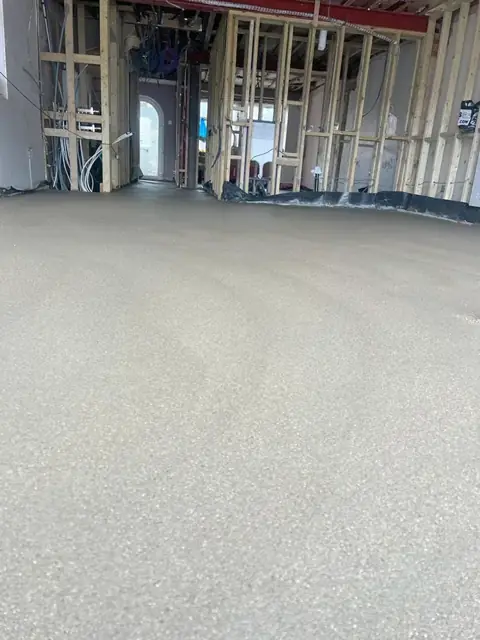
A screed is the layer laid over a concrete slab, or over insulation, to give a floor its final level and a smooth, even surface for tiles, timber, vinyl or carpet. Get the screed right and every floor finish on top of it goes down flat and stays that way. Get it wrong and the problems show up for years: cracks, hollow patches, uneven tiles and floors that take months to dry. K & B Screeding lays every common type of screed, and helps you choose the right one.
We are a floor screeding contractor based in Slough, laying screeds for homeowners, builders, developers and main contractors across London and the Home Counties. Our own floor screeders carry out every job, from the first survey to handover.
What is floor screeding?
Floor screeding is laying a layer of screed, usually liquid or sand and cement, over a concrete slab or insulation to give a flat, level surface ready for the final floor covering. The screed also protects insulation and underfloor heating pipes and spreads loads evenly across the floor.
Most floors are built in layers. A structural slab or beam and block floor comes first, then usually insulation, a membrane and, in many new floors, underfloor heating pipes. The screed goes on top of all of that. It protects the insulation and pipes, spreads loads evenly, and gives the floor covering a flat, true surface.
Screeds are described by how they sit on the layer below:
- Floating screeds are laid over insulation and a membrane, not bonded to the slab. This is the usual build-up in modern homes and extensions, and over underfloor heating.
- Bonded screeds are fixed directly to a prepared concrete base, which allows a thinner layer.
- Unbonded screeds are laid over a separating membrane on the slab.
The screeds we lay
| Screed | What it is | Where it usually suits |
|---|---|---|
| Liquid screed | Pumped, self levelling, calcium sulphate or cement based | Extensions, new builds, large open floors, underfloor heating |
| Sand and cement screed | Traditional semi-dry mix, laid and compacted by hand | Renovations, small rooms, wet rooms, garages, early loading |
| Underfloor heating screed | Liquid or sand and cement screed over wet heating pipes | Heated extensions, garden rooms, new homes |
| Anhydrite screed | Calcium sulphate flowing screed to a specified grade | Apartments, new build plots, specified projects |
| Fibre reinforced screed | Sand and cement with fibres added to the mix | Floors that need extra resistance to cracking |
| Quick drying screed | Fast drying mixes for tight programmes | Refurbishments and commercial fit outs |
Swipe the table sideways to see every column.
Not sure which you need? Our guide to liquid screed vs sand and cement screed sets out the differences, and we will always give you a straight recommendation for your floor.
How deep a screed needs to be
Depth depends on the screed type and what is underneath. As a guide:
| Build-up | Liquid (calcium sulphate) | Sand and cement |
|---|---|---|
| Floating, domestic | From about 35mm | 65mm |
| Floating, commercial | From about 40mm | 75mm |
| Over heating pipes | At least 25mm cover | About 45mm cover |
| Bonded | Around 25mm | 25 to 40mm |
Swipe the table sideways to see every column.
Our screed thickness guide explains these figures and the exceptions.
How we screed a floor
- Survey and advice. We look at the floor, the levels, the build-up and your programme, and recommend the right screed.
- Fixed quotation. You get a written price within 24 hours, agreed before any work starts.
- Preparation. Insulation, membrane and edge strip go down, and any underfloor heating pipes are checked. We can lay the insulation and membranes ourselves.
- Laying. Liquid screed is pumped and levelled; sand and cement is laid, compacted and finished by hand or with a power float.
- Handover. We tell you when the floor can be walked on, when the heating can start and when floor coverings can go down.
Drying times
Liquid screed is usually walkable within 24 to 48 hours. Drying before floor coverings takes much longer: as a rough guide, about a day per millimetre for the first 40mm, then slower. Calcium sulphate screed can usually be force dried with underfloor heating from about 7 days, and sand and cement after at least 21 days. Our guide on how long screed takes to dry explains testing before flooring.
Floor screeding prices
Published 2026 UK figures put sand and cement screed at about £18 to £25 per m² and liquid screed at about £24 to £31 per m², supplied and laid (MyJobQuote, August 2026). MyJobQuote does not say whether these figures include VAT. The depth, the area, access and any preparation all move the price. Our floor screeding cost guide covers this in detail, and the screed calculator works out volumes.
Where we work
We lay floor screeds across London and the Home Counties from our base in Slough, with a local page for every town we cover on our areas page. Near our base we cover Slough, Reading, Maidenhead and Windsor, and every borough of London.
“This company was a delight to work with. Nothing was too much trouble. They were on the job on time every day. The employee was so obliging and polite too.”