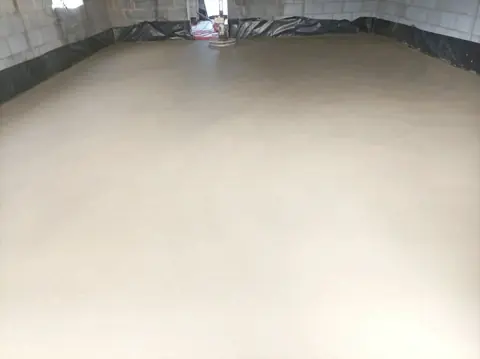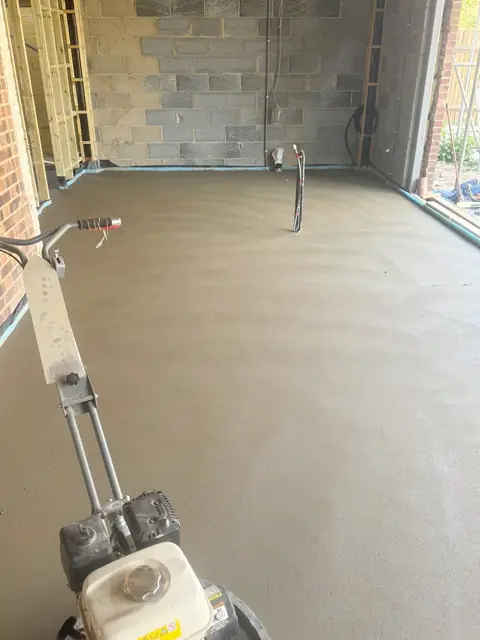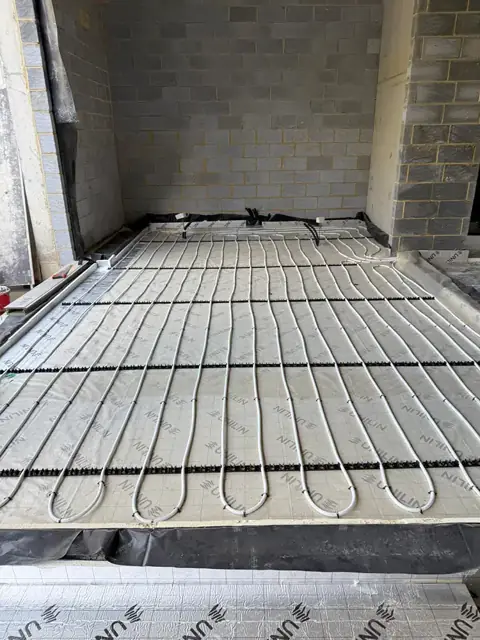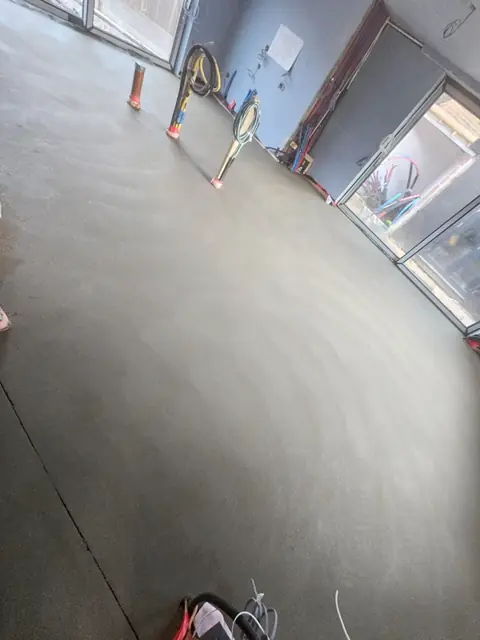
Reading sits about 15 miles west of our Slough base, a straightforward run along the M4. It is one of the fastest growing towns in the South East, with a huge mix of property: Victorian terraces close to the town centre, inter-war and post-war suburbs, the large 1970s and 1980s estates of Lower Earley and Woodley, a steady stream of new apartment schemes, and business parks full of offices and light industrial units.
That variety is exactly why the right screed matters. What suits a heated extension in Caversham is not what suits a warehouse at Green Park, and we tailor every floor to the job.
Choosing a screed across Reading's mix of buildings
Census 2021 recorded 203,789 people in the Reading built-up area. Their homes run from the Victorian terraces of Newtown and Katesgrove to recent apartment villages on brownfield land, and the right floor depends on which of those you live in. Before anything is priced, we check the existing floor for damp, soundness and the depth available above the slab, because those three facts narrow the choice quickly.
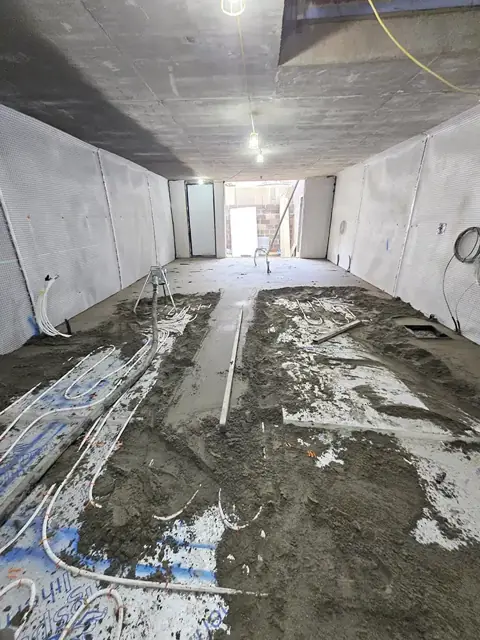
In Newtown, Katesgrove and the Redlands conservation area, the Victorian terraces often have old solid ground floors without a damp proof membrane. A renovation there usually means a new insulated floor, finished in hand-laid sand and cement screed in Reading, which suits narrow rooms and levels that must match an existing hall.
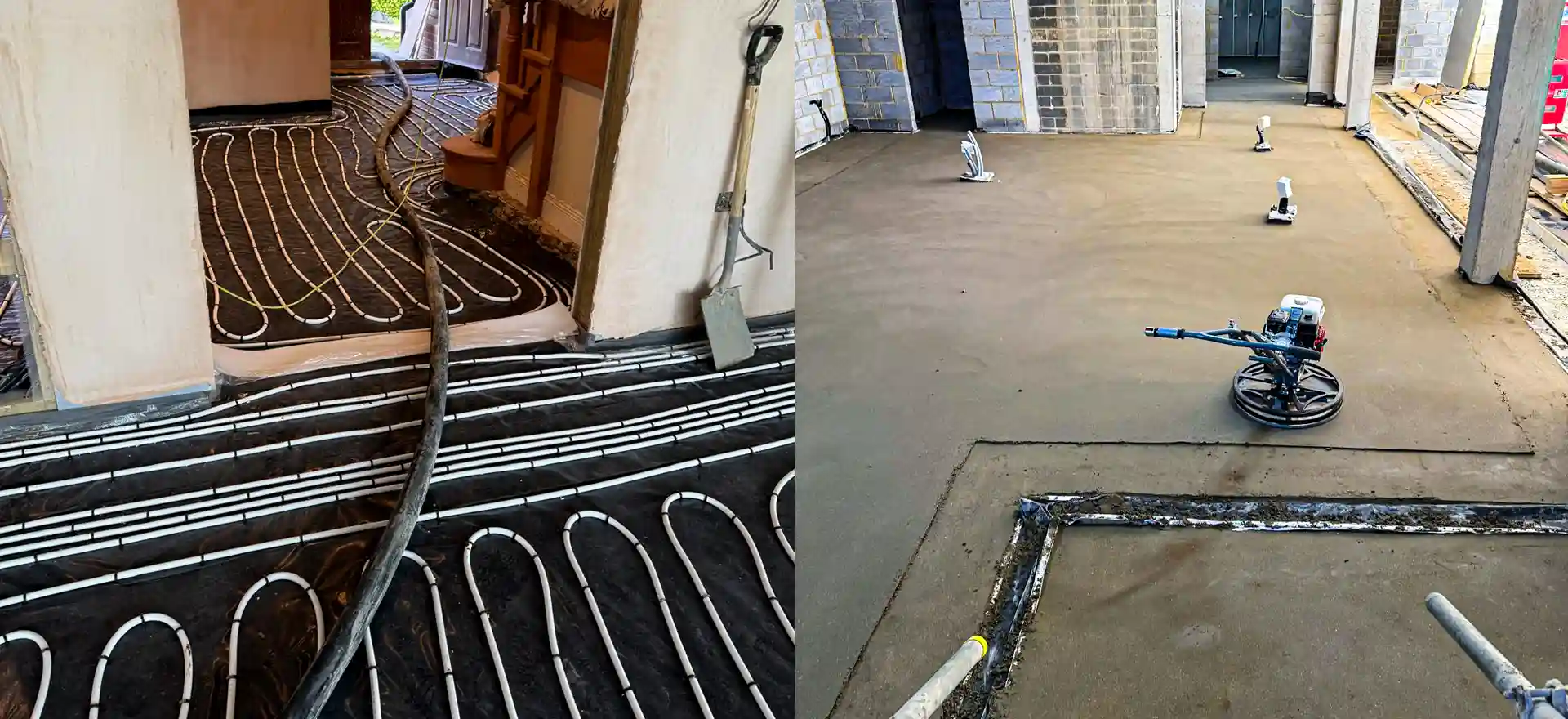
Semis in suburbs such as Tilehurst and Caversham suit rear extensions with underfloor heating. For that, read the page on heated floor screeds, and where the extension opens into a large kitchen, pumped liquid screed often makes the most sense.
Flats account for 28% of homes. Converted houses and the apartment blocks at Kennet Island, Green Park Village and in the centre bring screed work between flats, usually over an acoustic layer. In a converted house, the existing floor structure is checked first. If the drawings for a block call for calcium sulphate, read up on grades, sanding and moisture limits under anhydrite flow screed in Reading.
Homes in Reading at a glance
Of the 78,149 households in Reading, 28% live in semi-detached houses and the same share in flats. The largest group of homes here was built between 1973 and 1999 (26%), and a further 23% between 1945 and 1972.
| Homes in Reading | Share |
|---|---|
| Detached houses | 17% |
| Semi-detached houses | 28% |
| Terraced houses | 25% |
| Flats | 28% |
| Built before 1919 | 19% |
| Built 1919 to 1944 | 11% |
| Built 1945 to 1972 | 23% |
| Built 1973 to 1999 | 26% |
| Built since 2000 | 20% |
House types from Census 2021 (table TS044); building age from the Valuation Office Agency council tax stock of properties, 31 March 2026 (table CTSOP 4.1). Figures cover the Reading built-up area (E63005074).
Access and timing on Reading's streets and sites
Some of Reading's older streets are narrow. Katesgrove's are lined mainly with Victorian terraces, and a mixer lorry and pump need somewhere to stand for the length of a pour. We agree where the vehicles will go before the date is set, and for a terraced house we plan the hose route through the front door and hall with protection laid down. Hand-laid screed needs less kerb space but more barrow runs, which is one more reason it suits small terraced jobs.
Flats in the centre bring their own logistics: loading bays, lifts, managing agents and set working hours. Getting a hose up to an upper flat is easy enough, by the stairs or in through a window. Permission and timing are.
On any build the screed follows the roof, windows and first fix, and comes before the finishes. A day or two after a liquid pour the trades can cross it on foot, yet the floor coverings are still weeks off, which is why every later trade is booked around the pour date.
Commercial work runs to its own diary. Office refurbishments at Green Park Business Park, Thames Valley Park in Earley and Arlington Business Park, and retail fit-outs around The Oracle, need floors laid to tight tolerances, which is where floor levelling in Reading comes in.
Station Hill and office floors in central Reading
Commercial work in Reading turns on flatness. New buildings at Station Hill, office refurbishments at the business parks and retail fit-outs around The Oracle all require raised floor bases, levelling and screeds laid to tight tolerances.
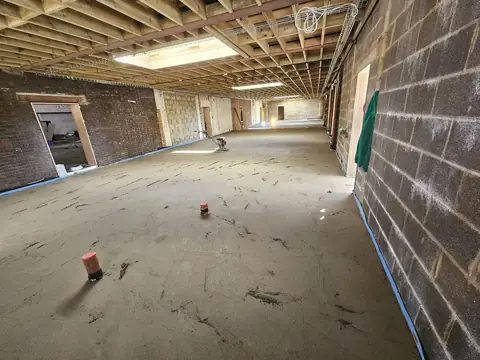
A raised access floor stands on pedestals over the base screed, which is why that base has to be sound, clean and laid to a tight tolerance in the first place. On an existing office floor, high spots, old adhesive and ridges between bays are taken down first with dust-controlled diamond grinding, and any low areas are then filled with levelling compound. Office floors from before 2000 can hide old tiles or black adhesive containing asbestos, so a specialist tests them before grinding starts; that testing and any removal sit outside K & B's work.
Where a floor has to be renewed, the programme decides the screed. A fast drying mix keeps a fit-out moving, while a pumped screed can cover a large cleared floor in one visit. Thicknesses, flatness and drying times are agreed against the specification before the price is fixed, and the work can be split into zones so part of a building stays in use.
Retail units add one more limit: deliveries and opening hours. Tell us the hours the centre allows for contractors, and the pours are planned around them.
Building control in Reading
New floors in Reading extensions usually need building regulations approval, with Part L insulation rules in England; Reading Borough Council Building Control is the council building control service.
What to consider for a Reading project
Older homes. Many period properties in Reading have solid floors laid before damp proof membranes were standard, and floors that fall noticeably from one side of a room to the other. We check the base, advise on a membrane where needed, and set the new level to meet the rest of the house.
Flood awareness. Parts of Reading lie close to the Thames and the Kennet. On low lying sites, ground floor construction and damp protection deserve extra care, and we will talk through the build-up with you or your builder.
Programme. New build and commercial programmes in Reading move quickly. We plan our work around other trades and give realistic drying times so follow-on work is not held up. Our guide on how long screed takes to dry explains what to expect.
Planning a heated extension in Reading
Many modern extensions include underfloor heating, and a little planning before screed day saves problems later:
- Fix the finished floor level early. Work back from the level of the existing house and the thickness of your chosen flooring, so the insulation and screed depths both work.
- Zone the heating sensibly. Large open plan spaces are often split into heating zones, and movement joints in the screed should line up with any zone boundaries and doorways.
- Pressure test before we arrive. Your heating engineer should test and leave the pipes filled so we can pour with confidence.
- Allow drying time. Build the heat-up and drying period into the programme before tiles or LVT are booked.
We are happy to talk this through with you or your builder when we quote, and our screed thickness guide sets out the typical depths.
Why Reading customers choose K & B Screeding
- Close by. Reading is about 15 miles along the M4 from our Slough base, so we respond quickly and arrive on time.
- Fast quotes. We call back the same day and have your quotation ready within 24 hours.
- Straight answers. We tell you which screed suits your floor and why, including when a cheaper option will do the job.
- No hidden fees. You pay the price agreed at the start.
- Finished properly. If you are not satisfied with a finished job, we put it right at no extra cost.
Areas of Reading we cover
We work throughout Reading and the surrounding area, including Caversham, Tilehurst, Earley, Lower Earley, Woodley, Whitley, Southcote, Calcot, Theale, Shinfield, Wokingham and Winnersh, as well as business locations such as Green Park, Thames Valley Park and Winnersh Triangle. Closer to our base we also cover Maidenhead and Windsor.
Screeding prices for Reading floors
Published 2026 UK figures put sand and cement screed at about £18 to £25 per m² and liquid screed at about £24 to £31 per m², supplied and laid (MyJobQuote, October 2026). MyJobQuote does not say whether these figures include VAT. Depth, access and preparation move the figure either way, so your price is fixed in writing within 24 hours of hearing about the floor. See our floor screeding cost guide or the screed calculator.
Who lays your floor screed in Reading
K & B Screeding, led by director Donatas Bardisevicius. Founded 2019, company 12298780.
See what customers say in our Google reviews and on our testimonials page.