"Self levelling screed" is one of the most searched phrases in our trade, and it is used for two quite different materials. Getting the right one matters: a thin compound poured where a floor needs a new screed can crack and debond, and a full screed poured where a thin smoothing layer would do costs far more than it needs to. K & B Screeding lays both, and checks which one your floor needs first.
We work across London and the Home Counties from our base in Slough, for homeowners, builders and flooring contractors.
The two things people mean
| Self levelling compound | Flowing (liquid) screed | |
|---|---|---|
| What it does | Smooths a floor that is already sound | Forms the floor itself |
| Typical depth | From about 2mm up to around 10mm, some products deeper | From about 35mm floating in homes, 40mm commercial |
| Laid over | An existing screed, slab, overboarded timber or firmly bonded tiles | Insulation, underfloor heating pipes or a concrete slab |
| Typical finish | SR1, ready for vinyl, LVT and thin finishes | SR1 or SR2, usually still smoothed or prepared before thin finishes |
| Our service page | Floor levelling and latex screed | Liquid screed and anhydrite screed |
Swipe the table sideways to see every column.
Both flow out and settle flat under their own weight, which is why both get called self levelling. The difference is depth and purpose.
Which one does your floor need?
- The floor is sound but uneven, rough or patched. A self levelling compound is usually right. It takes out trowel marks, shallow dips and the joints in plywood overboarding so a thin floor covering lies flat.
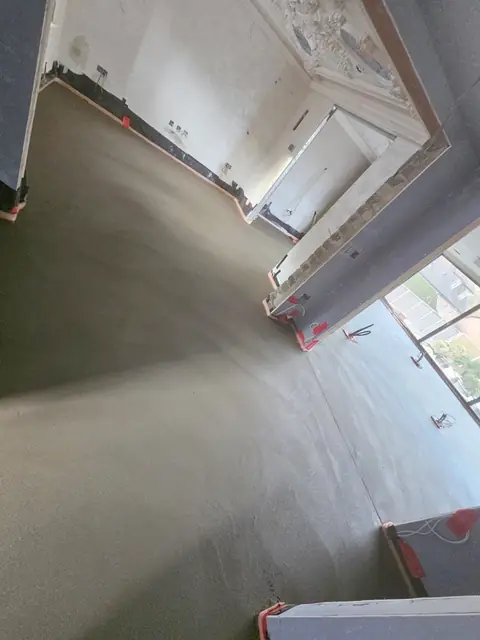
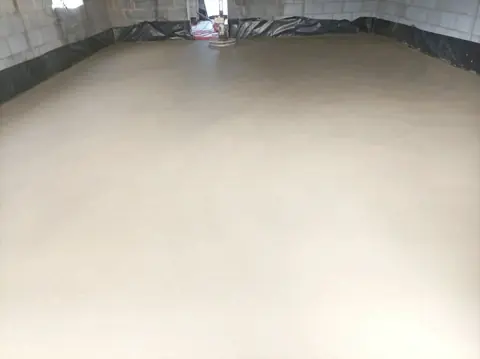
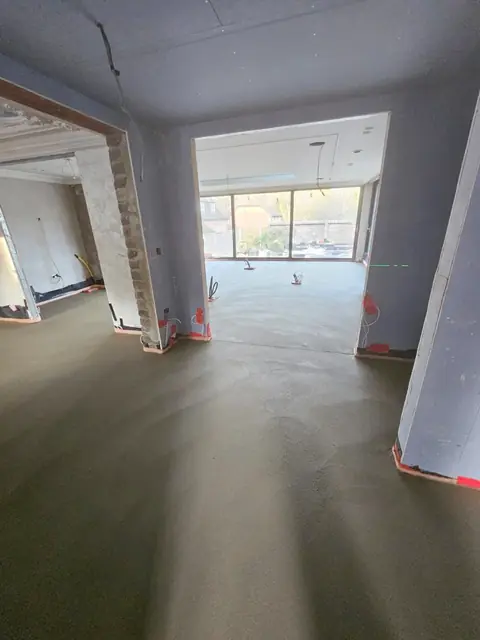
- There is no floor yet, or the old one is coming out. New extensions, floors over insulation and floors over underfloor heating need a full depth screed. A flowing screed is pumped in and laid in one visit.
- The floor is badly out of level, has big steps between rooms or the screed is weak. A compound is a false economy here. The floor needs repair or a new screed first, then a thin smoothing layer if the finish demands it.
We check the floor with a 2 metre straightedge before we quote, so you know which applies and why.
How flat is flat?
Flatness is measured with a 2 metre straightedge. The British Standard for screeds, BS 8204, sets three classes:
| Class | Maximum gap under a 2m straightedge | Typical use |
|---|---|---|
| SR1 | 3mm | High standard floors, thin sheet finishes |
| SR2 | 5mm | Normal standard for most floors |
| SR3 | 10mm | Utility standard, thick or tolerant finishes |
Swipe the table sideways to see every column.
A self levelling compound is the most reliable way to reach SR1. A flowing screed reaches SR1 or SR2 readily, and is often so flat that very little smoothing is needed afterwards.
How we lay it
- Survey. We check the level, how sound the base is and whether moisture needs dealing with first.
- Prepare. For a compound, the base is cleaned and repaired, with dust, weak laitance and old adhesive removed. For a flowing screed, insulation, membrane and edge strip go down and heating pipes are checked.
- Prime. Compounds need the primer the manufacturer specifies for the base. Calcium sulphate screeds are always primed after their laitance is removed.
- Pour. Compound is mixed and spread to depth, then spiked to release air. Flowing screed is pumped from the mixer to depth markers and dappled to help it level.
- Hand over. We tell you when the floor can be walked on and when flooring can go down for the product used.
Drying before flooring
A thin compound can often take flooring within hours to a day, depending on the product. A flowing screed is usually walkable within 24 to 48 hours, but needs much longer to dry before floor coverings: as a rough guide, about a day per millimetre for the first 40mm, then slower. Our guide on how long screed takes to dry explains testing with a hygrometer.
Prices
Published 2026 UK figures put liquid screed at about £24 to £31 per m² supplied and laid (MyJobQuote, August 2026, which does not say whether VAT is included). Self levelling compound is priced on the area, the depth and the preparation the base needs, so we quote each floor once we know it. Our floor screeding cost guide covers the main factors.
Where we work
We lay self levelling screed throughout London and the Home Counties, with a local page for every town we cover on our areas page. Near our base we cover liquid screed in Slough and towns such as Reading, Maidenhead and Windsor.
“Excellent professional service from start to finish. Even when problems arose from the existing kitchen being badly installed, they took care of everything. Couldn't be happier. 10/10”
Part of our screeding and floor screeding services, laid by our own team across London and the Home Counties.