
Kitchen refits in Cheltenham's post-war semis
Two parts arrive on site: a cement based powder and a container of latex liquid, which takes the place of water in the mix. The latex makes the cured layer slightly flexible and helps it hold onto surfaces a water-mixed compound would not grip well. It is spread a few millimetres thick, and its role is finishing, not building height.
A post-war semi that is on its second or third kitchen shows why that is useful. Once the units and old flooring are out, the floor can reveal ceramic tiles from an earlier refit, areas of old adhesive and a patch of newer concrete where a wall or pipe was moved. Breaking all of that out takes time and makes a mess. Where the tiles are bonded solidly and the old glue is thin and firm, latex can go over the top once the surface has been cleaned, abraded where needed and primed with the right product for each material.
The finish matters too. Sheet vinyl, lino, rubber and LVT are thin and will mirror any grout line or ridge beneath them; latex hides those. Carpet is more forgiving but still benefits from an even face where one room has several bases.
What latex will not handle is a floor that sits a long way out of level. When a Cheltenham kitchen drops by much more than a few millimetres from one wall to the other, the high spots are taken down by diamond grinding in Cheltenham and the low areas built up before latex finishes the surface.
Overboarded timber in Montpellier and Pittville houses
Many Montpellier and Pittville houses date from the Regency and Victorian years, and a lot of their floors are timber boards on joists. A bathroom or kitchen on that kind of floor can take latex only once it has been overboarded. Bare boards move with every season and every footstep, and a cement based layer laid straight over them cracks along the board edges. Flooring grade plywood is screwed down at close spacing, the joints kept tight, and only then is the ply primed and latex laid.
The floor has to be firm before that. Springy boards or joists weakened by damp need repairing, and the air flow under a suspended floor must keep working. Latex does nothing to cure damp, so a floor showing moisture is investigated first rather than covered.
Basements in these houses often have no damp proof membrane, which rules latex out until the damp is dealt with. A new floor build-up is the right route there; see sand and cement for Cheltenham basements.
For general compound work and the flatness classes behind it, the Cheltenham floor levelling page has the detail. Latex is the version for awkward bases.
How we price latex screed in Cheltenham
A fixed written price within 24 hours, once we know the area and the base. See our floor screeding cost guide.
Who lays your latex screed in Cheltenham
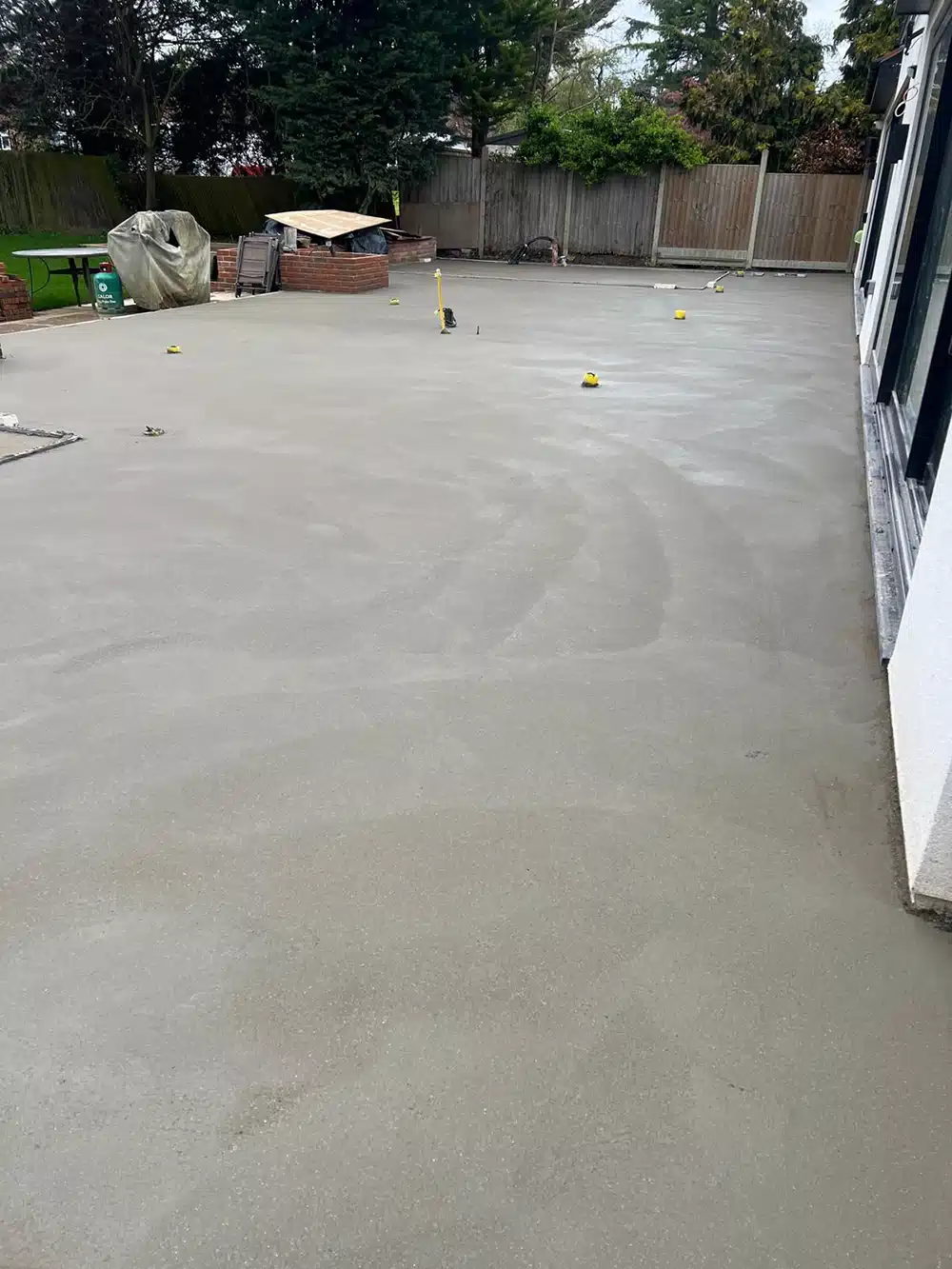
K & B Screeding’s own team, led by director Donatas Bardisevicius. Founded 2019, company 12298780.
See what customers say in our Google reviews and on our testimonials page.
Latex Screed from Slough to Cheltenham
On the map, Cheltenham sits west-north-west of Slough, about 66.5 miles from our base in a straight line (postcodes including GL50, GL51, GL53 and GL52), next to Tewkesbury (7.2 miles), Gloucester (7.7 miles), Stroud (12.3 miles) and Cirencester (13.5 miles).
More on latex screed, part of our screeding services.
