
Latex for refits at Lucas Bridge Business Park
When a unit at Lucas Bridge is refitted, the floor is normally kept and covered rather than rebuilt. Once the old carpet tiles or vinyl are up, the base underneath may be sound but marked: glue lines, small chips, joins between old patches and the outline of removed partitions. A thin, smooth layer is all it needs before new LVT, sheet vinyl or safety flooring goes down.
That layer is often latex. The term covers a levelling compound supplied in two parts, a cement based powder and a latex liquid that is used in place of water. It is spread a few millimetres thick and copes with mixed bases: sound concrete, well bonded ceramic tiles and some firmly stuck old adhesive.
Some units at Lucas Bridge have raised access floors. Latex does not go on those panels; it is used where there is a solid floor to receive it.
Preparation decides how well latex performs. Loose adhesive and weak surface material come off first, by scraping or by grinding the concrete back. Each base then gets the primer it needs, and a calcium sulphate screed always has its laitance removed and is primed before any latex goes on.
Office kitchens, tea points and washrooms are where sheet vinyl and safety flooring tend to go, and those thin finishes wear first wherever a ridge sits under them. A smooth latex base matters more there than under carpet tiles in an open office, which hide small marks. Where LVT runs from one area into the next and the difference in height is small, the latex brings both to the same level.
Old floors along Watling Street East and West
Along Watling Street East and Watling Street West, many of the period buildings still sit on old solid floors. Where one of those floors is dry, firm and only rough, latex can save lifting it. Where it is not, the floor needs more than a thin layer.
The tests are simple. A damp reading rules latex out, because it does nothing to stop moisture rising, and a damp old floor is better lifted, insulated and relaid in sand and cement for Towcester period floors. A floor that has sunk or tilted well past a few millimetres is also beyond it: pushed into a deep layer, latex can crack and come away from the base.
Timber is the other common base in older houses. Bare floorboards are never latexed, because they shrink and swell. The boards are fixed down, overboarded with flooring grade plywood screwed at close spacing, and the latex is laid on the plywood. If the boards spring, the joists are put right first.
Houses built between 1945 and 1972, 17% of Towcester's homes, can still have original quarry or ceramic tiles in kitchens and halls. If they are firmly bonded, they can be cleaned, primed and covered rather than chipped off, which keeps the floor height down and avoids breaking them out.
How we price latex screed in Towcester
A fixed written price within 24 hours, once we know the area and the base. See our floor screeding cost guide.
Who lays your latex screed in Towcester
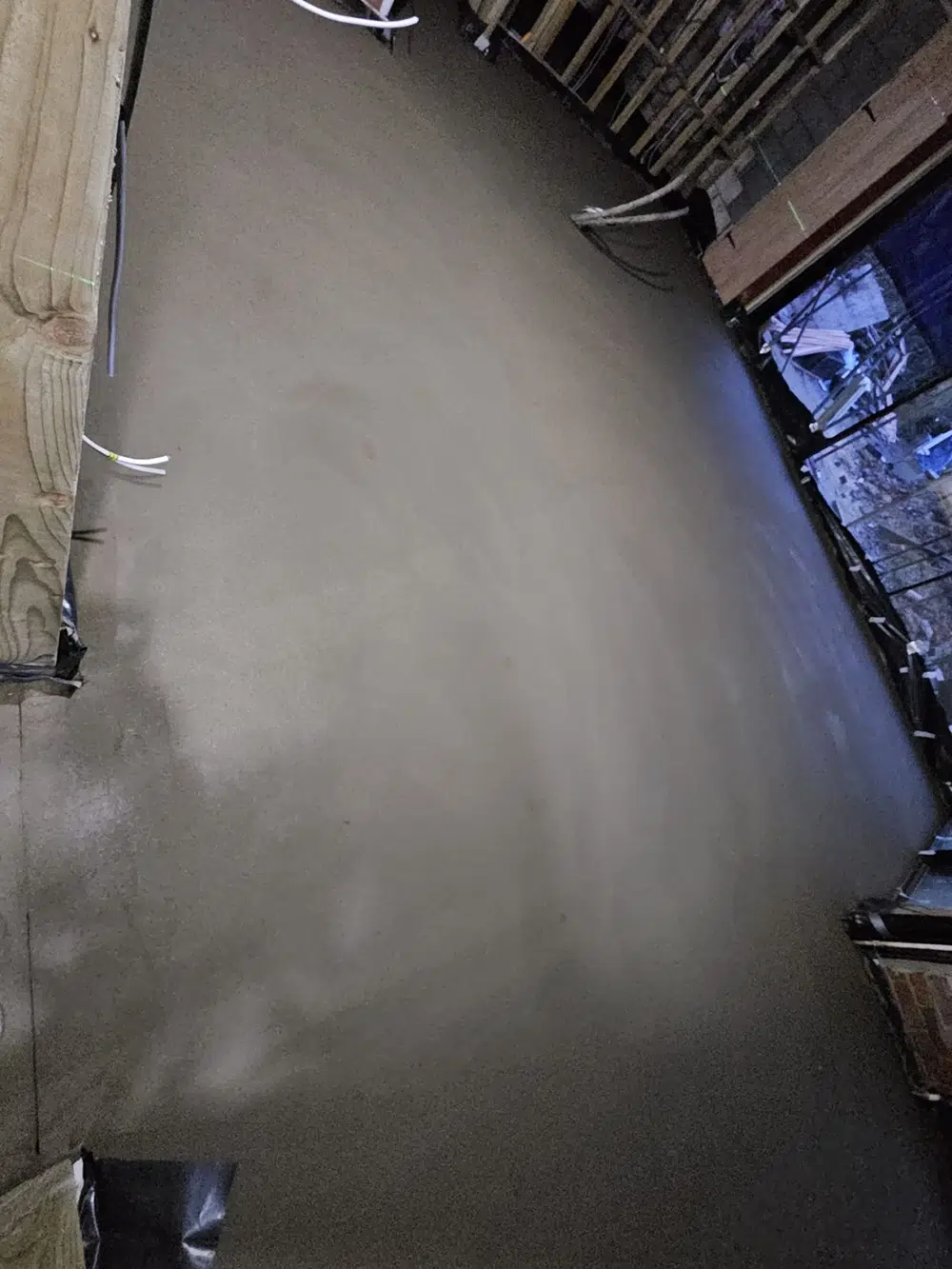
K & B Screeding’s own team, led by director Donatas Bardisevicius. Founded 2019, company 12298780.
See what customers say in our Google reviews and on our testimonials page.
Latex Screed from Slough to Towcester
On the map, Towcester sits north-north-west of Slough, about 44 miles from our base in a straight line (postcodes including NN12), next to Northampton (8.3 miles), Buckingham (9 miles), Brackley (9.5 miles) and Daventry (11.4 miles).
More on latex screed, part of our screeding services.