
Levelling floors during Abingdon-on-Thames flat refits
When a flat is refitted, the old flooring comes up and the floor underneath is rarely as flat as the new finish needs. Old adhesive, patched areas, and the ridge where two rooms meet all show through rigid LVT or large format tiles.
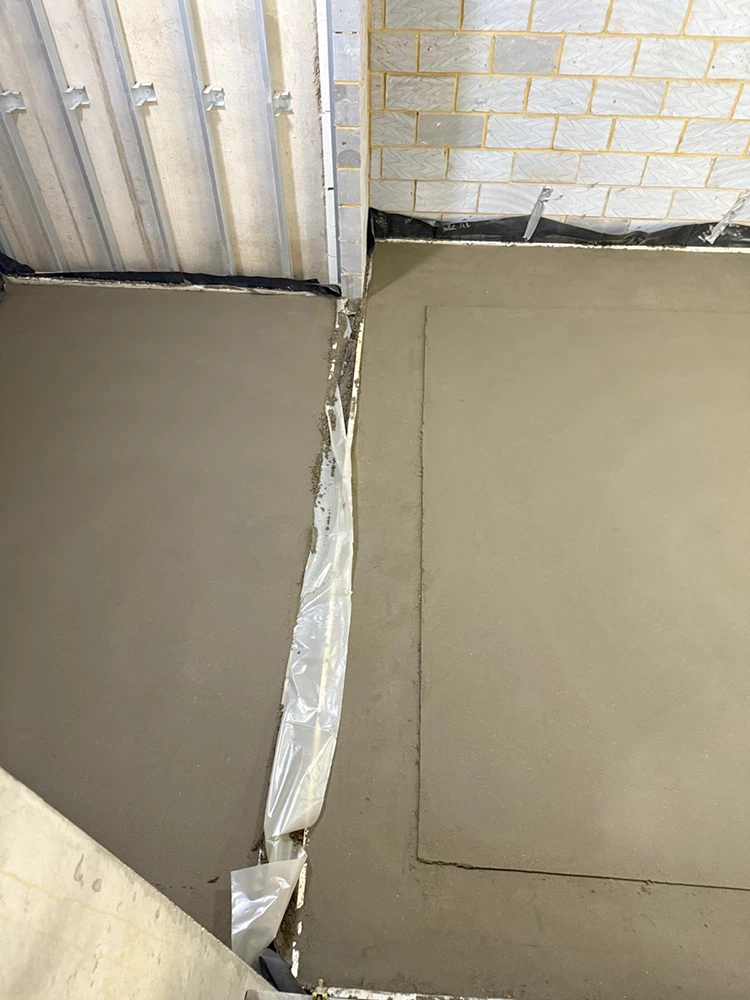
A poured compound sorts out most of it. We normally lay it between about 2mm and around 10mm (a few products go deeper), and it runs out smooth on its own. Flatness is judged with a 2m straightedge: SR1 means a gap of 3mm at most, SR2 means 5mm, and thin sheet floors often ask for SR1.
What lies under the old flooring decides the primer. Bare concrete, an old cement screed and an anhydrite floor each need their own product, and a mismatched primer is often why compound comes away. Old adhesive residues may need grinding off first.
Flats also have neighbours below. Floors between flats often carry acoustic layers, and levelling should not bridge or damage them. Before we start, we look at how the floor is built up and ask what the block's managing agent allows.
A floor that dips well beyond 10mm, or a screed that is loose and cracked, will tend to crack and debond under a deep pour. In that case a new screed is the honest answer, such as pumped liquid screed, or repairs to the existing screed where the damage is local.
Office and unit refits around Drayton Road Industrial Estate
Technology firms in the town's business and science parks, the smaller industrial units on the Drayton Road Industrial Estate and offices at Milton Park all need flat floors under new finishes. When one of these is refitted, the floor is often the first thing to sort out.
A typical commercial levelling job begins with lifting carpet tiles and scraping or grinding away old adhesive. High spots and contamination are removed, with concrete floor grinding where needed. The floor is primed for its base, and a fast drying compound is poured to SR1 or SR2 so the new carpet tiles, vinyl or LVT can follow on a short programme.
Where refits run on tight dates, the compound can be laid in phases so one area is handed back while the next is prepared. Tell us the finish, the programme and whether the building stays open during the work.
Units that take heavier loads may need more than compound. Damaged or weak areas are repaired first, and a high strength screed is used where the floor carries racking or trolleys. Resin and polished concrete finishes are not part of what we do.
How we price floor levelling in Abingdon-on-Thames
A fixed written price within 24 hours, once we know the area and the base. See our floor screeding cost guide.
Who levels your floor in Abingdon-on-Thames
K & B Screeding’s own team, led by director Donatas Bardisevicius. Founded 2019, company 12298780.
See what customers say in our Google reviews and on our testimonials page.
Floor Levelling from Slough to Abingdon-on-Thames
Abingdon-on-Thames is about 29 miles west-north-west of our Slough base as the crow flies, with postcodes including OX14. The nearest towns to it are Didcot (4.7 miles), Oxford (5.7 miles), Wantage (8.4 miles) and Kidlington (10.5 miles).
More on floor levelling, part of our screeding services. Not sure whether you need a thin compound or a full flowing screed? See self levelling screed explained.
