Latex over boards, tiles and concrete in Brent conversions
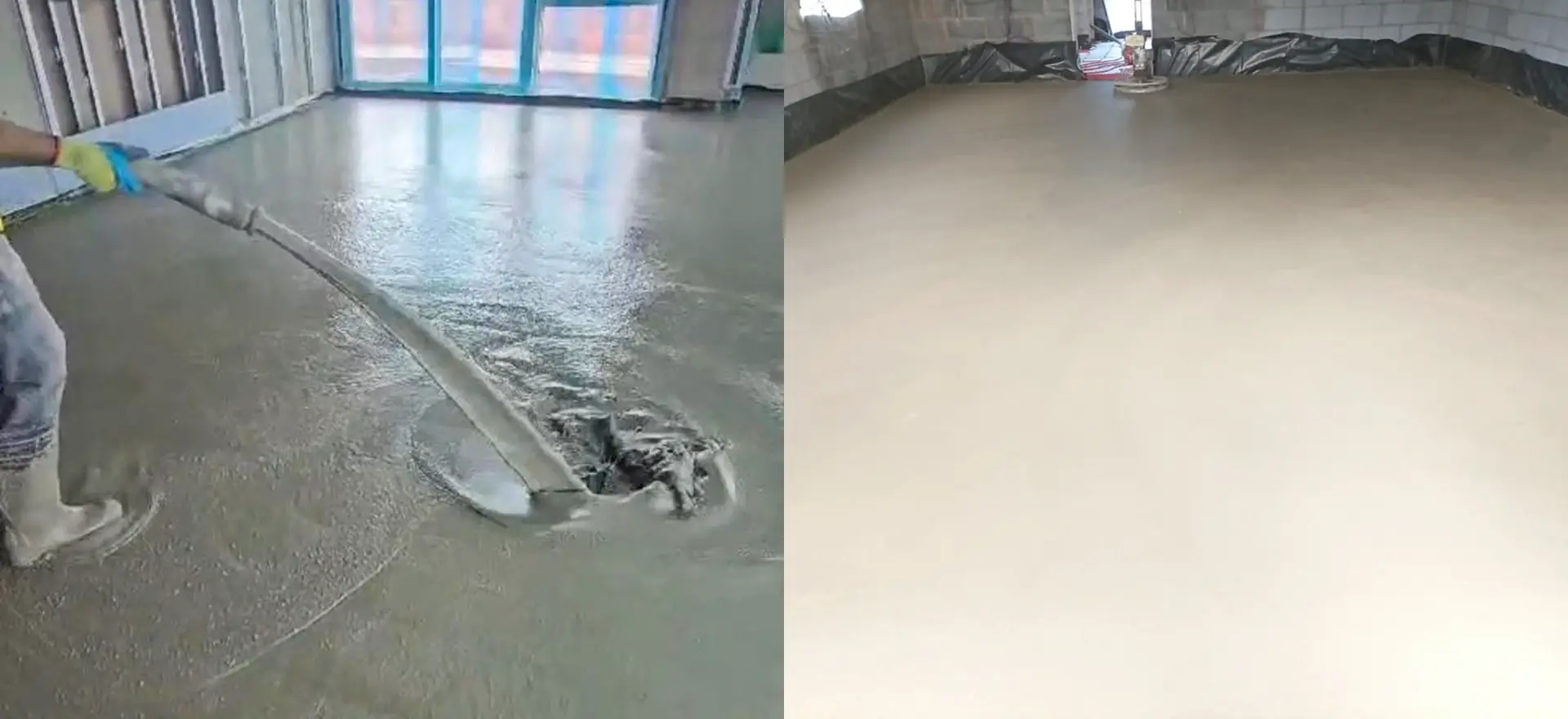
Ask a flooring fitter for latex and you get a two part product: a bag of cement based powder and a drum of latex liquid, mixed together in place of water. The latex makes the cured coat grip harder and flex slightly, so it sits well on plywood and glazed tiles where a water-mixed compound is more likely to let go. It is laid a few millimetres thick and finished smooth.
In a converted period house, one flat can hold three different bases, and each is handled in its own way before the latex goes on.
Timber: boards are screwed down so nothing moves, then covered with flooring grade plywood fixed at close centres. Latex goes over the ply, never on bare boards, because the gaps between boards open and close with the seasons and crack anything thin laid over them.
Tiles: each one is tapped to find hollow or loose tiles, which are cut out and the holes filled. The glaze is cleaned of grease and primed so the latex has something to hold.
Concrete: loose material and dust come off, and the slab is checked for damp before priming. Where old paint or heavy adhesive coats it, concrete grinding in Brent clears it first.
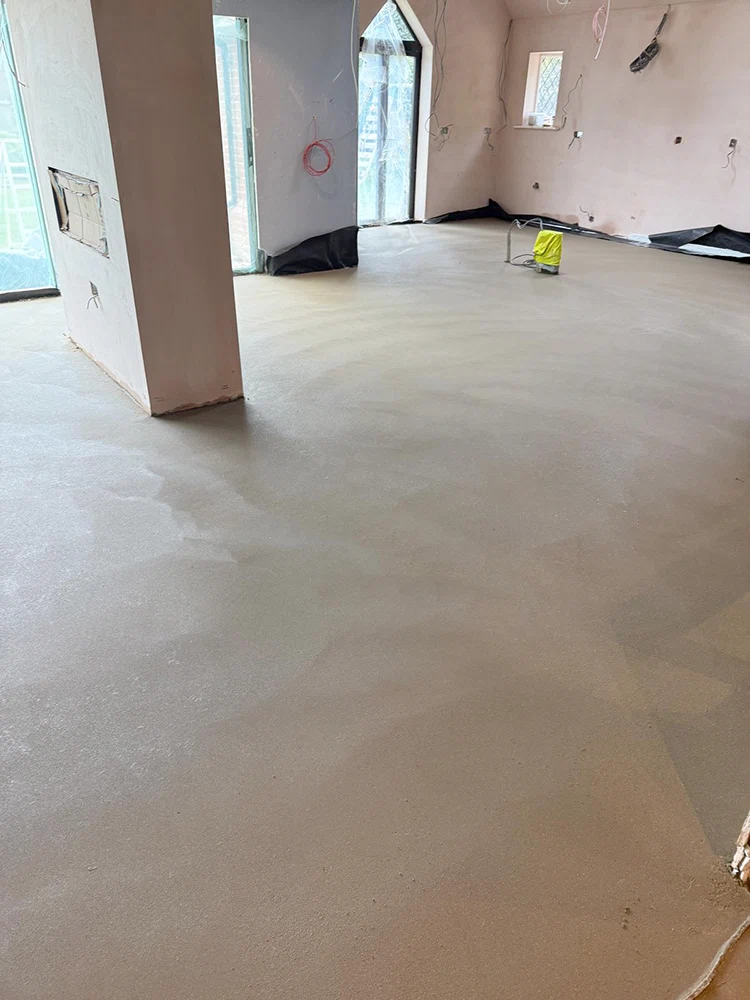
Once the bases are ready, the latex is mixed in batches, spread and smoothed in one working session, so the new floor has no joins between the old timber, tiled and concrete areas.
Finishes and limits for latex in Brent flats
The finishes that call for latex are the thin ones. Sheet vinyl, LVT, lino, rubber and slip resistant safety flooring are all glued down and all follow the shape of whatever is under them. A board joint or a grout line will show within weeks. Carpet hides more, yet a smooth latex face still gives an even floor that wears evenly.
Homes built from 1973 to 1999 make up 9% of Brent's housing, and floors of that age may well carry adhesive from earlier coverings. If it is hard and firmly bonded, it can often be primed and covered rather than stripped.
Primer is matched to each base. If the base is a calcium sulphate screed, its laitance is sanded off and a suitable primer applied before any latex touches it.
Latex has clear limits. It will not stiffen a springy floor, cure damp or correct a floor that falls badly across a room. A floor in that state needs the boards fixed, the damp found or a deeper fix, either levelling compound for bigger dips or a full screed. Neighbouring Harrow has its own page: latex screed in Harrow.
Latex over heated floors in Wembley Park flats
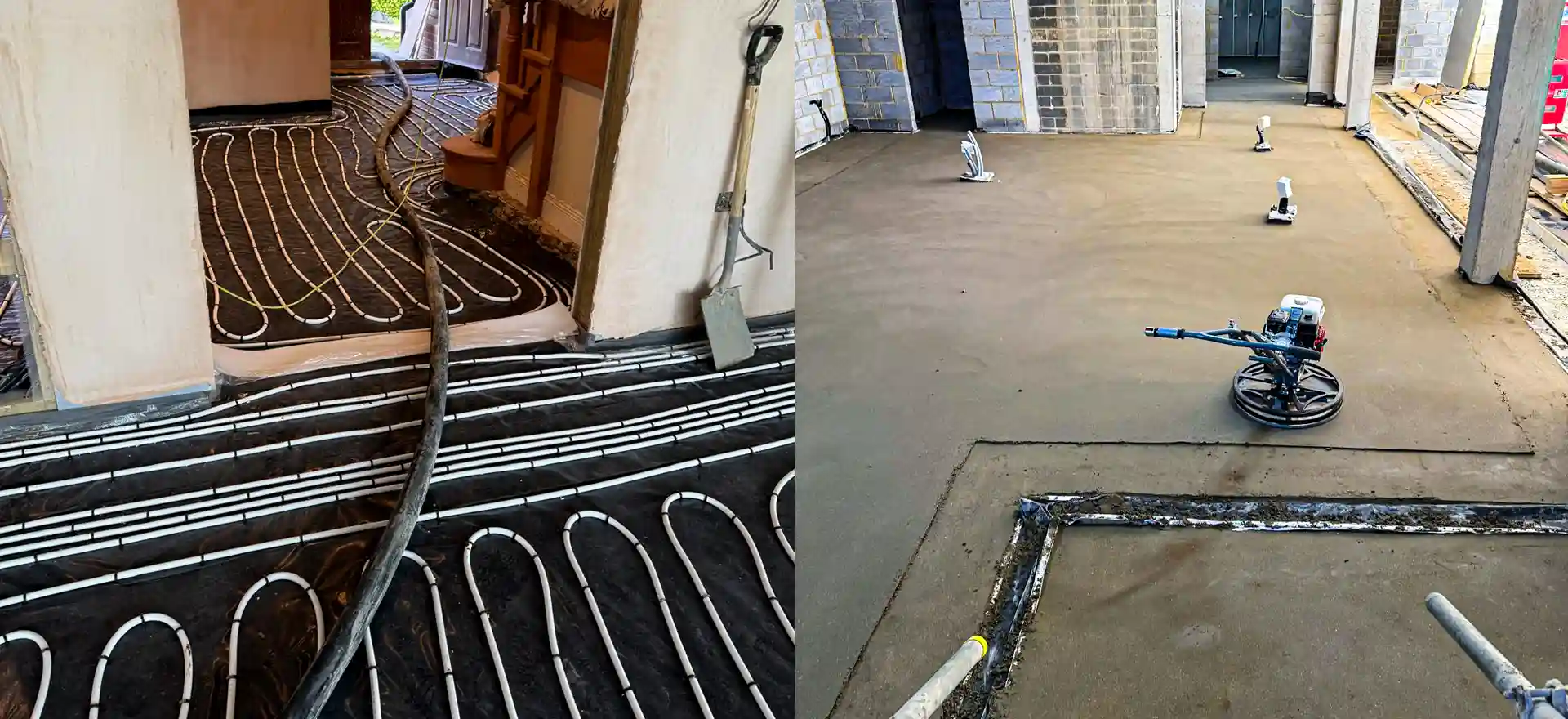
The towers going up around Wembley Park and along the canal at Alperton are mostly liquid screed over heating pipes, pumped floor by floor, and 15% of Brent's homes have been built since 2015. When a flat in a building like that is refloored, or when the original screed is not quite smooth enough for thin vinyl or LVT, a latex skim may be needed over a heated floor.
Find out what the screed is. A flowing screed in a new block may be calcium sulphate or cement based, and the specification or handover file should say which. A calcium sulphate screed needs the sanding and priming described above before any latex is laid.
The heating needs managing. The screed should have been commissioned and be dry before latex goes on. While the latex is laid and cures, follow the compound maker's instructions on floor temperature; that usually means turning the heating down beforehand and bringing it back up gradually afterwards.
The latex has to suit heated floors. Product sheets state whether a compound is suitable over underfloor heating, and we choose one that is.
The flooring has its own limits. Vinyl, LVT and their adhesives each have a maximum surface temperature over heating, so check them against the building's heating settings before choosing the finish. In a new block, the managing agent or the handover pack should give those settings.
Latex screed prices for Brent floors
Latex has no separate rate in the trade2base guide; a thin levelling layer over concrete is £10 to £20 per m² (trade2base, June 2026), so £200 to £400 for 20 m². trade2base does not say whether these figures include VAT. See our floor levelling cost guide.
Who lays your latex screed in Brent
K & B Screeding, led by director Donatas Bardisevicius. Founded 2019, company 12298780.
See what customers say in our Google reviews and on our testimonials page.
Latex screed from Slough to Brent
On the map, Brent sits east of Slough, about 16.8 miles from our base in a straight line (postcodes including HA0, NW2, NW6 and NW10), next to Ealing (3.5 miles), Hammersmith and Fulham (4.3 miles), Kensington and Chelsea (4.5 miles) and Camden (4.5 miles).
More on latex screed, part of our floor screeding service. For every screed we lay locally, see floor screeding in Brent.
Further reading: levelling compound on wooden floors and which screed primer to use.