
Levelling ground floors in Frome's 1970s to 1990s homes
Homes built from 1973 to 1999 make up 35% of Frome's stock, the largest single age group. Homes of that age have often had walls removed, kitchens moved or pipes rerouted through the floor, so a floor can be sound underneath but no longer flat.
Thin finishes hide nothing. LVT and sheet vinyl follow each dip and ridge, and large tiles rock on high spots. Run a 2m straightedge across the floor and the largest gap decides the class, with SR1 at 3mm or less, SR2 at 5mm and SR3 at 10mm. Many thin sheet finishes ask for SR1.
A self levelling compound spreads across the room and settles into a smooth surface. The key is preparation. First, paint, old adhesive and any weak surface skin come off, sometimes by grinding, which is part of our floor preparation work. Next comes priming, with a product chosen for the base, whether that is a concrete slab, an older sand and cement screed or calcium sulphate.
Extensions are a frequent problem spot where they meet the older part of the house. The two floors are rarely the same height, and a compound feathered across the join, over the right primer on each side, gives one continuous surface.
Compound has limits. Compound used thick in place of a needed screed can crack and come loose. If the dip goes well beyond around 10mm, a new screed is the proper answer. Timber floor sanding is not part of what we do.
Trade units on the Marston Road Trading Estate
The Marston Road Trading Estate grew after the Second World War around manufacturing and light industry. Older factory floors there may have been patched, worn or cut for services, and a new occupier needs a surface flat enough for its finish or its racking.
Where the old slab is kept, shot blasting and a bonded screed may be needed before any compound, because a thin layer will not fix a weak surface. Concrete floor grinding removes coatings and high spots on a sound slab. Where racking or heavy equipment will stand on the floor, a thin compound may not be enough, and a higher strength screed is worth discussing.
The planned Saxonvale regeneration is set to bring shops and a cultural quarter to the town, and new retail space needs floors ready for its finish without long delays. A fit-out keeps moving with fast drying products, following the timings on the maker's data sheet.
Where the base is sound, levelling is often the proportionate route: it makes a floor flat for new flooring without digging it out.
How we price floor levelling in Frome
A fixed written price within 24 hours, once we know the area and the base. See our floor screeding cost guide.
Who levels your floor in Frome
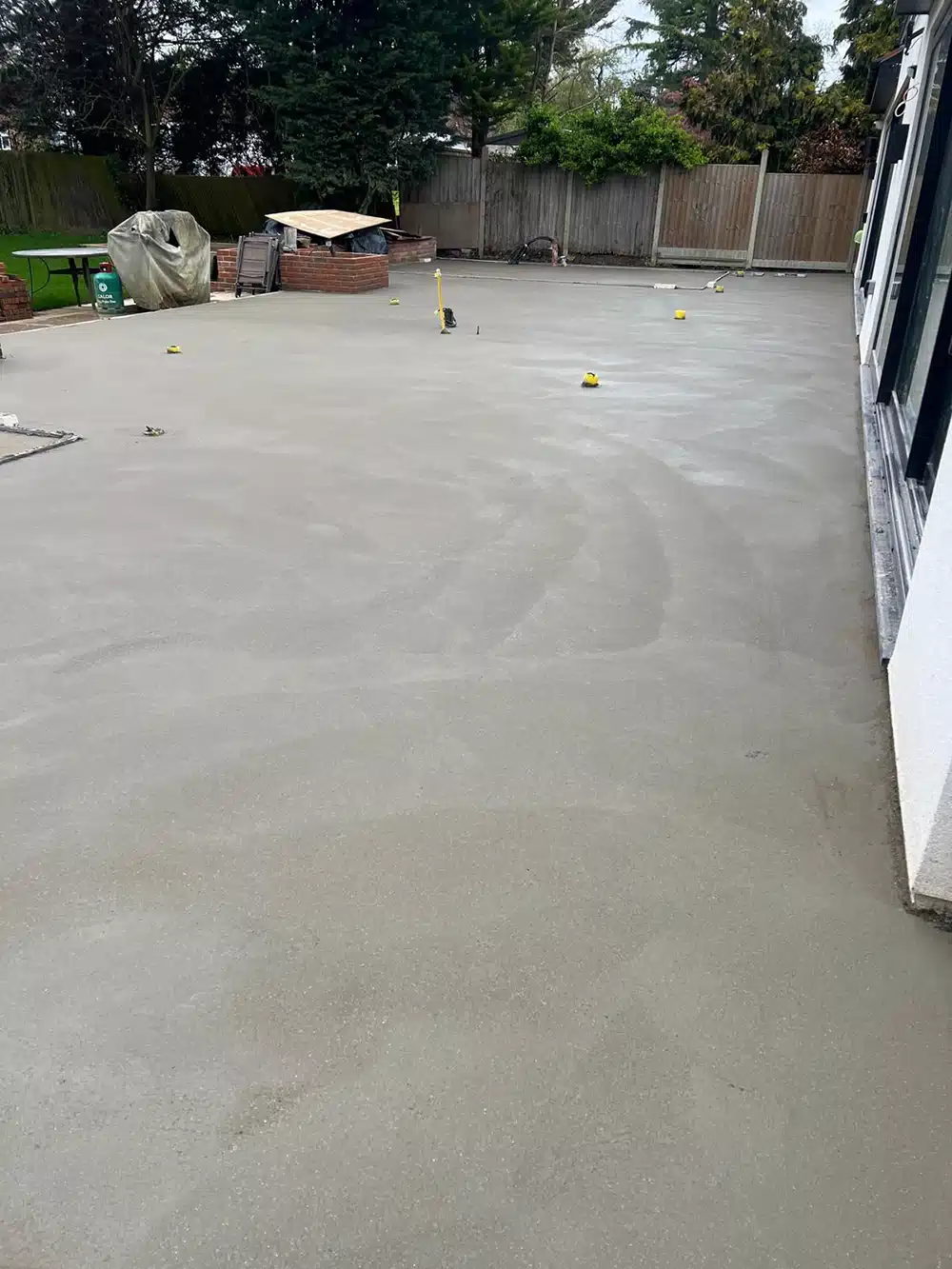
K & B Screeding’s own team, led by director Donatas Bardisevicius. Founded 2019, company 12298780.
See what customers say in our Google reviews and on our testimonials page.
Floor Levelling from Slough to Frome
As the crow flies, our yard in Slough is about 75.4 miles from Frome, which lies to the west-south-west. Postcodes here include BA11, and Westbury (6.3 miles), Warminster (6.4 miles), Trowbridge (7.9 miles) and Bath (10.6 miles) are close by.
More on floor levelling, part of our screeding services. Not sure whether you need a thin compound or a full flowing screed? See self levelling screed explained.