
Refitting kitchens and bathrooms in Littlehampton terraces
Older terraces nearer the River Arun and the town centre have usually been refitted more than once, and each refit leaves its mark on the floor. Lift the lino in a back kitchen and you might find ceramic tiles, a concrete patch where a chimney breast came out, and plywood laid over boards in the hallway. Thin finishes need all of that turned into one smooth surface.
That is the job latex screed does. It is mixed from two parts, a cement based powder and a latex liquid, with the latex standing in for water. The cured layer flexes slightly and bonds well to tiles and plywood, which is why it is chosen over a plain compound on mixed bases.
Tiles first. Any that are loose or sound hollow are removed and the holes filled; the rest are cleaned and primed for a closed surface. Plywood next. Latex goes onto flooring grade plywood that has been screwed down over the boards, never onto bare boards, which move enough to crack it. Concrete last. Small hollows, trowel marks and hard remains of old adhesive can be covered, while loose residue is taken off before priming.
One warning for older terraces here: a failed ground floor in an older terrace often has to be taken up and relaid over a new membrane. Latex is not a substitute for that work. Where the floor beneath has broken down, we price relaying it with hand-laid sand and cement first, and latex can follow if the new finish calls for it.
Primers, damp and limits on Littlehampton floors
A latex layer is only a few millimetres thick, so it inherits every fault in the base. Three checks come before any mixing.
Damp. Latex does not hold back moisture from below. A floor that is damp needs its cause dealt with, usually with a new membrane, before any thin layer goes on. Laying over it simply moves the failure to the new floor covering.
Movement. Boards that bounce or creak are refixed or replaced, then overboarded. A latex coat over moving timber will crack along the board lines whatever primer is used.
Level. Latex smooths; it does not correct a room that falls badly to one side. Bigger errors call for a new screed or a deeper repair, then a thin coat on top.
Primers are chosen for the base. Absorbent concrete and cement screed take one type, glazed tiles and other closed surfaces need their own, and a calcium sulphate screed must have its laitance sanded away and a compatible primer applied before latex goes on. Our floor preparation work covers sanding, cleaning and priming.
Homes built between 1919 and 1944 account for 7% of Littlehampton, and floors of that period, like older ones, can hide earlier coverings. Worthing, about 7 miles away, has its own page on latex screed in Worthing.
How we price latex screed in Littlehampton
A fixed written price within 24 hours, once we know the area and the base. See our floor screeding cost guide.
Who lays your latex screed in Littlehampton
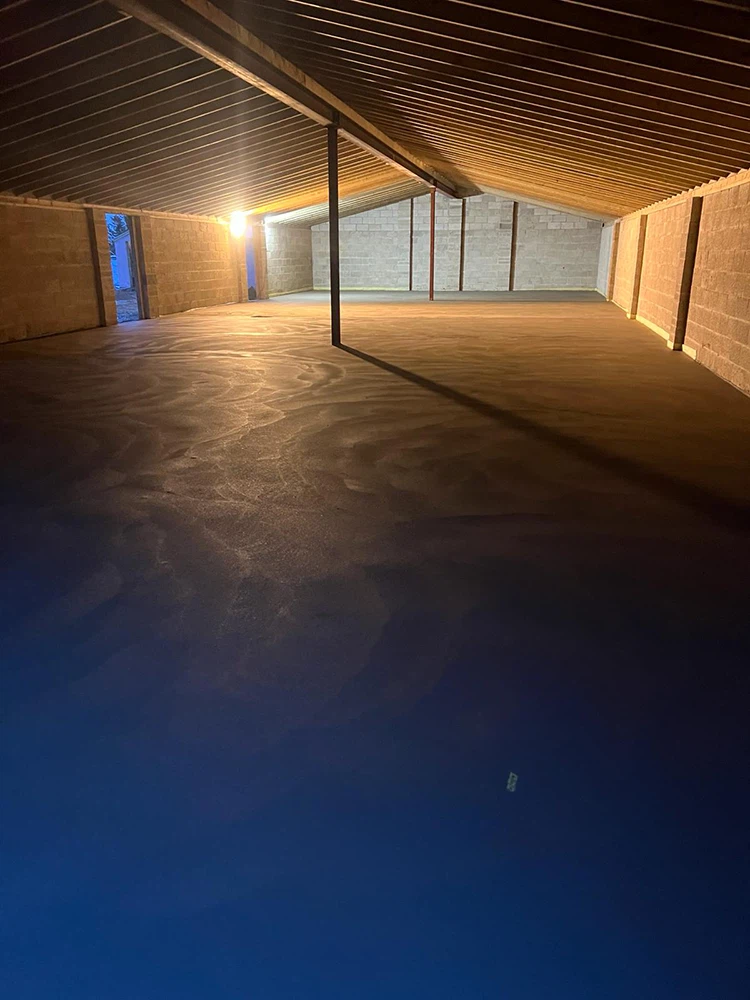
K & B Screeding’s own team, led by director Donatas Bardisevicius. Founded 2019, company 12298780.
See what customers say in our Google reviews and on our testimonials page.
Latex Screed from Slough to Littlehampton
As the crow flies, our yard in Slough is about 50.2 miles from Littlehampton, which lies to the south. Postcodes here include BN17, and Bognor Regis (6 miles), Worthing (7.4 miles), Chichester (10.6 miles) and Shoreham-by-Sea (11.8 miles) are close by.
More on latex screed, part of our screeding services.
