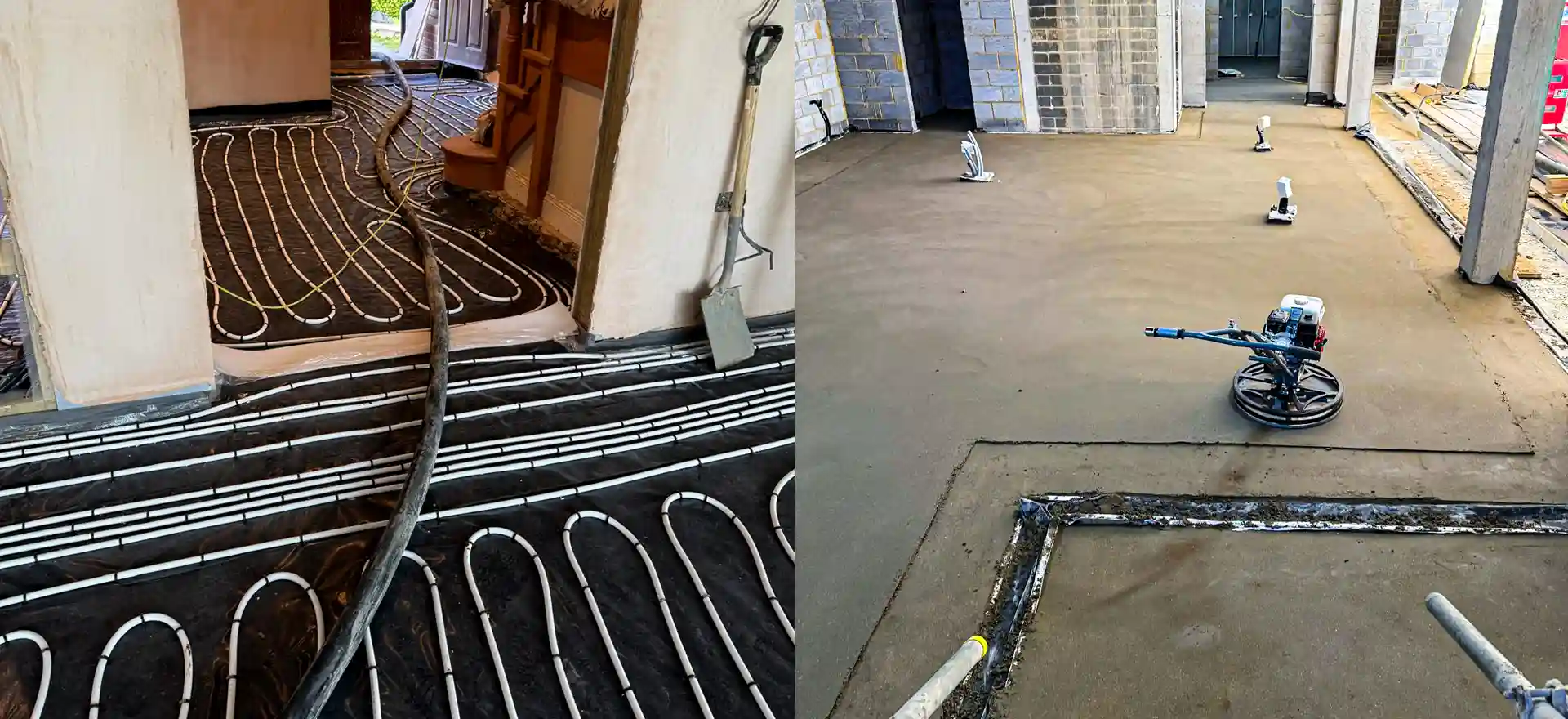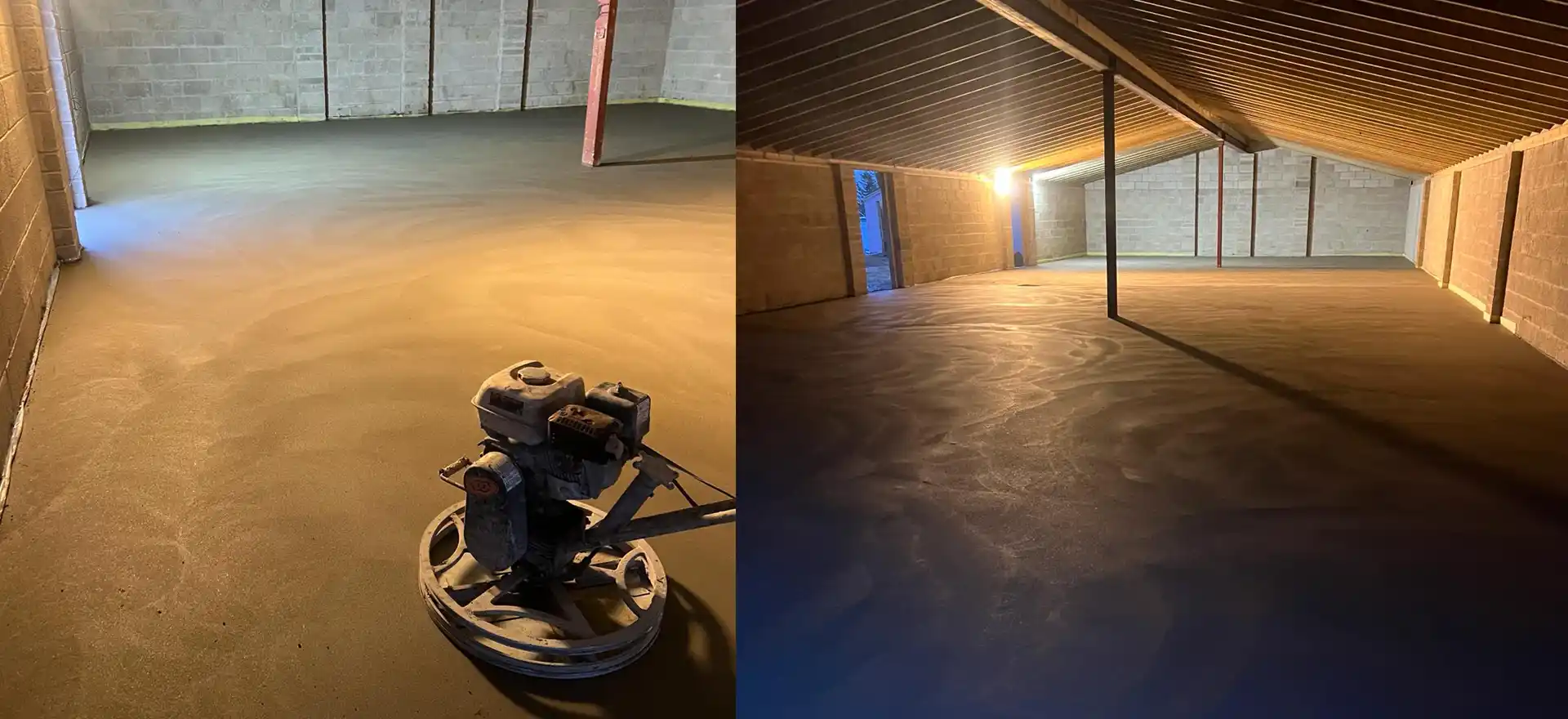
Grinding unit and shop floors at Kimpton and Imperial Way
Diamond grinding works by spinning segments of industrial diamond against the floor, so the top of the slab or screed is cut away in thin layers. Each pass removes a little: old adhesive, floor paint, thin coatings, trowel marks, the ridge where two pours met, or the weak laitance on a newer screed. What is left is a clean, open surface that primer and compound can bond to.
When a unit at Kimpton or on Imperial Way is fitted out for a new occupier, painted aisle lines, old epoxy patches and tile adhesive all need to come off before a new floor goes down. On a unit that needs resin, we grind and prepare the floor and the resin is laid by a specialist; resin and polished concrete are not finishes our team lays.
Shop floors around Times Square and the St Nicholas centre are a smaller version of the same job, where the residue is more likely to be carpet tile or vinyl adhesive. Each shop or unit is measured and looked at before pricing, so the method suits what is actually on the floor.
On a very large floor, or where a coating is thick, shot blasting or scarifying may be the better method, and our floor preparation service covers both. After grinding, levelling compound for Sutton refits can follow where the floor still needs to be flatter. Our grinders and diamonds are not for sale or hire: our own team brings the equipment and does the work.
Extensions, garages and dust control in Sutton homes
At home, grinding is usually a smaller, targeted job. Where a new extension floor finishes slightly proud of a solid floor in the original house, the lip along the join is ground back before any compound tapers the rest. Lifting old carpet or vinyl in a refit can leave a crust of adhesive that has to come off so a thin latex screed for Sutton floors or new flooring will bond.
Garages are another case. Detached houses are 10% of the borough's homes, and a garage being converted into a room may have oil marks, flaking paint and a rough surface. Grinding cleans the slab before it is insulated and screeded; our garage floor screed guide covers the rest.
Grinding has limits. It removes high points but cannot fill low ones, so a floor that falls away or sags across a wide area still needs levelling or a screed afterwards. It must also be measured: grinding too deep into a thin screed can take it below its minimum depth.
Dust is controlled throughout. Concrete and screed contain silica, and cutting them releases fine silica dust that is harmful to breathe, so every machine we use runs with extraction attached, and the rooms around the work are protected.
Preparing Beddington Lane warehouse slabs for new toppings
The Beddington industrial area along Beddington Lane is one of Sutton's three Strategic Industrial Locations, and its warehouses suit heavy duty floors. When a worn warehouse slab is to be renewed with a bonded screed or repaired, grinding is often the first and most important step.
A bonded topping only works if it can grip the slab underneath. Laitance, old sealers, paint, oil and dust all stop that bond. Grinding removes them in thin passes and opens the surface of the concrete, giving the bonding agent and new screed something sound to hold. A bonded screed is then typically 25 to 40mm deep, and the quality of that preparation decides whether it stays bonded under loaded trolleys and racking.
Grinding also tells you about the slab. Once the surface is cut back, cracks, weak areas and old repairs show clearly. Those are marked and dealt with through concrete repair before any topping goes on, so the new layer is not laid over a fault.
It evens out the thickness too. High spots along old bay joints are taken down, so the topping is not left thin over a ridge, where it would be most likely to crack or come loose.
Edges, column bases and the corners behind racking legs are where a larger machine cannot reach, so smaller grinders finish those areas to the same standard as the open floor.
How we price floor grinding in Sutton
A fixed written price within 24 hours, once we know the area and what has to come off. See our concrete floor sanding guide.
Who grinds your concrete floor in Sutton
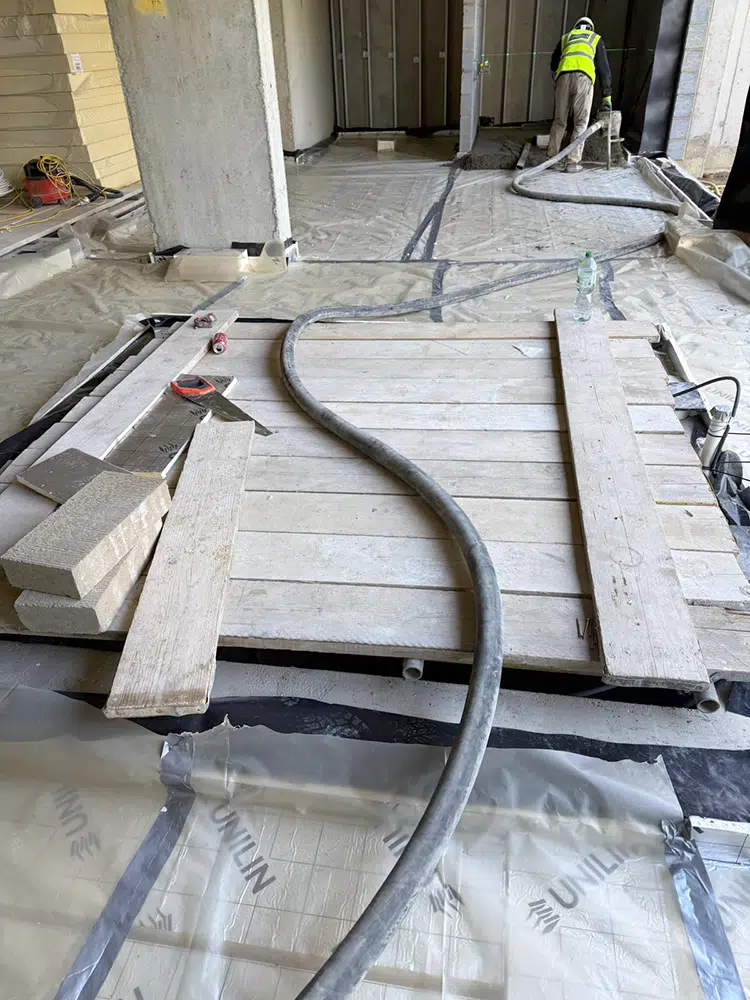
K & B Screeding’s own team, led by director Donatas Bardisevicius. Founded 2019, company 12298780.
See what customers say in our Google reviews and on our testimonials page.
Concrete floor grinding from Slough to Sutton
As the crow flies, our base in Slough is about 23.6 miles from Sutton, which lies to the east-south-east. Postcodes here include SM6, CR0, CR4 and SM2, and Ewell (3.6 miles), Croydon (3.7 miles), Merton (3.7 miles) and Epsom (4.7 miles) are close by.
More on floor grinding, part of our screeding services. For every screed we lay locally, see floor screeding in Sutton.
Further reading: sealing a concrete floor and how to level a concrete floor.