
Levelling for kitchen and bathroom refits in Whitstable
A new kitchen or bathroom floor is only as flat as what lies under it. Thin LVT and sheet vinyl show each bump beneath them. Large-format tiles need a flat bed or their edges lip. Engineered boards hollow and creak over a low spot.
We check a floor by laying a 2m straightedge across it and measuring the gaps against BS 8204, which permits 3mm for SR1, 5mm for SR2 and 10mm for SR3. Plenty of thin sheet floorings insist on SR1, and an old floor in a Tankerton or Church Street house is unlikely to meet that without help.
That is where compound comes in. Most of it goes down at somewhere between 2mm and roughly 10mm, and a few products can be poured thicker. The base is cleaned and any weak patches cut out first, then primed with a primer matched to the surface: concrete, old sand and cement, calcium sulphate and old tile adhesive each need a different product.
Semi-detached houses make up 32% of Whitstable's homes, and where a refit runs from the kitchen into a dining room or an extension, levelling the whole ground floor in one go gives the new flooring a single continuous base, with no ridge at the old doorway.
Cracks and hollow areas are repaired before levelling through our screed repair service. Where a sound floor is out by just a few millimetres, a skim of latex screed could be enough.
Retail and office floors at John Wilson Business Park
The business parks on the edge of town hold large retailers, offices and light industry, including the John Wilson Business Park, and a change of tenant usually means a new floor finish. Carpet tiles or vinyl in an office will only look right on a flat base. Shops need a floor that takes trolleys and footfall without cracking the finish above.
Preparation comes first. Old adhesive, paint or coatings stop the compound bonding, so they are ground off and the surface opened up through our floor grinding service before priming.
Harbour buildings, cargo stores and fish processing units raise a different question. Floors that are washed down need cement based materials throughout, and some are too damaged or contaminated for compound alone, so the base has to be repaired first.
That limit applies everywhere. Compound is for smoothing a sound floor, not rebuilding a failed one. Deep pours over a weak, cracked or damp base can crack and debond. If the dips are deeper than compound can handle, we will tell you the floor needs relaying in sand and cement instead.
How we price floor levelling in Whitstable
A fixed written price within 24 hours, once we know the area and the base. See our floor screeding cost guide.
Who levels your floor in Whitstable
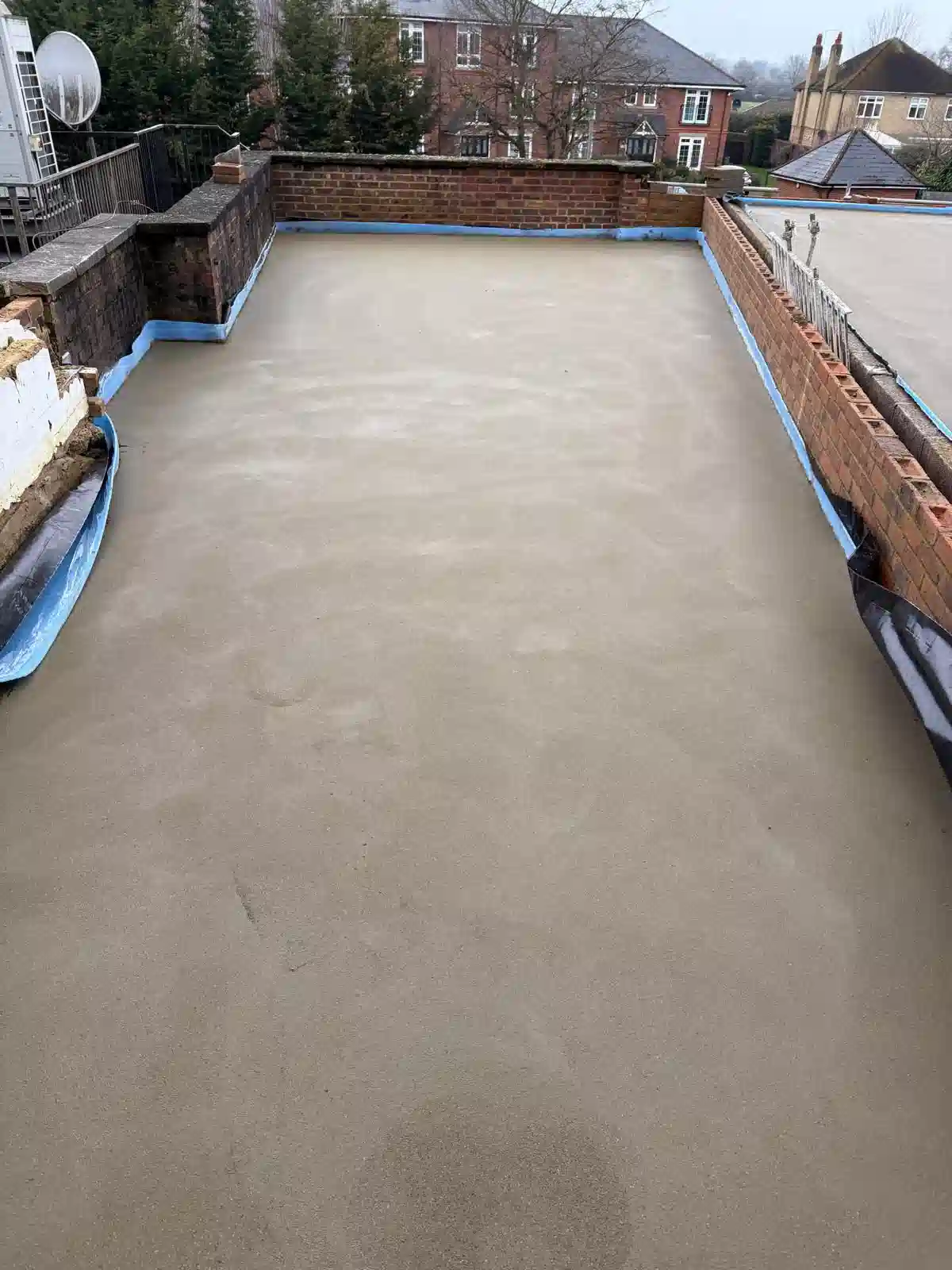
K & B Screeding’s own team, led by director Donatas Bardisevicius. Founded 2019, company 12298780.
See what customers say in our Google reviews and on our testimonials page.
Floor Levelling from Slough to Whitstable
As the crow flies, our yard in Slough is about 73.1 miles from Whitstable, which lies to the east. Postcodes here include CT5, and Herne Bay (4.5 miles), Canterbury (5.9 miles), Faversham (6.5 miles) and Sittingbourne (12.6 miles) are close by.
More on floor levelling, part of our screeding services. Not sure whether you need a thin compound or a full flowing screed? See self levelling screed explained.