
Latex over awkward bases in Huntingdon refits
Strip the floor out of a Huntingdon kitchen or bathroom and the base is rarely one material. There may be ceramic tiles under a later vinyl, a concrete patch where a pipe was rerouted, and a hardboard strip by the back door. Thin flooring will show every one of those edges.
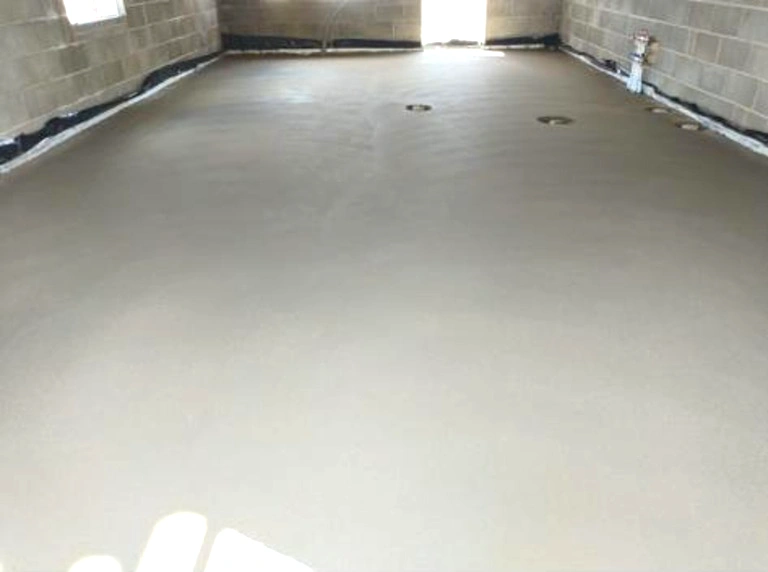
Latex screed is made for that situation. Its powder has a cement base and is combined with liquid latex rather than water, and it grips more kinds of base than a standard compound while staying slightly flexible once cured. Spread a few millimetres thick, it hides joints, grout lines and small dips in a single smooth coat.
Each base is prepared differently. Ceramic or quarry tiles that are firmly bonded can stay, after loose ones are lifted and the rest are degreased and primed. Older concrete is cleaned back to a sound surface. Thin, hard old adhesive that is well stuck can sometimes be left and primed over. Timber floors are overboarded with flooring grade plywood, screwed down closely, because latex laid directly on floorboards cracks as they move. A calcium sulphate screed has its laitance removed and is always primed first.
Flats in converted buildings account for 3% of Huntingdon homes. Upper floors in converted buildings are commonly timber, so overboarding is normally the first step there before any latex.
For the difference between this and a general levelling compound, see Huntingdon floor levelling. If the base needs work before latex, our floor preparation work covers it.
Which Huntingdon floors need latex first
Not every finish needs latex. Ceramic tiles and engineered wood on a suitable underlay can tolerate a little more texture. The finishes that do need it are the thin, flexible ones: sheet vinyl, LVT, lino, rubber, safety flooring and some carpet. They mould themselves to whatever is beneath them, so a trowel mark or grout line becomes a visible ridge after a few weeks of foot traffic.
Damp is checked before anything else. Latex is not a damp proof layer, and moisture rising through an old solid floor will break its bond and lift the finish. A reading is taken before we price, and a floor that fails needs a membrane or a rebuild, not a thicker coat.
Springy boards and big slopes are the other two stop signs. Boards that flex need refixing and overboarding first. A floor well out of level needs a new screed, which for older Huntingdon terraces is set out on the sand and cement page for Huntingdon.
We cover the whole town, including Hartford, Newtown, Stukeley, Green End and Belle Isle, and the same checks apply wherever the floor is. For St Ives, roughly 4.7 miles away, see our St Ives latex page.
How we price latex screed in Huntingdon
A fixed written price within 24 hours, once we know the area and the base. See our floor screeding cost guide.
Who lays your latex screed in Huntingdon
K & B Screeding’s own team, led by director Donatas Bardisevicius. Founded 2019, company 12298780.
See what customers say in our Google reviews and on our testimonials page.
Latex Screed from Slough to Huntingdon
Huntingdon is about 58.6 miles north-north-east of our Slough base as the crow flies, with postcodes including PE29 and PE28. The nearest towns to it are St Ives (4.7 miles), St Neots (8 miles), Chatteris (13.2 miles) and Sandy (14.6 miles).
More on latex screed, part of our screeding services.
