
Latex over sound floors in Ninefields and Roundhills refits
Ninefields and Roundhills went up in the 1960s and 1970s, and their kitchens, bathrooms and extensions are now due for renewal. Many of those refits mean breaking out the old screed, but not all. Where the screed under a kitchen or bathroom is sound, dry and close to the right height, keeping it saves time and mess, and what it needs is a smooth top rather than a new floor.
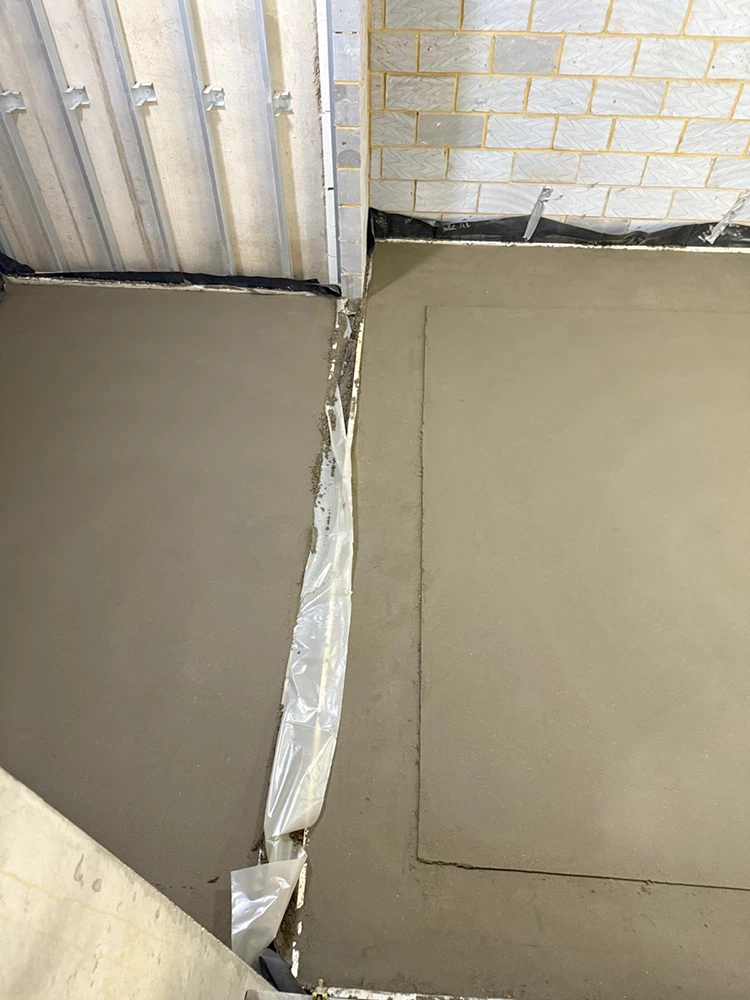
That is the job latex screed does. The powder is cement based and the liquid it is mixed with is latex, used in place of water. The mix grips firmly, tolerates a little movement once set and goes down thin, usually a few millimetres. It fills chases cut for pipes, grout lines in old tiles and the shallow dips left by decades of use, and it leaves a surface that thin finishes will not telegraph through.
Old ceramic or quarry tiles are a common find in bathrooms. If every tile is tight, they can stay: we clean them, prime with a product made for glazed surfaces and latex over. Loose or hollow tiles come out first.
Terraced houses make up 34% of Waltham Abbey's homes, and in a terrace the upstairs bathroom is usually a timber floor. Latex never goes straight onto those boards. They are fixed down and overboarded with flooring grade plywood, then the latex covers the sheet joints and screw heads.
Where a different finish is going down in each room, latex keeps all of them on one smooth, even base.
Damp, springy boards and primers in Waltham Abbey
Latex screed is easy to misuse, so we check three things before a Waltham Abbey floor gets it.
Is the base dry? On a ground floor, an older slab may have a failed membrane or none at all, and a thin compound will not keep moisture out of the finish. We take a reading first. Where damp is getting through, the floor needs rebuilding, which is set out on our Waltham Abbey sand and cement screed page.
Is it firm? Boards that flex will crack latex however carefully it is laid. In flats, where a quiet floor matters to neighbours below, any acoustic layer must stay intact, so we look at the whole build-up before adding anything to it.
Is it close to level? Latex is a smoothing coat. It cannot take out a fall across a room or bring a low kitchen up to meet an extension. Those need a deeper product or a new screed, covered on the floor levelling page for Waltham Abbey.
Once the base passes, priming follows the material. Concrete, sand and cement, plywood and tiles each take their own primer, and calcium sulphate screed always has its laitance sanded off before priming. Cracked or hollow patches are cut out and filled through screed repairs before the latex goes on.
How we price latex screed in Waltham Abbey
A fixed written price within 24 hours, once we know the area and the base. See our floor screeding cost guide.
Who lays your latex screed in Waltham Abbey
K & B Screeding’s own team, led by director Donatas Bardisevicius. Founded 2019, company 12298780.
See what customers say in our Google reviews and on our testimonials page.
Latex Screed from Slough to Waltham Abbey
Waltham Abbey is about 30.4 miles east-north-east of our Slough base as the crow flies, with postcodes including EN9. The nearest towns to it are Waltham Cross (2.1 miles), Cheshunt (2.8 miles), Loughton (3 miles) and Epping (4.1 miles).
More on latex screed, part of our screeding services.
