
What latex does on Waltham Cross refit floors
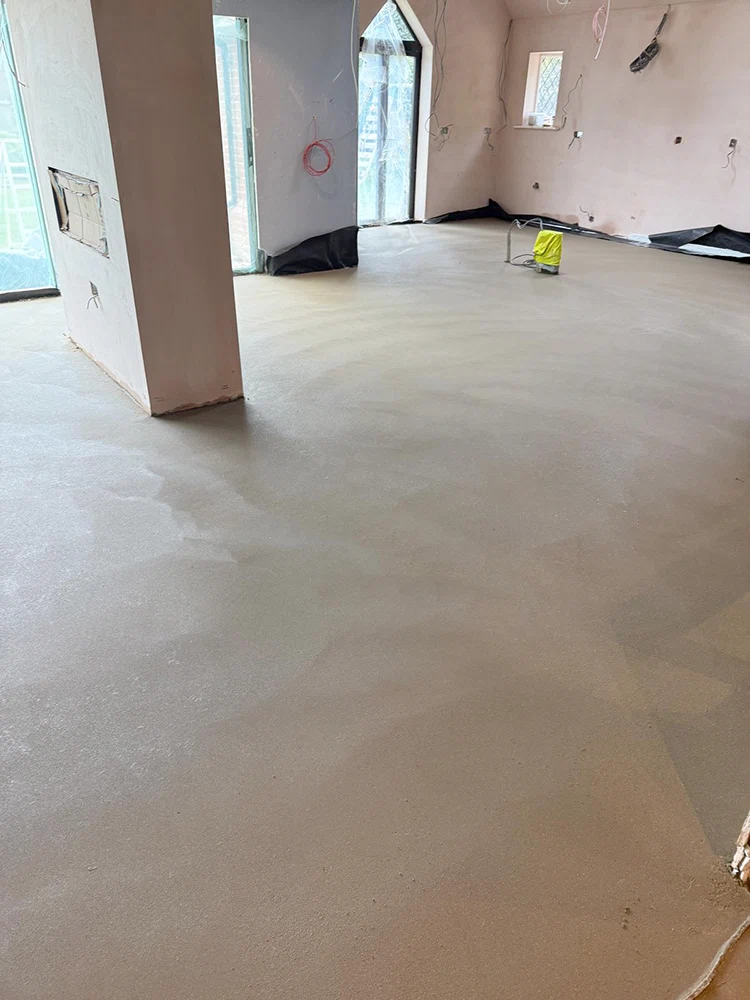
The name confuses people, so it helps to be plain about it. Latex screed is not a screed in the usual sense. One part is a dry cement mix, the other a latex liquid used where water would normally go, and together they make a compound that grips hard and tolerates a little flex. It goes down a few millimetres thick, which is why it belongs to refits rather than new builds.
Kitchen and bathroom refits in the older houses of Waltham Cross tend to uncover four kinds of base that latex handles well.
Old quarry or ceramic tiles. If every tile is still firmly bonded, there is no need to hack them up. They are cleaned, degreased and primed, then the latex fills the grout lines and leaves a flat skin over the top.
Timber floors that have been overboarded. Latex never goes straight onto bare floorboards, because boards move and the layer would crack. Once the boards are covered with flooring grade plywood, screwed down at close centres, latex hides the sheet joints and screw heads so thin vinyl will not show them.
Uneven older concrete. Worn, pitted or patched concrete that is still sound takes latex well once it is primed.
Old adhesive. Some residue left after lifting vinyl or carpet can stay if it is hard, thin and compatible, though anything soft or loose comes off first.
The finishes that need this base are the thin, unforgiving ones: sheet vinyl, LVT, lino, rubber and safety flooring, plus carpet where a smooth base helps it wear evenly. Where a floor simply needs flattening to a set class, the general levelling compound page covers that side of the work.
When Holdbrook and Waltham Cross floors need more than latex
Latex is a finishing layer, so it can only be as good as what lies under it. Before anything is mixed, three things get checked.
Movement. Press on an overboarded floor and feel for give. Springy joists or loose boards will crack a thin layer within weeks, so the timber floor is fixed or reboarded first.
Damp. Latex does not cure a damp floor and will not hold back moisture rising from below. An older solid floor that reads damp needs the cause dealt with before any smoothing.
Level. A few millimetres hides ridges and joints. It will not correct a kitchen that falls away across the room, or old sand and cement that has broken up and come loose from the slab. Floors like that are better broken out and relaid, or patched through our screed repair service, with latex used afterwards only if the finish calls for it.
Primer is the step people forget. Every base gets one suited to it, and a calcium sulphate screed, the kind often poured in new flats, must have its laitance sanded off and be primed before any latex touches it. Skip that and the bond is unreliable.
We cover the whole town, including Holdbrook and the roads around Monarchs Way, and the same work continues next door as latex smoothing in Cheshunt.
How we price latex screed in Waltham Cross
A fixed written price within 24 hours, once we know the area and the base. See our floor screeding cost guide.
Who lays your latex screed in Waltham Cross
K & B Screeding’s own team, led by director Donatas Bardisevicius. Founded 2019, company 12298780.
See what customers say in our Google reviews and on our testimonials page.
Latex Screed from Slough to Waltham Cross
As the crow flies, our yard in Slough is about 28.4 miles from Waltham Cross, which lies to the east-north-east. Postcodes here include EN8, and Cheshunt (1.2 miles), Waltham Abbey (2.1 miles), Enfield (3.3 miles) and Loughton (4.8 miles) are close by.
More on latex screed, part of our screeding services.