
CA grades for Waltham Abbey apartment floors
Each grade carries two figures in N/mm2: the C figure gives compressive strength, the F figure flexural strength. Three grades cover most buildings. Lightly used house floors can take CA-C20-F4, ordinary houses, flats and offices generally get CA-C25-F5, and CA-C30-F6 handles harder wear. On a specified job we pour exactly the grade on the drawings.
Alpha hemihydrate products are the other option a specifier may choose, where faster drying or a reduced depth matters. Minimum depth and drying for each come from the maker's data sheet, which is what we go by.
Low shrinkage is what makes the material popular for apartment floors. With so little movement as it cures, wide areas need only a few joints, and one visit can cover an entire flat. Joints still go in at thresholds and between separately controlled heating zones, and that layout is fixed before the pour.
Then there are the houses still to come. Waltham Abbey North, on land that includes sites west of Galley Hill Road and at Crooked Mile, is expected to bring houses with underfloor heating under liquid screed, and where that screed is specified as calcium sulphate, the grade and testing rules on this page apply. What the material is, and why it behaves as it does, is covered in anhydrite screed in plain terms.
Laitance and moisture checks on Waltham Abbey floors
Every calcium sulphate floor develops laitance, a weak surface skin, as it dries. We sand that skin away before any glue or compound, then seal the surface with a primer made for calcium sulphate. Skipping either step is a frequent cause of LVT and tiles coming loose later.
Moisture testing follows. Flooring manufacturers commonly set the allowable moisture for calcium sulphate below the figure for cement, so a surface that feels dry under your hand can still hold more water than the new floor covering will accept. A hygrometer reading decides. Underfloor heating speeds things up, as it can normally be used to dry the screed from around day 7.
Water is the one thing anhydrite will not put up with. A bathroom, shower or utility room at risk of leaks gets a cement based flowing screed or a hand-laid alternative, so a flat may need a second screed type in its bathroom. If the slab needs attention first, that is covered by floor preparation. For the pumping and access side of the job, the liquid screed page for Waltham Abbey has the detail.
Anhydrite & Flow Screed prices in Waltham Abbey
Liquid flowing screed (which includes anhydrite): £24 to £31 per m² supplied and laid (MyJobQuote, August 2026), so £960 to £1,240 for 40 m². MyJobQuote does not say whether these figures include VAT. See our floor screeding cost guide or screed calculator.
Who lays your anhydrite and flow screed in Waltham Abbey
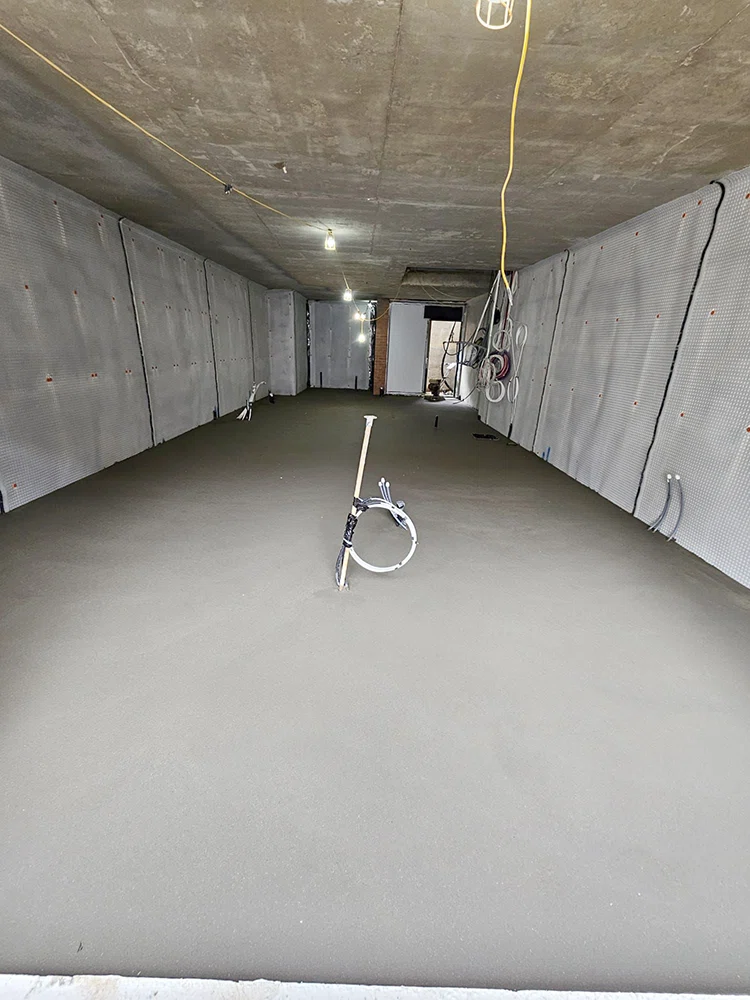
K & B Screeding’s own team, led by director Donatas Bardisevicius. Founded 2019, company 12298780.
See what customers say in our Google reviews and on our testimonials page.
Anhydrite & Flow Screed from Slough to Waltham Abbey
Waltham Abbey is about 30.4 miles east-north-east of our Slough base as the crow flies, with postcodes including EN9. The nearest towns to it are Waltham Cross (2.1 miles), Cheshunt (2.8 miles), Loughton (3 miles) and Epping (4.1 miles).
More on anhydrite screed, part of our screeding services.
