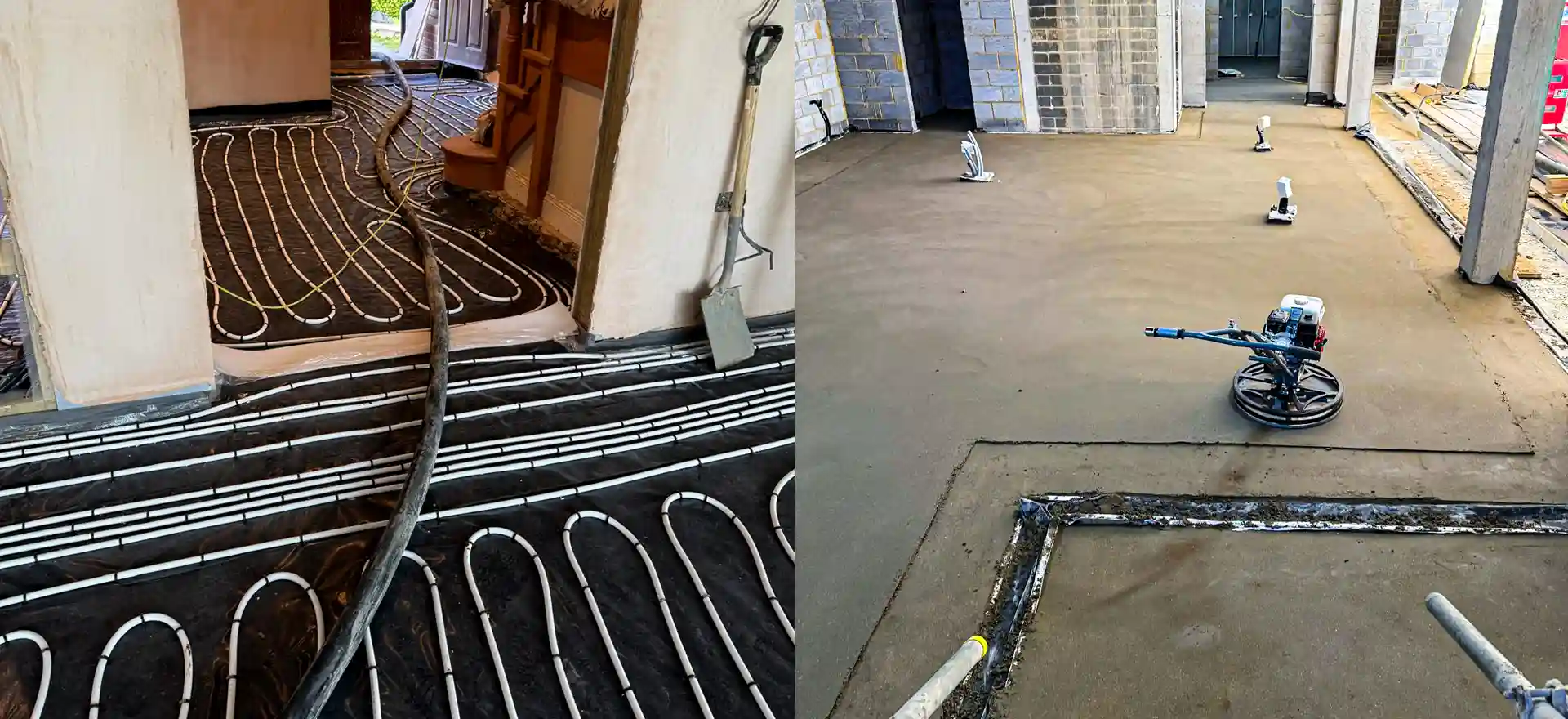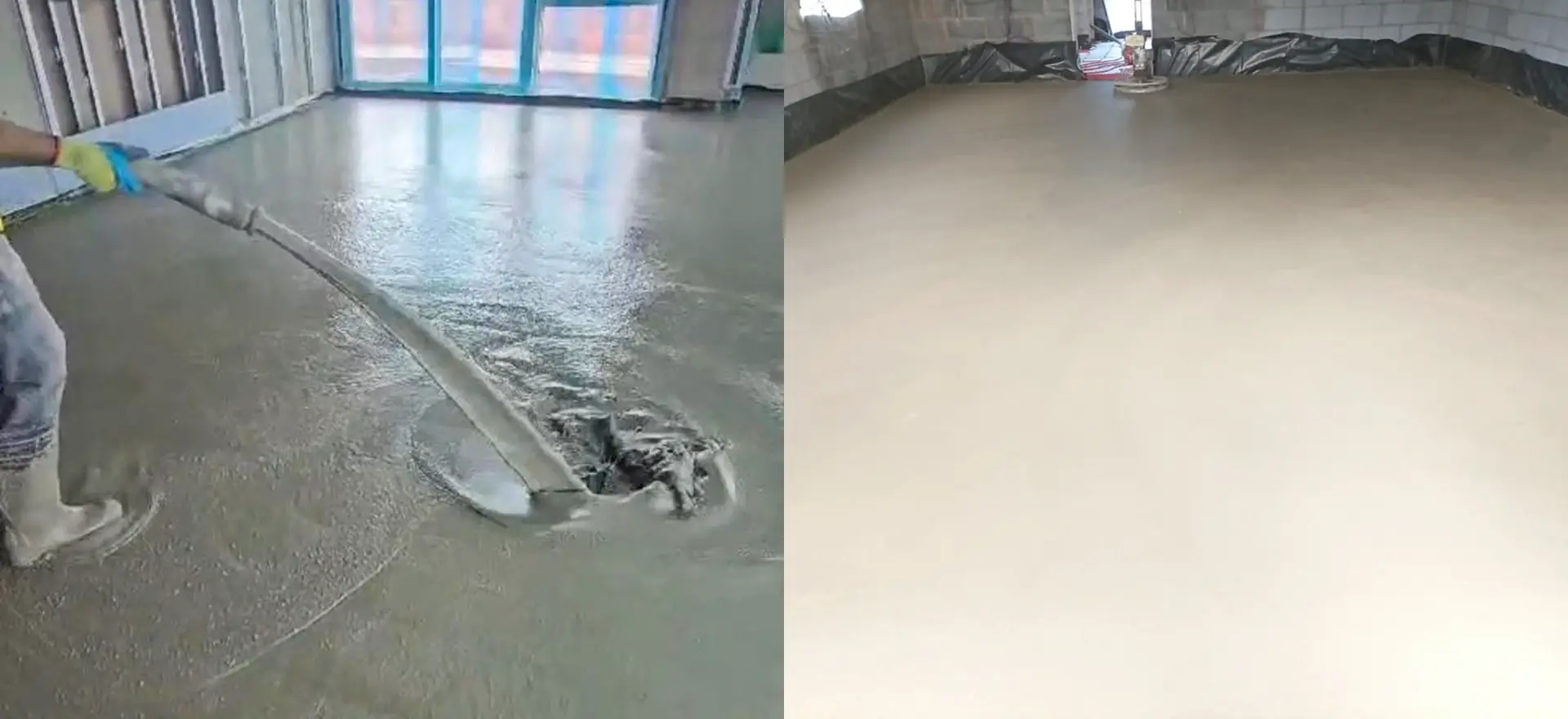
CA grades on Buckingham housing and apartment specifications
Each anhydrite screed has a short code under the European standard for screed materials. Read left to right, CA stands for calcium sulphate, the C number is compressive strength and the F number is flexural strength, both in N/mm2.
On Buckingham drawings, expect one of three: CA-C20-F4 where domestic traffic is light, CA-C25-F5 in most houses, apartments and offices, and CA-C30-F6 where wear is heavier. Whatever is written there is what goes in the pump.
Some 19% of Buckingham's homes were built between 2000 and 2014, and Lace Hill added 696 homes with a primary school and community centre. Where a housebuilder chooses calcium sulphate, the specification sets the grade and depth. In the town, 11% of homes are purpose-built flats, and floors in blocks like those normally get CA-C25-F5 laid over insulation.
When a plot needs a floor that dries quicker or sits thinner, an alpha hemihydrate product may be specified, and its depth and drying come from that product's own data sheet.
Because it barely shrinks, joints can be few and bays large, and an open-plan floor usually goes down in a single piece. We plan bays and joints before the pour, working to the drawings and the site manager's sequence so each plot is ready in turn.
For more on the material itself, see our anhydrite explainer; the pump, hose and access side is on our liquid screed page for Buckingham.
Sanding, priming and testing on Buckingham plots
Calcium sulphate screed forms a surface laitance as it dries. This weak layer must be removed before any flooring, because adhesives and compounds cannot bond to it properly. After drying, we sand the surface back and prime it with a product suited to calcium sulphate.
Moisture testing follows. Flooring makers commonly accept less moisture in calcium sulphate than in cement screed, so each plot gets a hygrometer reading before a covering is laid.
Plots with underfloor heating can usually have the screed force dried from around day 7, with the heat brought up gently.
Wet rooms are covered in the questions below, and the base work before a pour is on our floor preparation page.
On a housing site, flooring trades are often ready before the screed is. The moisture result, not the calendar, decides when each plot can be handed over, and we give the drying and laitance advice in writing so the site team and the floor layers work from the same information. If a skim is needed before thin flooring, a thin coat of levelling compound can follow the priming.
When a Buckingham plot specification names alpha hemihydrate
Most specifications name a standard CA grade. Now and then, the drawings for a plot name an alpha hemihydrate product instead. It is still a calcium sulphate screed, but it is chosen where faster drying or a reduced depth matters, and on a housing site that usually comes down to a tight programme or a limited build height.
The important point is that each product has its own rules. Minimum depth, drying time, when the heating can start and how the surface is prepared are all set by that product's data sheet, not by the general figures for anhydrite. We work to the sheet for the named product, and if the drawn depth or build-up does not suit it, we raise that before quoting.
On a phased site this affects the programme. Some 17% of Buckingham's homes have been built since 2015, and up to 420 more are planned off Osier Way, so plots are poured in sequence. Where some plots use a named alpha hemihydrate product and others a standard grade, their drying times differ, and each handover date is worked out from the product actually poured on that plot.
Substitutions need care too. If a supplier offers an alternative product, the specifier has to approve it, because its depth and drying may not match. We pour what is named, and the delivery note is checked against the drawing for each plot.
Send any product you do not recognise with the plans and we will check it.
Anhydrite and flow screed prices for Buckingham floors
Liquid flowing screed (which includes anhydrite): £24 to £31 per m² supplied and laid (MyJobQuote, October 2026), so £960 to £1,240 for 40 m². MyJobQuote does not say whether these figures include VAT. See our liquid screed cost per m² guide or screed calculator.
Who lays your anhydrite and flow screed in Buckingham
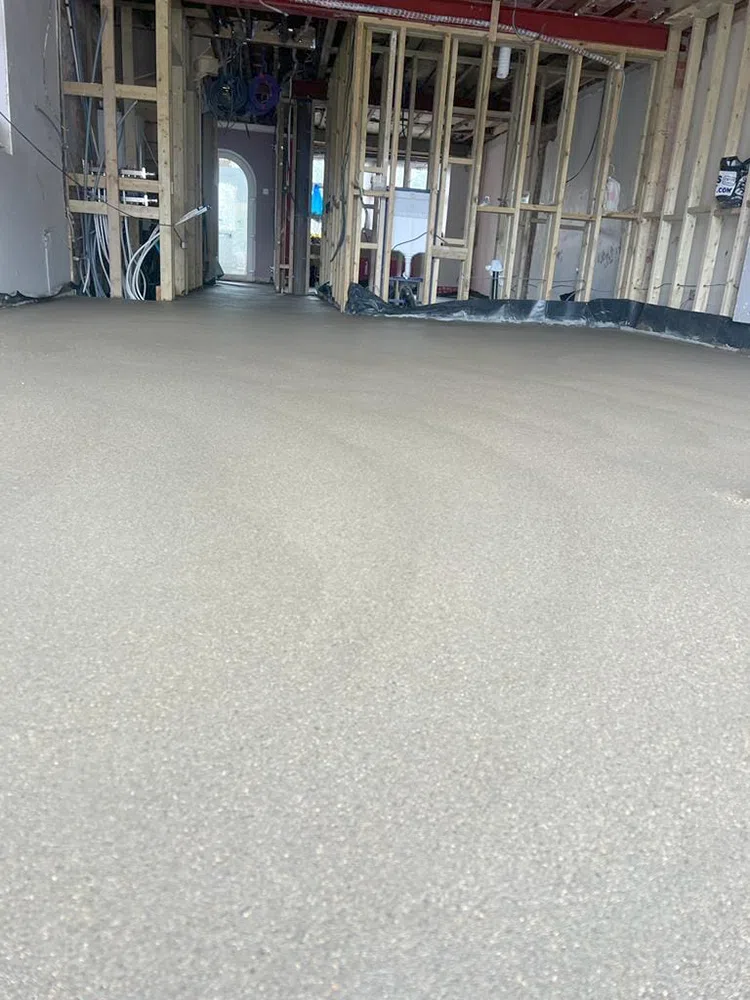
K & B Screeding, led by director Donatas Bardisevicius. Founded 2019, company 12298780.
See what customers say in our Google reviews and on our testimonials page.
Anhydrite and flow screed from Slough to Buckingham
As the crow flies, our base in Slough is about 35.6 miles from Buckingham, which lies to the north-north-west. Postcodes here include MK18, and Brackley (7.1 miles), Towcester (9 miles), Bicester (10.1 miles) and Milton Keynes (10.3 miles) are close by.
If the anhydrite delivery has to stand on the road in Buckingham, a bay suspension can be requested from Buckinghamshire Council (parking suspension); we will say on the quote if it is needed.
More on anhydrite screed, part of our screeding services. For every screed we lay locally, see floor screeding in Buckingham.
Further reading: primers for calcium sulphate screed.