Industrial and refit floors from Charlton Riverside to Woolwich
Along Charlton Riverside the land is still mostly industrial: Angerstein and Murphy's Wharf are protected, and the Westminster Industrial Estate is on the same stretch. Floors in that kind of building take heavy use, and when a unit changes hands or is refitted, the old surface usually has to be cleaned back first. Regeneration at Woolwich and the Peninsula adds new slabs that need the same care before a finish goes on.
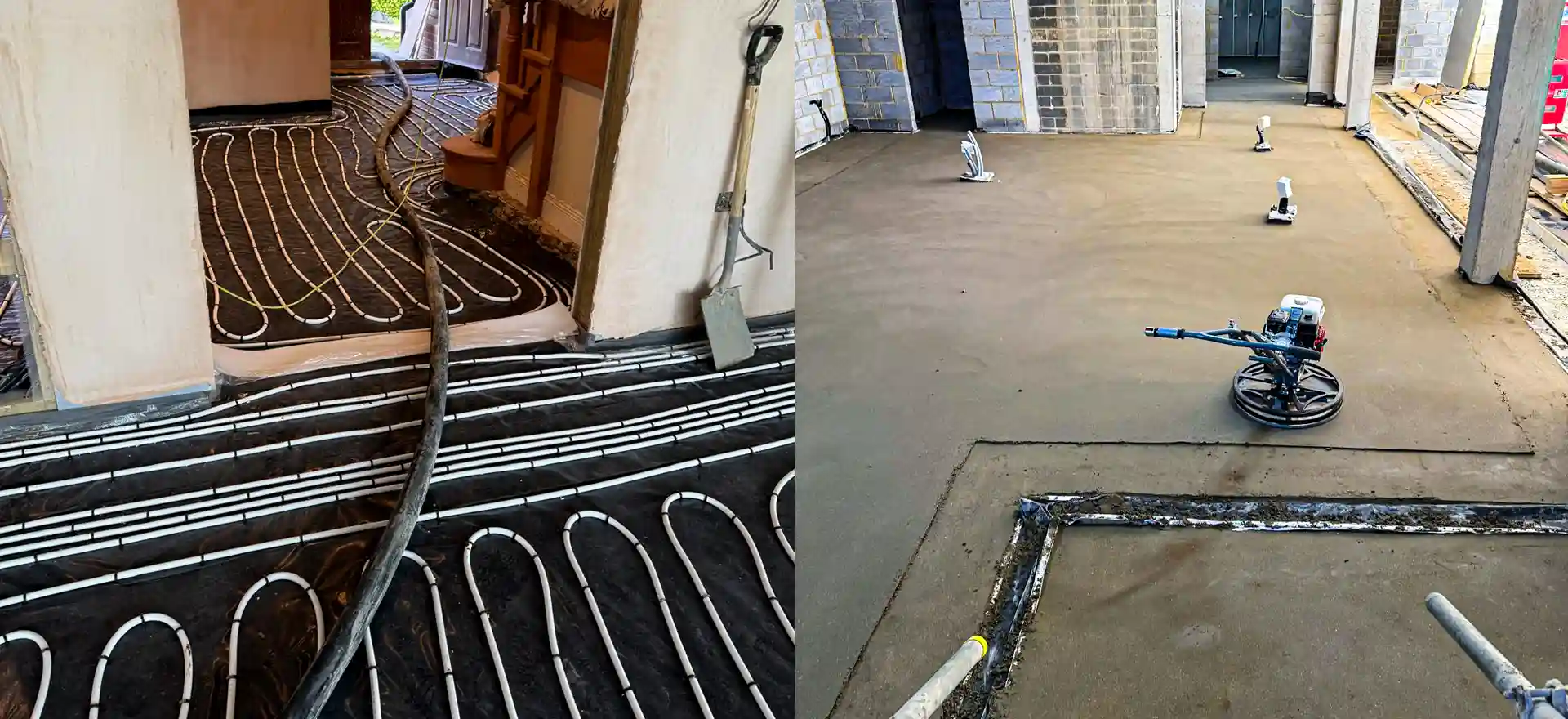
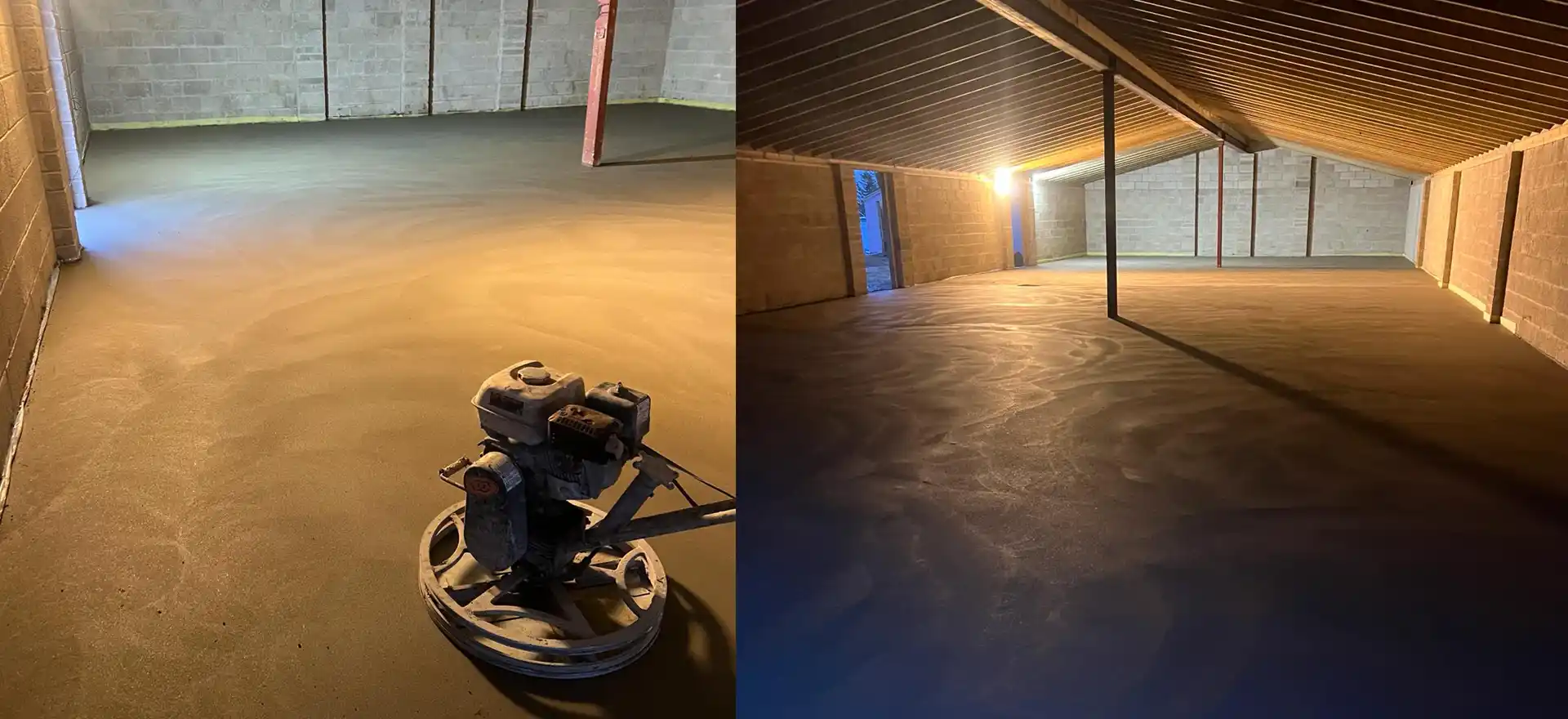
Diamond grinding does that work. Heads with diamond segments spin against the slab and shave the top off in thin passes. Ridges, trowel marks and raised edges between bays come down, and painted lines, worn coatings, adhesive and the weak laitance on a newer slab come away with them. What is left is an open, sound surface that a levelling compound, a new screed or a resin system from another contractor can bond to.
Grinding has limits. It deals with local high spots, but a floor that slopes or dishes over a wide area keeps that shape however much is ground. The answer is to grind the high points and then level or screed. On a screed rather than a structural slab, depth also matters, because grinding too much away can leave it thinner than its minimum.
For big open floors or thick coatings, shot blasting or scarifying may be quicker, and both come under our floor preparation work. Where the slab is cracked or broken rather than just dirty, concrete floor repair comes before anything else.
Extensions, garages and lifted flooring in Greenwich homes
Houses need grinding on a smaller scale. Semis account for 18% of Greenwich homes, and the inter-war semis around Eltham and New Eltham are typical candidates for a rear extension. Where an extension slab meets the original floor, a lip or a strip of rough old screed often remains along the join. Grinding it back gives a clean edge, and our Greenwich levelling service then brings both sides into one flat surface.
Pulling up old vinyl, carpet or tiles tends to reveal glue. Black bitumen adhesive, tile adhesive ridges and patchy carpet glue all stop a new compound bonding properly. Some thin, sound residue can be covered, but most of it is better ground off.
Garage floors are another case. Paint, oil and a dusty surface have to go before a garage conversion gets a new screed or compound.
Silica is the hazard. It is present in every slab, screed and tile, and grinding turns it into a fine dust that should never be breathed in. We grind only with extraction attached to the machine, sheet off doorways and protect the rest of the house. Our grinders and diamond tooling are used by our own team only and are not for sale.
If the ground floor is then going to take sheet vinyl, a latex screed skim in Greenwich gives it a smooth face.
Preparing apartment screeds at Kidbrooke and the Royal Arsenal
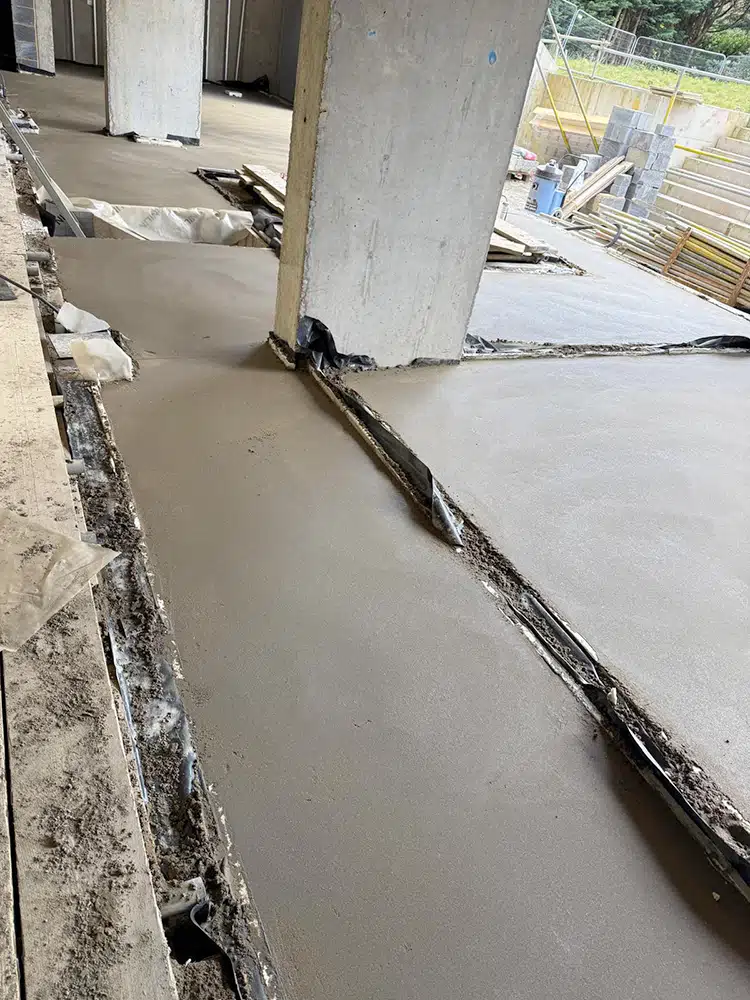
Large schemes such as Kidbrooke Village, the Royal Arsenal in Woolwich and Greenwich Peninsula rely on liquid screeds over heating pipes, laid on acoustic floating floors between flats. Grinding in a building like that is a lighter, more careful job than on an industrial slab, and it usually happens just before the flooring goes in.
The common reasons are small. A calcium sulphate screed needs its laitance removed before adhesive or compound goes on. Plaster, paint and filler dropped by other trades can leave hard lumps. Where bays meet at a doorway, one side may stand a millimetre or two proud. A light grinding pass deals with all of these and leaves a clean, open surface for the primer.
Depth is the limit, as on any screed, and the acoustic layer adds a second reason for care. The screed floats on that layer, separate from the concrete structure, and the edge strip round the walls has to be left intact so the floating floor does not touch them. So the work is a skim, not a cut, and anything more than a local high spot is put right with levelling compound instead.
Timing matters too. Grinding is best done once the other trades have finished in the flat, so the surface is not dirtied again, and the floor is kept clean until the primer goes on. Machines and extractors go up in the lift or by the stairs, and the building may ask for protection to communal areas.
How we price floor grinding in Greenwich
A fixed written price within 24 hours, once we know the area and what has to come off. See our concrete floor sanding guide.
Who grinds your concrete floor in Greenwich
K & B Screeding’s own team, led by director Donatas Bardisevicius. Founded 2019, company 12298780.
See what customers say in our Google reviews and on our testimonials page.
Concrete floor grinding from Slough to Greenwich
Greenwich is about 30.8 miles east of our Slough base as the crow flies, with postcodes including SE2, SE9, SE3 and DA16. The nearest towns to it are Bexley (3.6 miles), Newham (3.7 miles), Lewisham (4.3 miles) and Tower Hamlets (5.2 miles).
More on floor grinding, part of our screeding services. For every screed we lay locally, see floor screeding in Greenwich.
Further reading: sealing a concrete floor and how to level a concrete floor.