Fit out floors on Kensington High Street and King's Road
When a retail or hospitality unit along Kensington High Street or the King's Road, or around stores such as Harrods and Harvey Nichols in Knightsbridge, is fitted out, stripping out the previous scheme tends to leave the same problems: old adhesive, removed partitions, patched service trenches and slight steps between areas laid at different times.
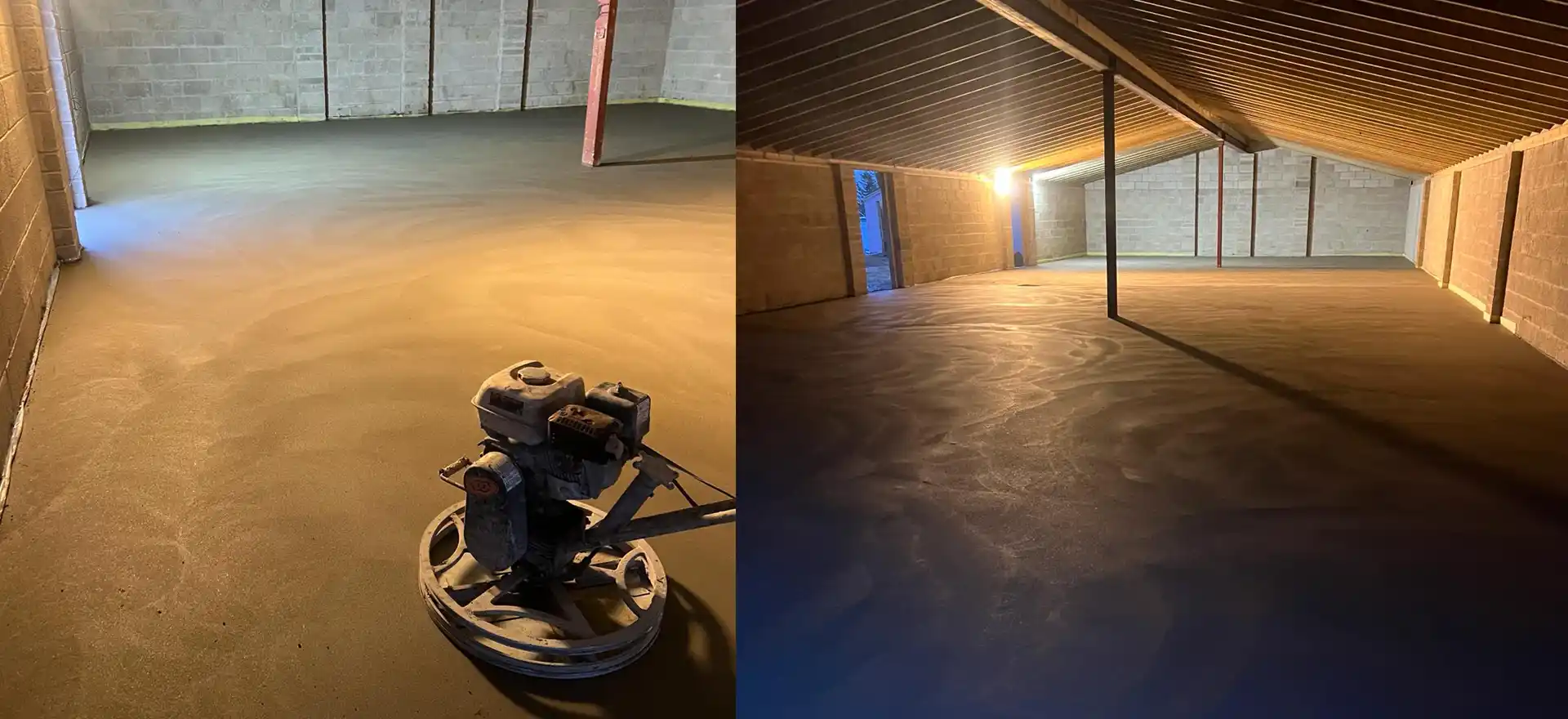
Self levelling compound deals with this quickly. It is typically laid from about 2mm up to around 10mm, with some products going deeper, and fast drying products keep the programme moving so the flooring contractor is not left waiting. Work can be arranged outside trading hours where a landlord needs it.
Flatness is measured under a 2m straightedge to BS 8204: SR1 allows 3mm, SR2 allows 5mm and SR3 allows 10mm. SR1 is the class many thin sheet finishes demand, which matters in a shop laid with vinyl or LVT. The primer is matched to the base, whether screed, concrete, calcium sulphate or old tiles, because the wrong primer can let compound lift.
Preparation is often the bigger part of the job. Adhesive residues and weak surfaces are ground off first; our concrete floor grinding service covers that. If a floor is hollow or breaking up across a wide area, compound will not hold, and the honest recommendation is a new sand and cement screed for failed floors.
Levelling older floors in Chelsea and Kensington homes
Just 9% of the borough's homes were built between 1945 and 1972, and 10% between 1973 and 1999. Most of the stock is older still, and floors in the borough's period houses and conversions carry decades of changes. Where a new section meets an old one, the two rarely line up, and a feathered compound can blend them before a new finish runs through.
The limit of compound is depth. Laid thicker than it is designed for, a deep pour used to fix a floor that really needs a screed can crack and debond. So we measure first, with a 2m straightedge across the whole room and not just the worst spot. If the dips are within about 10mm, compound is the quick answer. If they are not, a new screed is, and we would rather say so at the pricing stage than find out when the compound cracks. Moisture matters too: compound laid over a damp lower ground floor will fail however flat it is.
For very thin corrections before sheet flooring, a latex screed of a few mm is often specified. For similar levelling work across the eastern boundary, see floor levelling in Westminster.
Self levelling screed or compound in a borough refurbishment
Refurbishment dominates in Kensington and Chelsea, and in a refit the phrase self levelling screed causes confusion, because it is used for two very different things.
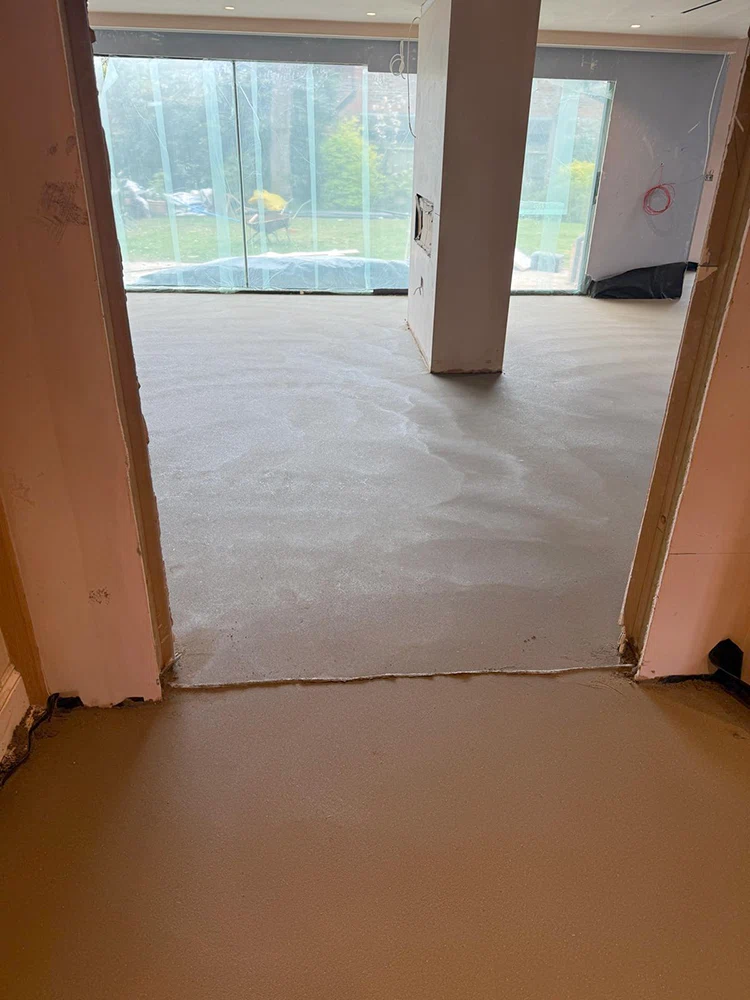
The first is a thin self levelling compound. It is poured a few millimetres deep, usually about 2mm up to around 10mm, over a floor that is already sound. Its job is to take out dips, ridges and joins so that LVT, vinyl, tiles or engineered wood sit flat. This is what our floor levelling work is about.
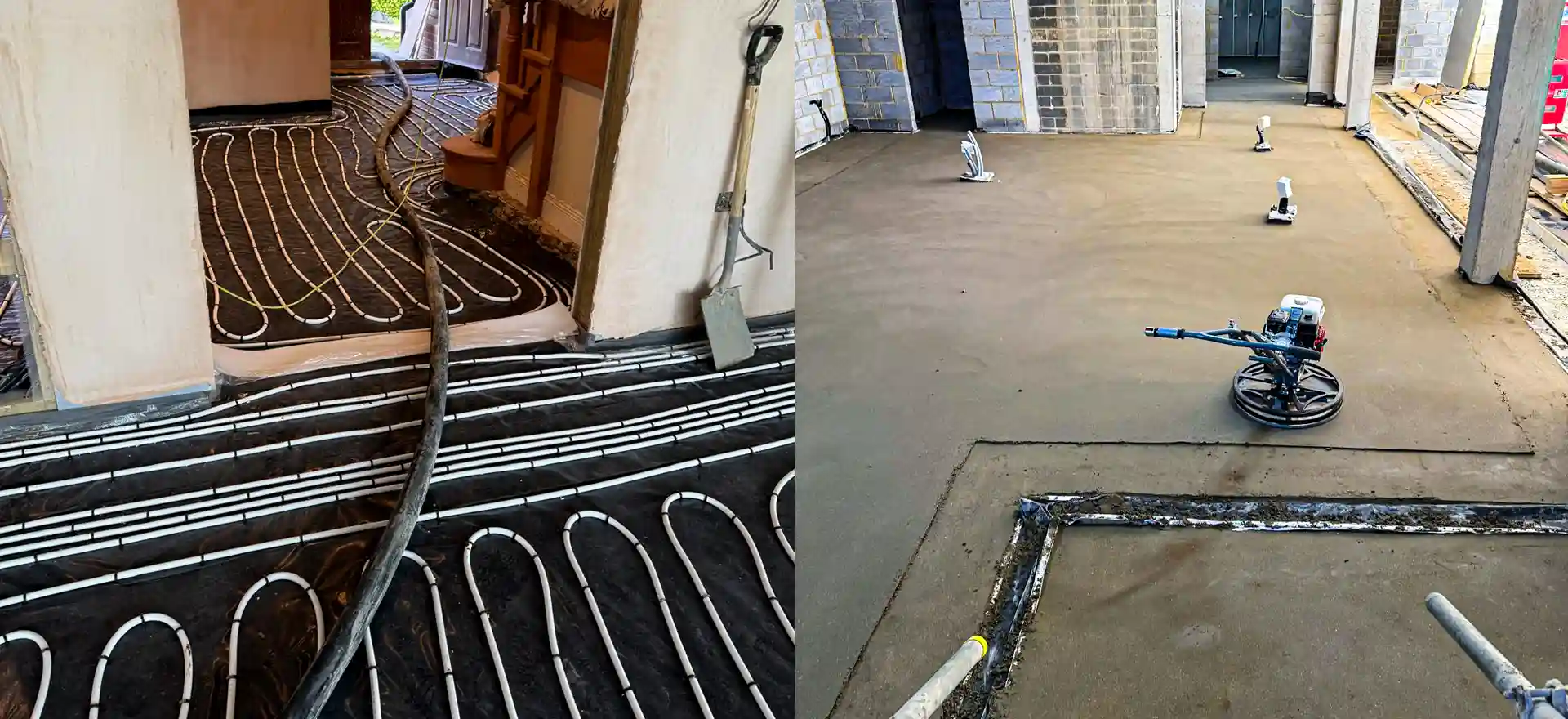
The second is a flowing screed, often called liquid screed. It is the floor itself, pumped in at full depth over insulation or underfloor heating, from about 35mm in homes and 40mm on commercial floors. It is used when a floor is being rebuilt, not just smoothed.
To tell which one your floor needs, ask what is underneath. If there is a solid, dry base and the problem is unevenness of a few millimetres, compound is the answer. If the old floor has been dug out, if you are adding insulation or heating, or if the floor is out by more than compound can safely take, you need a full depth screed. Our liquid screed page for the borough covers that work.
In this borough the split often follows the floor. A lower ground floor that is being dug out and rebuilt with a membrane gets a screed. A flat getting new LVT or engineered wood over a sound, dry floor usually needs only compound.
How we price floor levelling in Kensington and Chelsea
A fixed written price within 24 hours, once we know the area and the base. See our self levelling screed cost guide.
Who levels your floor in Kensington and Chelsea
K & B Screeding’s own team, led by director Donatas Bardisevicius. Founded 2019, company 12298780.
See what customers say in our Google reviews and on our testimonials page.
Floor levelling from Slough to Kensington and Chelsea
As the crow flies, our base in Slough is about 19.6 miles from Kensington and Chelsea, which lies to the east. Postcodes here include SW7, SW3, SW5 and W10, and Hammersmith and Fulham (1.2 miles), Westminster (1.6 miles), Camden (3.4 miles) and Wandsworth (3.8 miles) are close by.
More on floor levelling, part of our screeding services. For every screed we lay locally, see floor screeding in Kensington and Chelsea. Not sure whether you need a thin compound or a full flowing screed? See self levelling screed explained.
Further reading: how to level a concrete floor and latex, self levelling compound or screed.