
Relaying lower ground floors in Chelsea and Kensington
A lower ground floor in a period townhouse is a tight place to work. Rooms are small and reached down a single stair or through the front area. The old floor is often solid, laid straight onto the ground with no membrane, and it lets damp through into every new finish put on top.
The fix is to break the floor out, lay tanking or a membrane and insulation, and put a new floating screed over them. Sand and cement suits this well. It is mixed on site in small batches, so it can be carried down steps in buckets if a pump cannot reach. It is compacted and floated by hand, so it follows walls that are far from square. And being cement based, it is the right screed where a floor may get wet or needs a cement substrate.
Floating sand and cement screed is laid at 65mm in homes and 75mm in commercial use. Where the existing slab is sound and dry, a bonded screed of 25 to 40mm can go directly onto it instead, which saves height. Our screed depth guide compares the two.
Drying is the price of the traditional method. A hand-laid screed dries at roughly one day per mm for the first 40mm and more slowly beyond that, so a basement floor needs a realistic programme and good ventilation. Where time is short, a quick drying screed mix shortens the wait.
Stone floors and conversions in Kensington and Chelsea
25% of the borough's homes are converted flats or shared houses. In a conversion, the floors between flats need an acoustic build-up before the screed, so that one owner's new stone or tile floor does not carry noise to the neighbour below. The screed then goes down floating over that layer.
Heavy natural stone and large tiles need a firm, flat and fully cured base. A well compacted sand and cement screed gives that, and fibres can be added for £1 to £3 per m² to help control cracking. Where the load will be higher still, a higher strength mix can be specified.
Bathrooms and shower rooms are the other reason sand and cement stays in use in period interiors. A walk-in shower needs falls to a drain, and those are shaped by hand in a cement screed. Calcium sulphate screeds are not suitable where the floor may get wet.
For a larger, open floor where speed matters more than shaping, compare this with liquid screed for open floors.
Sand and Cement Screed prices in Kensington and Chelsea
Sand and cement screed: £18 to £25 per m² supplied and laid (MyJobQuote, August 2026), so £450 to £630 for 25 m². MyJobQuote does not say whether these figures include VAT. See our floor screeding cost guide or screed calculator.
Who lays your sand and cement screed in Kensington and Chelsea
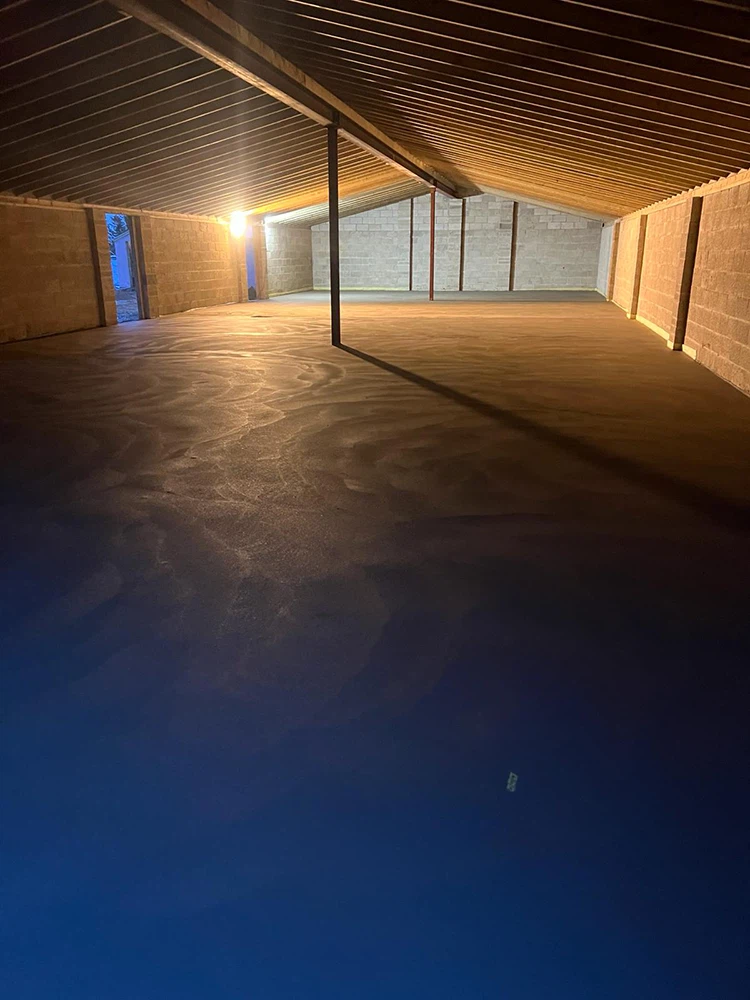
K & B Screeding’s own team, led by director Donatas Bardisevicius. Founded 2019, company 12298780.
See what customers say in our Google reviews and on our testimonials page.
Sand and Cement Screed from Slough to Kensington and Chelsea
As the crow flies, our yard in Slough is about 19.6 miles from Kensington and Chelsea, which lies to the east. Postcodes here include SW7, SW3, SW5 and W10, and Hammersmith and Fulham (1.2 miles), Westminster (1.6 miles), Camden (3.4 miles) and Wandsworth (3.8 miles) are close by.
More on sand & cement screed, part of our screeding services.
