
Flattening Selsey floors before LVT and tiles
Thin, modern floor coverings show every dip in the floor beneath them. LVT and sheet vinyl telegraph small ridges straight through, large format tiles rock on high spots, and engineered boards creak where they bridge a hollow. That is why the floor has to be flat before they go down.
BS 8204 judges flatness by laying a 2m straightedge on the floor. The gap underneath may be up to 3mm for SR1, 5mm for SR2 and 10mm for SR3. SR1 is the class many thin sheet finishes demand, so check the flooring data sheet before the compound is poured.
First we deal with what is already there. We strip off any old adhesive, screed that has come loose and anything contaminating the surface, fill the cracks and holes, and prime to suit the base. Cement screed, calcium sulphate and old concrete all take different primers, and compound poured on an unprimed floor often fails.
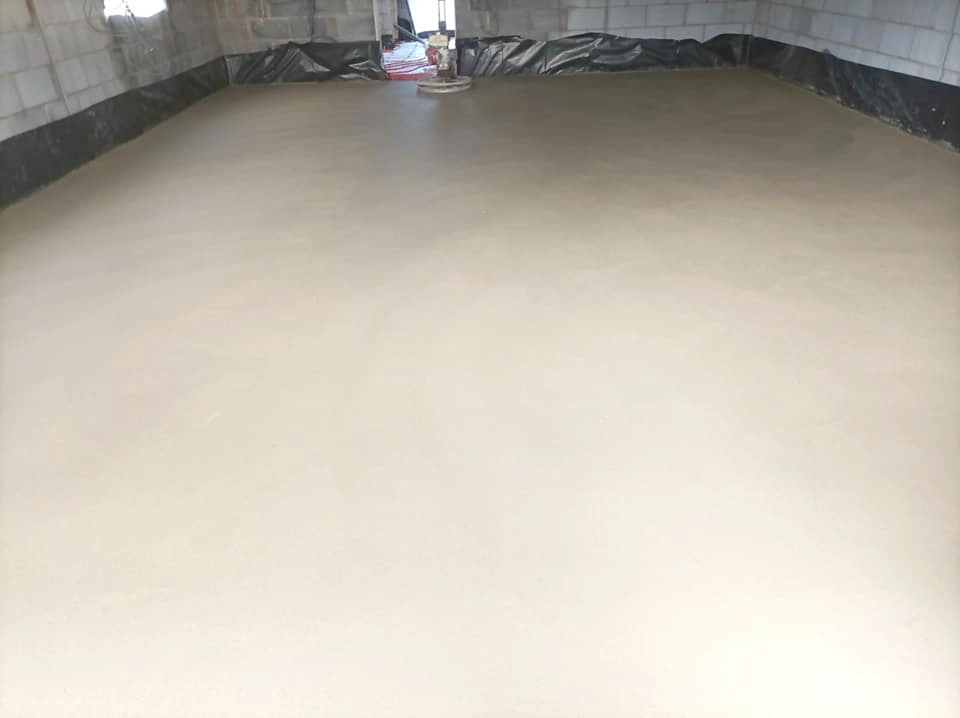
Only then do we mix and pour, normally at anything from about 2mm to around 10mm, with some products able to go thicker. Fast drying products mean the floor can often be covered within a day or two, which keeps a kitchen or bathroom refit moving. Where a sound floor needs only a very thin smoothing coat, a latex screed is another way to do it.
In a holiday cottage that has to be ready for the next booking, that quick turnaround can be the reason to level rather than rebuild.
When a Selsey floor needs more than compound
Levelling compound is a finishing layer, not a repair for a failed floor. Pour it thick over a floor that should have been rescreeded and it can crack and lift away, taking the new flooring with it.
So the first job is an honest look at the base. Old concrete that is solid but out of level is a good candidate for compound. If it is hollow, crumbling, cracked through, or damp because there is no membrane beneath it, the floor needs to come out. Many 1950s and 1960s floors in Selsey were laid with no insulation beneath them, so a dug-out rebuild is often the better long-term answer. Our floor preparation service covers grinding, cleaning and repairs before compound goes down.
Trouble often shows where a newer extension meets the original Selsey house. The new screed may finish a few millimetres higher or lower than the old floor, and the change in level shows as a ridge under the new covering. A feathered pour of compound across the join usually solves it, provided the difference is within the product's range.
If the new extension is being heated, plan the levelling around the heating schedule, because the screed beneath has to be dry first. See screed over heated floors in Selsey for the timing. For floors in nearby towns, see floor levelling in Bognor Regis.
How we price floor levelling in Selsey
A fixed written price within 24 hours, once we know the area and the base. See our floor screeding cost guide.
Who levels your floor in Selsey
K & B Screeding’s own team, led by director Donatas Bardisevicius. Founded 2019, company 12298780.
See what customers say in our Google reviews and on our testimonials page.
Floor Levelling from Slough to Selsey
As the crow flies, our yard in Slough is about 55.6 miles from Selsey, which lies to the south. Postcodes here include PO20, and Bognor Regis (6.4 miles), Chichester (7.2 miles), Emsworth (10.2 miles) and Havant (12.1 miles) are close by.
More on floor levelling, part of our screeding services. Not sure whether you need a thin compound or a full flowing screed? See self levelling screed explained.
