
Reading the grade on a Camberley specification
Calcium sulphate screeds are designated under the European standard for screed materials. Read the C figure as strength in compression and the F figure as strength in bending, each in N/mm2. Three grades cover most buildings. For a lightly used domestic floor, CA-C20-F4 is enough. Most houses, flats and offices get CA-C25-F5. Floors that take a harder life are given CA-C30-F6.
On a new build or an apartment scheme, the grade is set by the engineer and we pour what is specified rather than swapping it. When a scheme needs a quicker dry or a shallower floor, an alpha hemihydrate product may appear on the drawings. Each of those has its own data sheet setting depth and drying, and that sheet is what we follow on site.
Camberley's newer homes include mixed buildings such as The Atrium, built between 2006 and 2008, which combines flats with a nine screen cinema, a bowling alley and shops. Homes built in Camberley from 2000 to 2014 make up 12% of the total. Flats and new plots of that kind are where calcium sulphate tends to appear on drawings, because the material shrinks very little and large open bays can go down with few joints.
A few joints are still required, at doorways and where one heating zone meets the next, and we settle that layout with the site team ahead of pour day. For background on the material and how it behaves, read anhydrite screed explained.
Laitance, moisture and wet areas in Camberley homes
The pour is only half of an anhydrite job. While it dries, the top of a calcium sulphate floor grows a thin, soft crust known as laitance. Glue a tile to that crust and the tile is only held as well as the crust is, so we sand it away when the floor has dried and seal the surface with a primer made for calcium sulphate.
Moisture testing comes next. Flooring makers often allow less moisture in calcium sulphate than in cement, which means a figure that clears a sand and cement floor may still fail this one. So we put a hygrometer on it instead of trusting the calendar. If the floor is heated, running the system on a slow, stepped programme from around day 7 can speed the drying.
Keep calcium sulphate out of rooms that could stay damp. Walk-in showers, wet rooms and utilities where a machine might leak need something else: a cement based flowing screed or hand-laid sand and cement; on a Camberley plot poured in anhydrite elsewhere, we screed those rooms on their own.
Where an existing base needs cleaning, repair or a new membrane before the pour, our floor preparation work covers it. We also pour anhydrite screed in Yateley for projects in a neighbouring town.
Anhydrite & Flow Screed prices in Camberley
Liquid flowing screed (which includes anhydrite): £24 to £31 per m² supplied and laid (MyJobQuote, August 2026), so £960 to £1,240 for 40 m². MyJobQuote does not say whether these figures include VAT. See our floor screeding cost guide or screed calculator.
Who lays your anhydrite and flow screed in Camberley
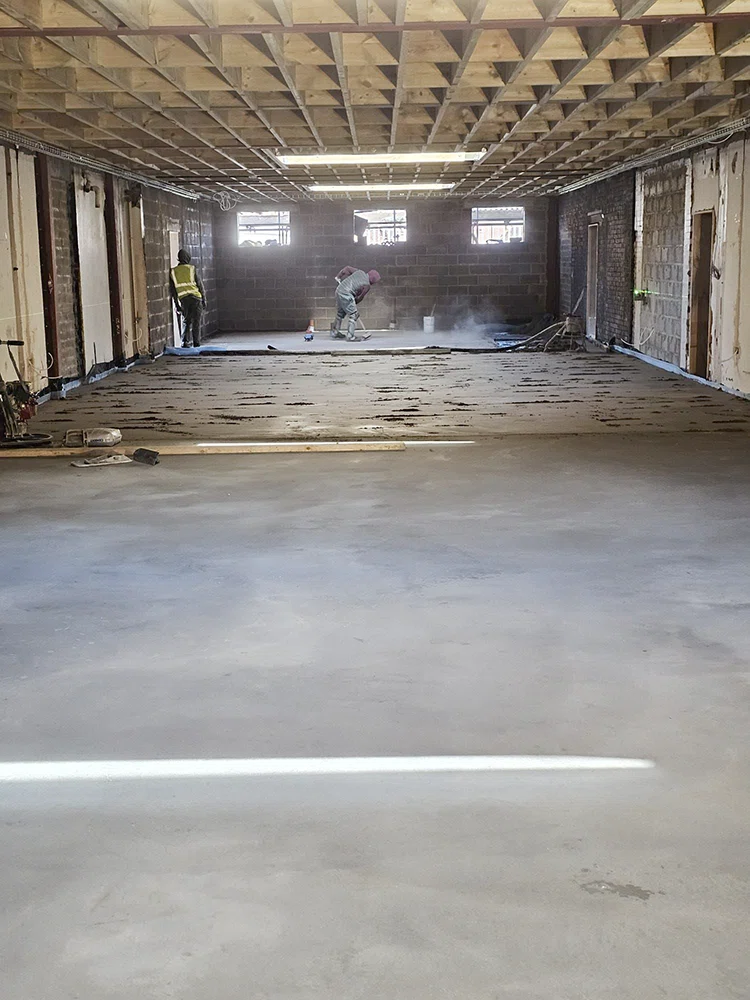
K & B Screeding’s own team, led by director Donatas Bardisevicius. Founded 2019, company 12298780.
See what customers say in our Google reviews and on our testimonials page.
Anhydrite & Flow Screed from Slough to Camberley
Camberley is about 14 miles south-south-west of our Slough base as the crow flies, with postcodes including GU15. The nearest towns to it are Frimley (1.7 miles), Sandhurst (2.6 miles), Crowthorne (3 miles) and Yateley (3.2 miles).
More on anhydrite screed, part of our screeding services.