
Reading the grade on a Chesham screed specification
Anhydrite is simply the everyday name for calcium sulphate screed. On a specification it carries a designation under the European screed standard, and the figures show its strength. Split CA-C25-F5 into its parts and it reads: calcium sulphate (CA), 25 N/mm2 compressive strength (C25) and 5 N/mm2 flexural strength (F5).
For a Chesham house the choice is usually between two grades: CA-C20-F4 where a domestic floor is lightly used, and CA-C25-F5, which also covers apartments and offices and suits most homes, with CA-C30-F6 held back for heavier use. Where the drawings give a grade, that is what we supply; where they do not, we can recommend one.
Alpha hemihydrate products sit in their own group. They earn their place when the screed must dry sooner or be laid thinner, handy where a floor has little height to spare, and each follows its own product data sheet for depth and drying.
Calcium sulphate hardly shrinks, so one pour can cover a big bay with very few joints. Just 5% of Chesham's homes were built in 2015 or later, so extensions and conversions count for as much as new plots here. Extension or new plot, we mark out where the bays and joints will fall before the pump starts. For background, read anhydrite screed explained, or see how it behaves over pipes on the underfloor heating screed page.
Laitance, moisture and primers on Chesham anhydrite floors
Dry to the touch does not mean ready for flooring. A calcium sulphate screed has three steps to go first.
First, the laitance. As the screed settles, fine material rises and dries into a weak surface skin. Once the floor has dried, that skin is sanded away, or adhesives and compounds would grip it instead of the screed below.
Next comes a hygrometer test for moisture. Many flooring makers allow less moisture in calcium sulphate than in cement screed, so check the figure on the adhesive or flooring data sheet rather than guess. If the floor has heating pipes in it, switching them on from about 7 days will usually force dry it and cut the wait. Our screed drying guide sets out what affects it.
Last, the surface gets a primer made for calcium sulphate, matched to the adhesive or compound going on next.
In the same Chesham house, the shower room or utility should get a cement based flowing screed or a hand-laid sand and cement floor instead, because anhydrite does not belong where floors may get wet. Once each pour is done, we hand you written notes on drying and laitance.
Anhydrite & Flow Screed prices in Chesham
Liquid flowing screed (which includes anhydrite): £24 to £31 per m² supplied and laid (MyJobQuote, August 2026), so £960 to £1,240 for 40 m². MyJobQuote does not say whether these figures include VAT. See our floor screeding cost guide or screed calculator.
Who lays your anhydrite and flow screed in Chesham
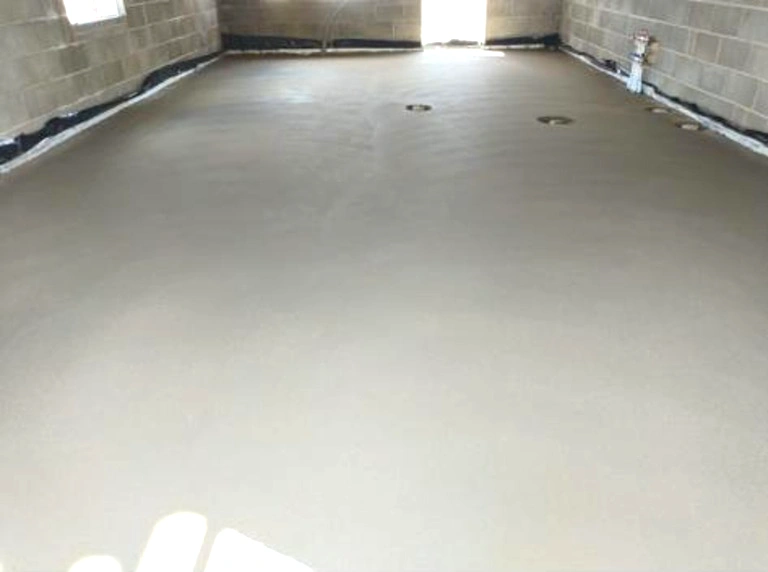
K & B Screeding’s own team, led by director Donatas Bardisevicius. Founded 2019, company 12298780.
See what customers say in our Google reviews and on our testimonials page.
Anhydrite & Flow Screed from Slough to Chesham
As the crow flies, our yard in Slough is about 12 miles from Chesham, which lies to the north. Postcodes here include HP5, and Amersham (1.9 miles), Berkhamsted (4.5 miles), Chorleywood (5.2 miles) and Tring (6.5 miles) are close by.
More on anhydrite screed, part of our screeding services.
