
Levelling uneven original slabs on Corby estates
The test for flatness is a 2m straightedge laid on the floor. BS 8204 sets the classes: no more than 3mm under the edge for SR1, 5mm for SR2 and 10mm for SR3. Many thin sheet finishes demand SR1, and large format tiles and click LVT show up any high spots as rocking or open joints.
Original slabs on the New Town estates were laid for the finishes of their day. After decades of lino, carpet and tiles being laid and lifted, they are often uneven, patched and marked with old adhesive. Most compounds we use run from roughly 2mm to 10mm thick, a few go deeper, and that range deals with a lot of what turns up on an original estate slab.
Preparation decides the result. We scrape off anything loose or contaminated, fill cracks and holes, then prime to suit whatever the base is made of. Bare concrete needs one primer, cement screed another and calcium sulphate a third, and picking the wrong one is how compound comes unstuck.
There is a limit. Pile compound into a floor that is past saving and it is likely to crack and let go. If the straightedge shows dips well beyond the compound's range, a levelling screed is better value, and our sand and cement screed service in Corby or floor preparation is the place to start.
Another 20% of Corby's homes went up from 1973 to 1999. In houses of that age and older, the join between an original room and a later extension is a common place to find a step.
Shop and office refits in Corby, including Willow Place
Commercial floors bring a different pressure: the programme. When a shop unit in a precinct such as Willow Place is refitted, or an office on one of the estates at the edge of town gets new carpet tiles, the floor usually has to be ready within days. Fast drying levelling compounds keep that programme moving.
The existing floor in a refit is rarely clean. Old tile adhesive, trunking channels, holes from removed fixtures and patches from past repairs all need dealing with before compound goes down. Where adhesive residue is heavy or the slab surface is weak, mechanical preparation such as concrete floor grinding comes first.
Warehouse and factory floors, like those on the northern industrial estates near Corby Power Station, are a separate case. A thin compound is not a structural fix for a heavily used slab, and those floors usually need high strength or fibre reinforced screed, shot blasting or concrete repair. Resin, polished concrete and sanding timber floors are all outside what K & B does. For work towards Kettering, see floor levelling in Kettering.
How we price floor levelling in Corby
A fixed written price within 24 hours, once we know the area and the base. See our floor screeding cost guide.
Who levels your floor in Corby
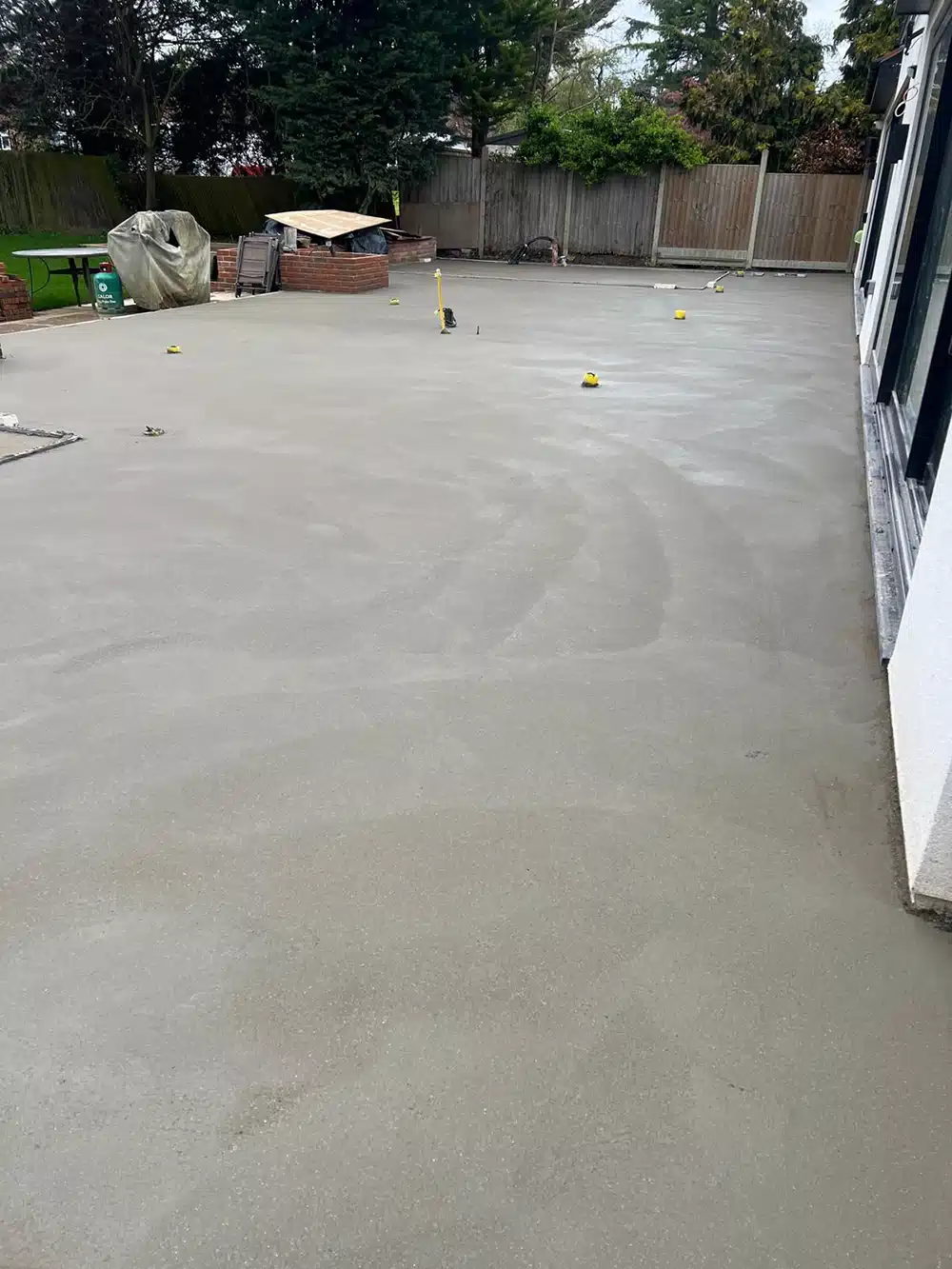
K & B Screeding’s own team, led by director Donatas Bardisevicius. Founded 2019, company 12298780.
See what customers say in our Google reviews and on our testimonials page.
Floor Levelling from Slough to Corby
As the crow flies, our yard in Slough is about 66.1 miles from Corby, which lies to the north. Postcodes here include NN17 and NN18, and Desborough (6 miles), Kettering (6.2 miles), Burton Latimer (8.7 miles) and Market Harborough (9.4 miles) are close by.
More on floor levelling, part of our screeding services. Not sure whether you need a thin compound or a full flowing screed? See self levelling screed explained.
