
Commercial floors on Uffington Road and Barnack Road
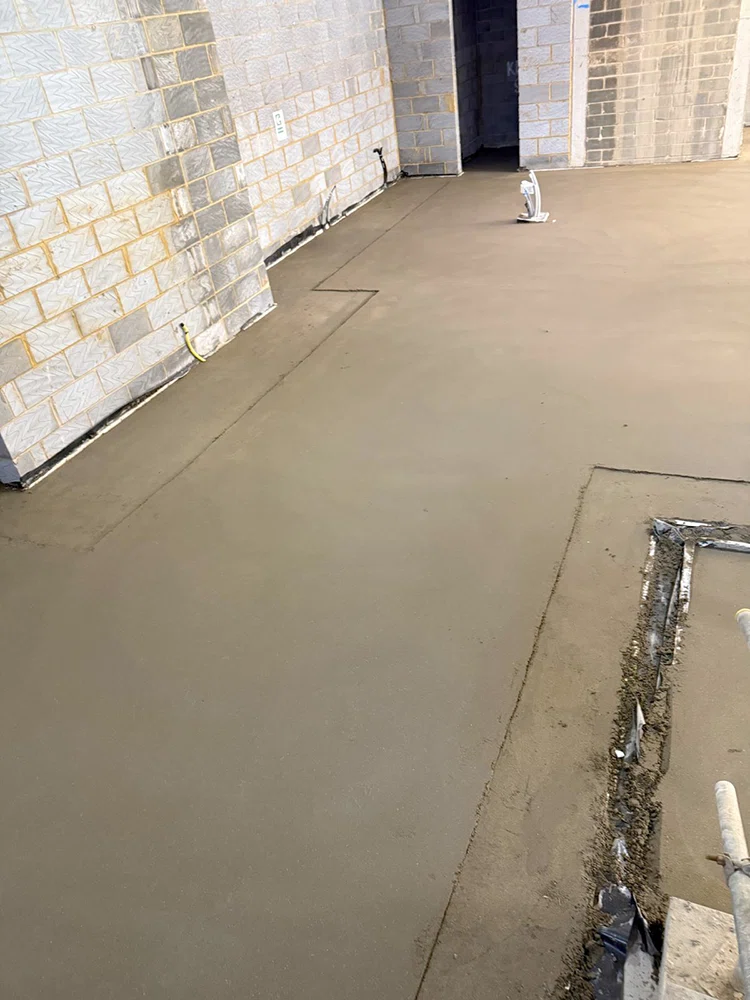
A new tenant in a unit along Barnack Road, or a refitted office, needs a flat and sound base under the new flooring. Carpet tiles, sheet vinyl and hard tiles all show the dips and ridges of an old floor. Self levelling compound brings the existing surface into tolerance without breaking it out. The premises along Uffington Road and Barnack Road, and the smaller industrial units and mixed-use buildings in the older parts of Stamford, are the typical setting. Floors in older commercial buildings have often been patched and re-patched over the years, with different materials meeting at each repair. The process starts with the base. We clean it, lift anything loose, repair the cracks and pick a primer for that base, since concrete, sand and cement, calcium sulphate and old tiles each want a different one. Next we pour the compound, typically 2mm to about 10mm deep, and it settles to a smooth finish. Fast drying products mean a floor can often take the flooring contractor very soon after, keeping a refit on programme. Most refits aim for SR1, a gap of 3mm or less under a 2m straightedge that many thin sheet finishes ask for, or SR2 at 5mm. For floors that need grinding back first, see concrete floor grinding, and where a worn concrete slab is breaking up, concrete floor repair.
Levelling older and extended Stamford homes
Houses built between 1945 and 1972 make up 26% of Stamford's homes, with another 29% from 1973 to 1999. Plenty of these houses have had an extension added, and the old and new floors seldom meet cleanly. A few millimetres of difference, or a change from timber to screed, is enough to show through LVT. Levelling compound bridges those joins and smooths out worn solid floors. In a listed or conservation area building, though, check with the conservation officer before covering historic floors, as those decisions sit with them and the owner. Compound will not fix every floor, though. It is made to go on thin, and using it thick on a floor that is really due a new screed risks cracking and the compound coming away. If the floor is out by much more than about 10mm, or the screed under it is hollow or crumbling, a new screed is the honest answer, and we will price that instead. The sand and cement screed page for Stamford covers that option.
How we price floor levelling in Stamford
A fixed written price within 24 hours, once we know the area and the base. See our floor screeding cost guide.
Who levels your floor in Stamford
K & B Screeding’s own team, led by director Donatas Bardisevicius. Founded 2019, company 12298780.
See what customers say in our Google reviews and on our testimonials page.
Floor Levelling from Slough to Stamford
Stamford is about 77.7 miles north of our Slough base as the crow flies, with postcodes including PE9. The nearest towns to it are Oakham (10.5 miles), Peterborough (11.4 miles), Corby (14.7 miles) and Whittlesey (16.3 miles).
More on floor levelling, part of our screeding services. Not sure whether you need a thin compound or a full flowing screed? See self levelling screed explained.
