
Awkward bases in Tilbury terraces and flats
A refit in Tilbury usually starts with a floor that has already had several lives. In homes from the inter-war years through to the 1970s and 1980s estates, a stripped kitchen often shows old vinyl tiles, a thin layer of hard adhesive, an earlier ceramic floor or concrete patched where pipes were rerouted. None of that is a clean base, but much of it is sound, and that is where latex screed is useful.
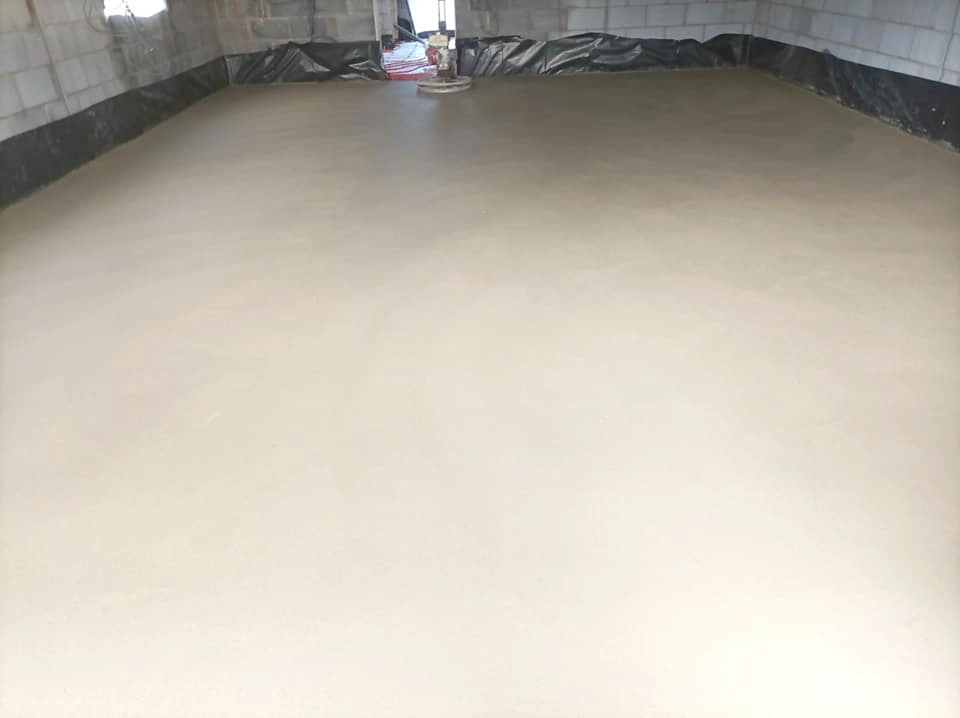
The product comes in two parts. A cement based powder is mixed with a latex liquid rather than water, and the result bonds well to dense or slightly awkward surfaces and copes with a little movement once cured. It goes down thin, normally a few millimetres, filling grout lines, old screw holes and shallow hollows so the finish above lies smooth.
Some 30% of the town's homes were built between 1945 and 1972, so many of those floors have been recovered several times since. Where those floors still carry firmly bonded tiles or thin, hard adhesive, latex can often go straight over after cleaning and priming, rather than everything being chipped back.
Timber is handled differently. Upper floors in houses, and some flats, are boarded, and latex never goes directly onto bare floorboards. The boards are fixed down and overboarded with flooring grade plywood, then the latex covers the sheet joints. Whether the home is on the Broadway Estate or one of the older terraced streets, the method follows the base, not the address.
In a flat, height is usually the deciding factor, and a few millimetres of latex keeps doors and kitchen plinths where they are.
Primers, damp and limits on Tilbury floors
Before mixing anything, we identify the base, because each one needs its own primer. Concrete, sand and cement, plywood and old tiles all take different products. Newer homes are different again. Where a floor in a recent scheme such as St Chad's or Beaconsfield Place proves to be calcium sulphate, its laitance is sanded off and it is primed before latex goes near it.
Damp is checked on ground floors. Latex does nothing to stop moisture rising through an older slab, and a damp base will spoil adhesive and finish alike. A hygrometer reading, or a closer look at the damp proofing, comes before the pour.
There are floors latex should not go on. Springy boards will crack a thin layer whatever is laid over them, so they are fixed first. A slab that is cracked through, hollow or sunken needs screed repairs or a rebuild in sand and cement for Tilbury floors. And a floor badly out of level needs a deeper product, explained on the Tilbury floor levelling page, before any latex finish.
Good latex work is mostly preparation, and the pour itself is quick.
How we price latex screed in Tilbury
A fixed written price within 24 hours, once we know the area and the base. See our floor screeding cost guide.
Who lays your latex screed in Tilbury
K & B Screeding’s own team, led by director Donatas Bardisevicius. Founded 2019, company 12298780.
See what customers say in our Google reviews and on our testimonials page.
Latex Screed from Slough to Tilbury
Tilbury is about 43.8 miles east of our Slough base as the crow flies, with postcodes including RM18. The nearest towns to it are Gravesend (1.3 miles), Northfleet (1.7 miles), Grays (2 miles) and Swanscombe (3.5 miles).
More on latex screed, part of our screeding services.
