
What latex screed does in Bexhill-on-Sea refits
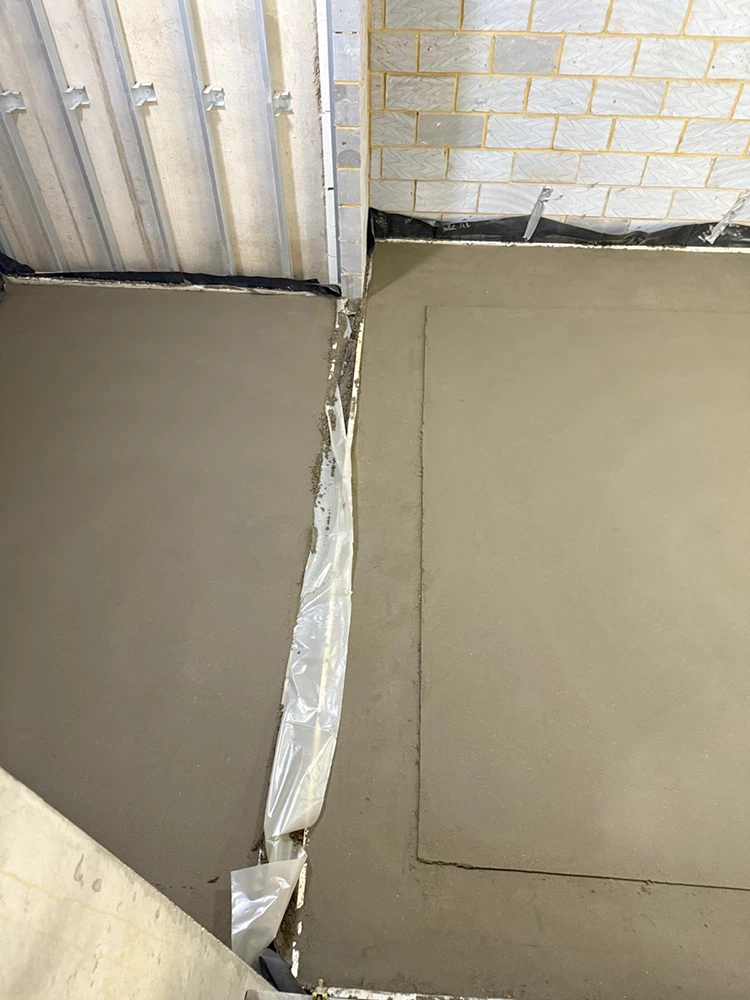
The name confuses people, so start with what it is. Latex screed is not a screed in the usual sense. It is a levelling compound supplied in two parts: a cement based powder and a container of latex liquid, which replaces the water you would otherwise mix in. The latex makes the cured layer slightly more flexible and helps it hold on to surfaces that a plain compound would grip poorly. It goes down thin, usually a few millimetres, and its whole purpose is to give sheet vinyl, LVT, lino, rubber, safety flooring or carpet a smooth face to sit on.
Refits in older Bexhill-on-Sea houses turn up exactly the bases it was made for. Lift the lino in an old back kitchen and there may be red quarry tiles, still stuck fast, with deep grout lines that would print through any new vinyl. Strip a bathroom and you may find boards that a previous owner has already covered in plywood. Elsewhere there are patches of old concrete, uneven where a wall came out, or a film of adhesive left behind by the last floor.
All of those can usually take latex, provided they are sound. Tiles have to be firmly bonded and degreased. Timber needs flooring grade plywood screwed down over the boards first, because latex poured onto bare floorboards cracks along every joint as the boards move. Old adhesive must be well stuck and suit the primer. That groundwork is most of the job, which is why we look at the bare floor before pricing.
If what you really need is a flatness check, or a choice between compound and a new screed, our floor levelling page for Bexhill-on-Sea covers the SR classes and that decision.
When latex is the wrong answer in Bexhill-on-Sea
Latex hides a poor surface. It does not cure a poor floor, and laying it over the wrong base only delays the failure. Three things stop us.
Movement is the first. Boards that bounce underfoot will crack a thin compound however much latex is in it. The fix is to refix the boards or joists and overboard properly, and only then smooth the surface.
Damp is the second. Where an older Bexhill house has been split into flats, the ground floor may be Victorian suspended timber, or a solid floor that lacks a membrane, and a latex skim over damp concrete will blister and let go, taking the vinyl with it. A moisture reading comes first, and a floor that fails needs a membrane or a rebuild, as our sand and cement screed page explains.
Level is the third. Latex smooths; it is not meant to fill a floor that falls away badly across the room. Where that happens, high spots may need diamond grinding by our own team and the low side a proper screed before a final skim.
Priming finishes the list. Concrete, sand and cement, old tiles and plywood each take their own primer, and a calcium sulphate screed must have its laitance sanded away and be primed every time, or the latex will not bond.
How we price latex screed in Bexhill-on-Sea
A fixed written price within 24 hours, once we know the area and the base. See our floor screeding cost guide.
Who lays your latex screed in Bexhill-on-Sea
K & B Screeding’s own team, led by director Donatas Bardisevicius. Founded 2019, company 12298780.
See what customers say in our Google reviews and on our testimonials page.
Latex Screed from Slough to Bexhill-on-Sea
As the crow flies, our yard in Slough is about 68 miles from Bexhill-on-Sea, which lies to the south-east. Postcodes here include TN40, TN39 and TN38, and Hastings (4.9 miles), Hailsham (9.5 miles), Eastbourne (9.9 miles) and Polegate (10 miles) are close by.
More on latex screed, part of our screeding services.
