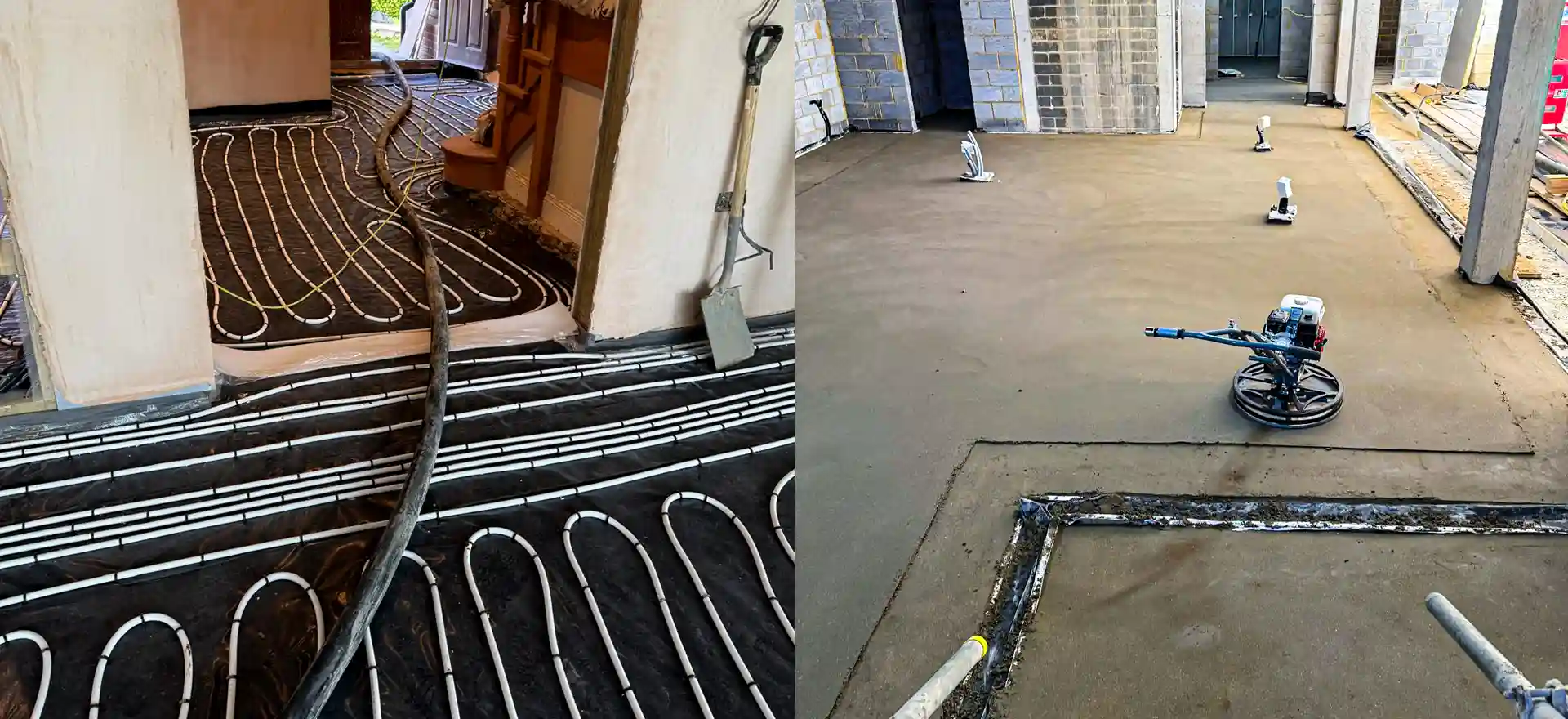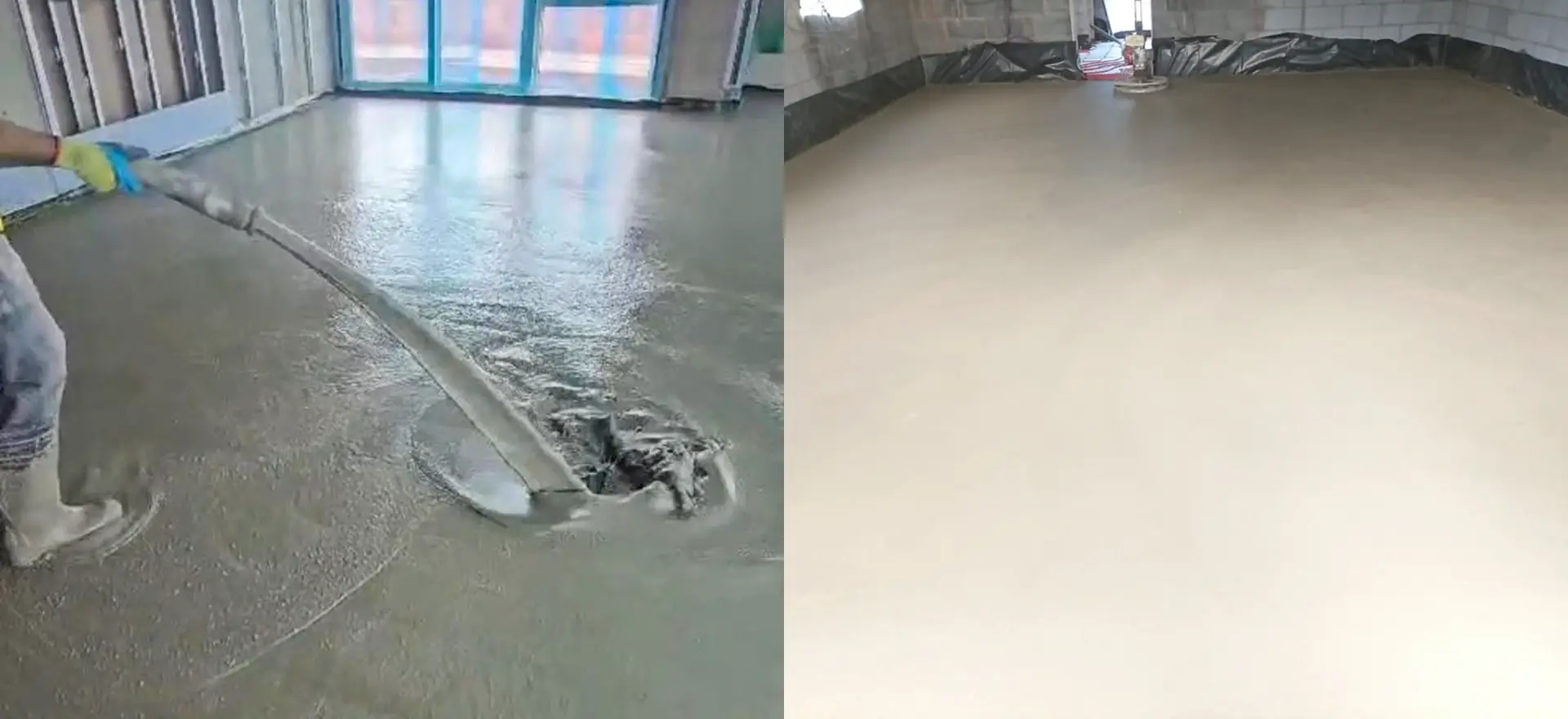
How latex grips awkward Newhaven floors
The name puts people off, but the product is simple. Its cement based powder is stirred into liquid latex, with no water added. The latex gives the cured layer a little flexibility and helps it grip the surface below, which is why it is chosen for bases that a plain compound might struggle to hold on to.
On a newer floor, the problem is rarely strength. A screed that has served well under carpet can still carry trowel marks, small hollows and patched holes from old fixings, and sheet vinyl or LVT will print every one of them through. A coat of latex a few millimetres deep closes those marks and leaves a smooth, even skin for the adhesive. The same applies under lino, rubber and the slip resistant safety flooring often fitted in kitchens and bathrooms.
What sits underneath decides the primer. If the screed in a newer Newhaven flat turns out to be calcium sulphate, its weak surface skin has to be sanded away and a compatible primer applied before any latex goes near it; our page on calcium sulphate screed in Newhaven explains why. Cement screeds and concrete take a different primer, and a dusty or soft surface is cleaned back first.
We also test for damp before anything is mixed. Latex sits on top of a floor and will not hold back moisture rising from below, so a damp reading changes the plan. Where the base is sound, dry and only rough, though, latex is a quick, low height fix that keeps the existing screed in place.
Old tiles and boards in Newhaven's older houses
Under a tired kitchen or bathroom floor, an older Newhaven house can hide quite a mix: quarry tiles, ceramic tiles, a patchwork of concrete or timber boards. Latex can deal with several of these, provided each one passes a few checks.
Old tiles can stay if they are firmly stuck down. We tap across them listening for hollow spots, take out any loose ones, clean off grease and polish, then prime. Latex over a well bonded tiled floor saves breaking it out and keeps the floor height almost unchanged.
Timber is different. Latex should never be poured straight onto bare floorboards, because the boards move and the gaps between them let the compound through. The floor is first covered with sheets of flooring grade plywood, screwed down at close centres, and the latex goes over that. Flats in converted buildings make up 6% of the town's homes, and an upper floor in one of those may well be timber, so the same rule applies there.
Some floors are beyond latex. A tired solid floor with no membrane, the kind the Victorian terraces near the town centre and harbour tend to have, lets damp through, and no thin compound will hold it back. That kind of floor needs digging out and relaying, as our page on hand-laid screed for older Newhaven houses describes.
Latex under vinyl in Denton Island workshops
Latex is not only a domestic product. Denton Island Business Park, centred on the Basepoint enterprise centre, offers smaller workshops, and a unit of that kind may have an office, kitchen or washroom that needs sheet vinyl, safety flooring or rubber laid over the existing concrete.
Those finishes are thin, and a workshop slab is rarely smooth enough for them. Old paint, the marks of previous fixings and worn patches near doors will all show through. Latex suits here because it grips well to a sound, prepared concrete base and only adds a few millimetres, so thresholds and door clearances barely change.
The preparation decides whether it lasts. Any floor paint, oil staining or loose material has to come off first, usually by concrete floor grinding, and the slab is then cleaned and primed with a product suited to concrete. A slab with cracks that move, or one that is badly out of level across the room, needs repair or a deeper layer first, because latex only smooths a base that is already sound.
Timing is the other question for a working unit. Small areas such as a kitchen or a washroom can often be prepared, primed and skimmed with little disruption to the rest of the building, and the flooring fitter follows once the compound maker's drying time has passed. Tell us when the space has to be back in use and we plan the work around that date.
Latex screed prices for Newhaven floors
Latex has no separate rate in the trade2base guide; a thin levelling layer over concrete is £10 to £20 per m² (trade2base, June 2026), so £200 to £400 for 20 m². trade2base does not say whether these figures include VAT. See our floor levelling cost guide.
Who lays your latex screed in Newhaven
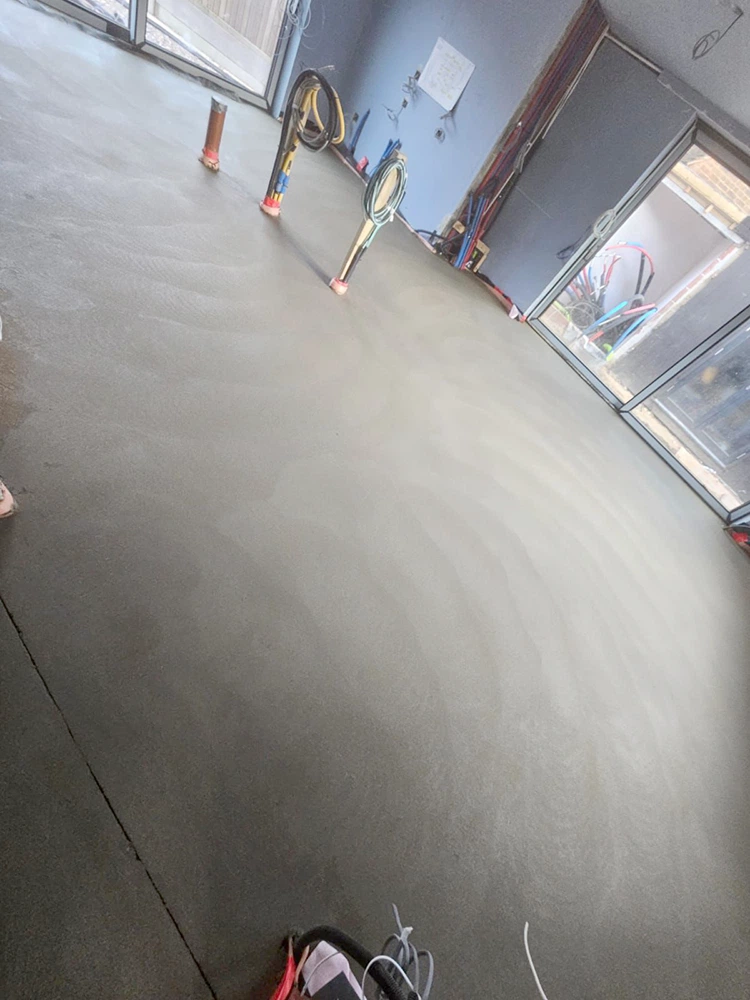
K & B Screeding, led by director Donatas Bardisevicius. Founded 2019, company 12298780.
See what customers say in our Google reviews and on our testimonials page.
Latex screed from Slough to Newhaven
As the crow flies, our base in Slough is about 59.2 miles from Newhaven, which lies to the south-south-east. Postcodes here include BN9, and Peacehaven (2 miles), Seaford (2.9 miles), Lewes (5.7 miles) and Brighton and Hove (8.6 miles) are close by.
More on latex screed, part of our screeding services. For every screed we lay locally, see floor screeding in Newhaven.
Further reading: levelling compound on wooden floors and screeding before LVT, tiles or carpet.