
Anhydrite grades for March new build plots
Calcium sulphate binds anhydrite together, where cement binds most other screeds. Shrinkage is minimal as it sets, which means wide bays and not many joints, and as it flows it hugs heating pipes closely. Those two qualities are why it is specified for many new house floors.
CA flags calcium sulphate; after C comes the compressive strength, after F the flexural strength, each figure in N/mm2, following the coding in the European screed standard.
Light domestic traffic suits CA-C20-F4, whereas CA-C25-F5 is the usual pour for homes, apartments and offices alike. CA-C30-F6 is chosen for heavier use.
On a rushed programme, or where depth is scarce, alpha hemihydrate sometimes appears on the specification instead of a standard grade. These dry faster and can go down at reduced depth, but each follows its own product sheet, and we pour to that sheet rather than to a general rule.
Flats are a small part of March's housing, with 8% of homes in purpose-built blocks. On apartment floors the same grades apply, and the screed is usually poured over acoustic insulation to keep sound from passing downwards. We plan the bay and joint layout before pouring, so doorways and changes of room are handled properly. For how these compare with cement, see our guide to anhydrite screed.
Laitance, moisture and primers in March
Pale and dry looking is no proof that calcium sulphate can take LVT or tiling. Curing brings laitance up, a thin and weak crust, and adhesive or levelling compound may not bond unless that crust is sanded back after drying.
Moisture is the second check. Flooring makers' moisture limits tend to be stricter for calcium sulphate, so hygrometer readings come first. Force drying by underfloor heating can usually start about 7 days in, handy when a South East March plot has trades queuing.
The primer must also be compatible with calcium sulphate. The flooring contractor needs to know they are working on calcium sulphate before choosing a primer and adhesive. Our floor preparation work covers sanding and priming before the finish goes down.
Wet rooms and outdoor stores are no place for anhydrite, because the material does not cope with getting wet. There, a cement based flowing screed is the right alternative, and we can offer one, or you can compare the options on the liquid screed page for March.
Anhydrite & Flow Screed prices in March
Liquid flowing screed (which includes anhydrite): £24 to £31 per m² supplied and laid (MyJobQuote, August 2026), so £960 to £1,240 for 40 m². MyJobQuote does not say whether these figures include VAT. See our floor screeding cost guide or screed calculator.
Who lays your anhydrite and flow screed in March
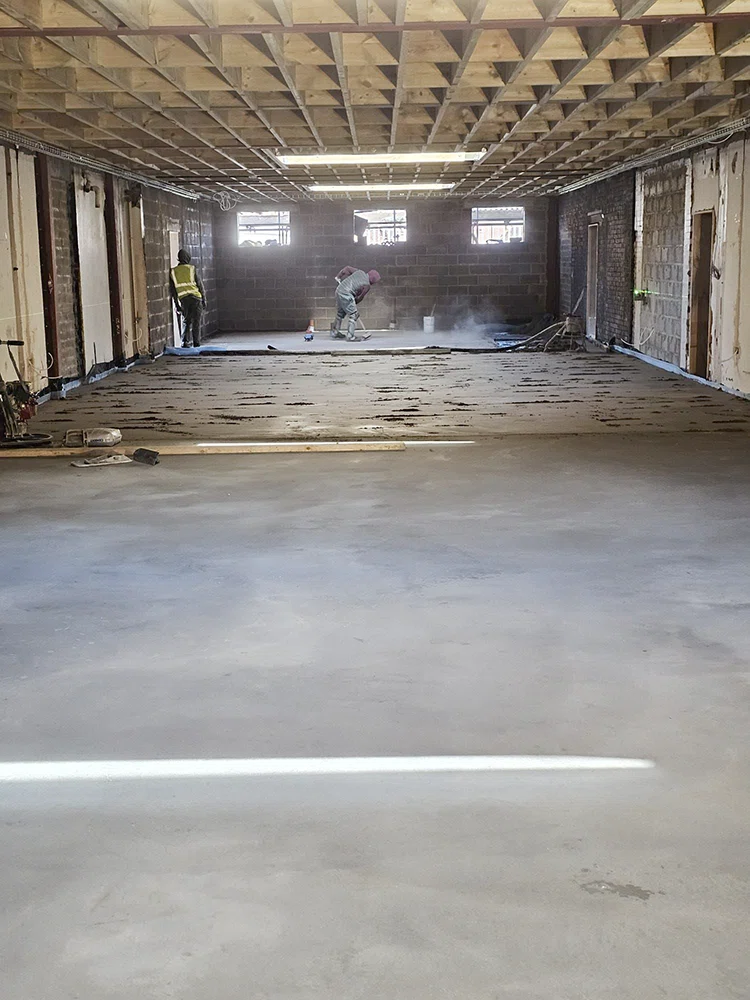
K & B Screeding’s own team, led by director Donatas Bardisevicius. Founded 2019, company 12298780.
See what customers say in our Google reviews and on our testimonials page.
Anhydrite & Flow Screed from Slough to March
March is about 76.8 miles north-north-east of our Slough base as the crow flies, with postcodes including PE15. The nearest towns to it are Chatteris (6.5 miles), Whittlesey (9.1 miles), Ely (12.6 miles) and Peterborough (14 miles).
More on anhydrite screed, part of our screeding services.
