
CA grades and alpha products for Redhill apartment floors
Every calcium sulphate screed carries a code set by the European screed materials standard. Read the code in two halves: the C figure is the compressive strength, the F figure the flexural strength, each in N/mm2. On Redhill drawings you will mostly meet three. CA-C20-F4 is for lightly used domestic floors, CA-C25-F5 covers the bulk of houses, flats and offices, and CA-C30-F6 is reserved for floors that take more punishment.
Whoever engineers an apartment block or new build plot picks the grade, and that is what goes in the mixer. Sometimes the drawings specify an alpha hemihydrate product in its place, usually because the floor must dry faster or be laid thinner. The manufacturer's data sheet then governs how deep it goes and how it dries, and we follow it.
Shrinkage as the material cures is very low, which lets us pour wide bays with hardly any joints, a good match for flats laid out open plan and for long communal corridors. Any joints that are needed, say at a doorway or where one heating zone meets another, are set out on a bay plan in advance, not decided with the hose in hand.
In a refurbishment, the acoustic layer under the screed is part of the building's sound separation and must stay intact. Redhill also has 8% of its homes built since 2015, and new build plots are where a written screed grade usually appears on the drawings. For background on the material and how it compares with cement, read anhydrite screed explained.
Sanding, primers and moisture limits on Redhill floors
As it dries, calcium sulphate leaves a thin, weak crust on top, known as laitance. Adhesives and compounds will not grip that crust, so once drying is far enough along we sand it away and prime with a product made for calcium sulphate bases, never a primer meant for cement.
Then comes moisture. The moisture figure a flooring maker accepts is often lower over calcium sulphate, which means a reading that would clear tiles on sand and cement can still fail here. A hygrometer on the floor gives the answer, not the number of weeks since the pour. If underfloor heating is fitted, it can normally help drive the moisture out from about 7 days.
Keep this material away from floors that could stay damp. A utility where a machine might leak, or a wet room, should get a cement based flowing screed or a hand-laid sand and cement floor. Where the existing base needs work first, such as an old slab under a refurbished flat, see our floor preparation service. Our advice on laitance and drying is written down, so whoever fits the flooring in your Redhill flat knows exactly what is left to do.
Anhydrite & Flow Screed prices in Redhill
Liquid flowing screed (which includes anhydrite): £24 to £31 per m² supplied and laid (MyJobQuote, August 2026), so £960 to £1,240 for 40 m². MyJobQuote does not say whether these figures include VAT. See our floor screeding cost guide or screed calculator.
Who lays your anhydrite and flow screed in Redhill
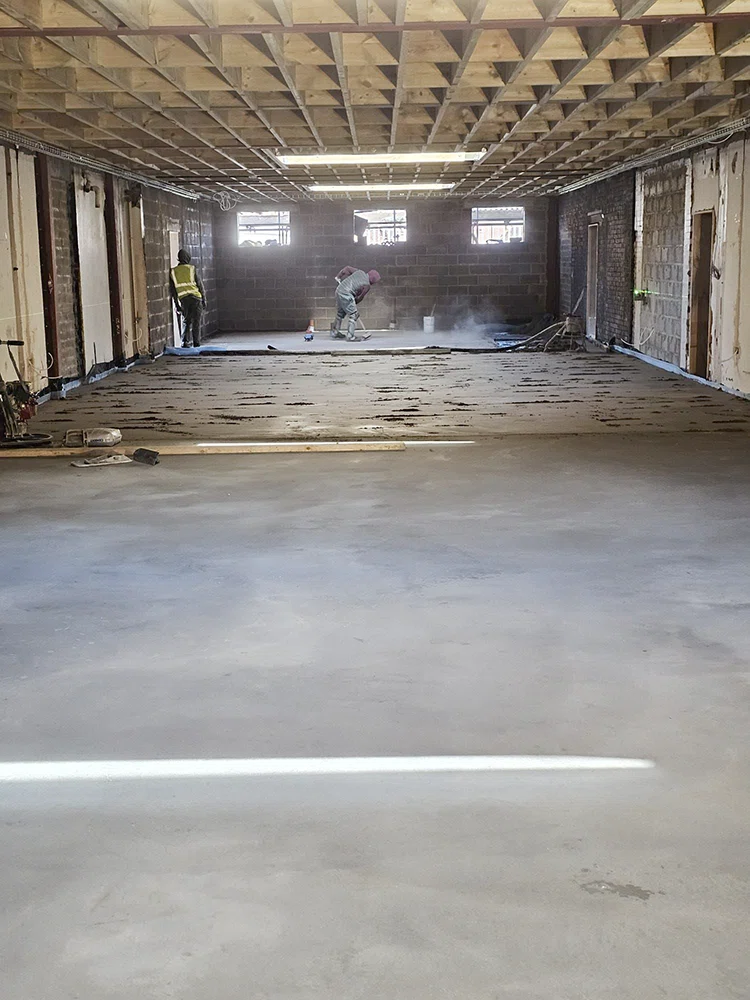
K & B Screeding’s own team, led by director Donatas Bardisevicius. Founded 2019, company 12298780.
See what customers say in our Google reviews and on our testimonials page.
Anhydrite & Flow Screed from Slough to Redhill
As the crow flies, our yard in Slough is about 28.7 miles from Redhill, which lies to the south-east. Postcodes here include RH1, and Reigate (1.5 miles), Horley (4.8 miles), Caterham (4.9 miles) and Dorking (6.9 miles) are close by.
More on anhydrite screed, part of our screeding services.