
Fit outs in Bedworth's precinct shops and offices
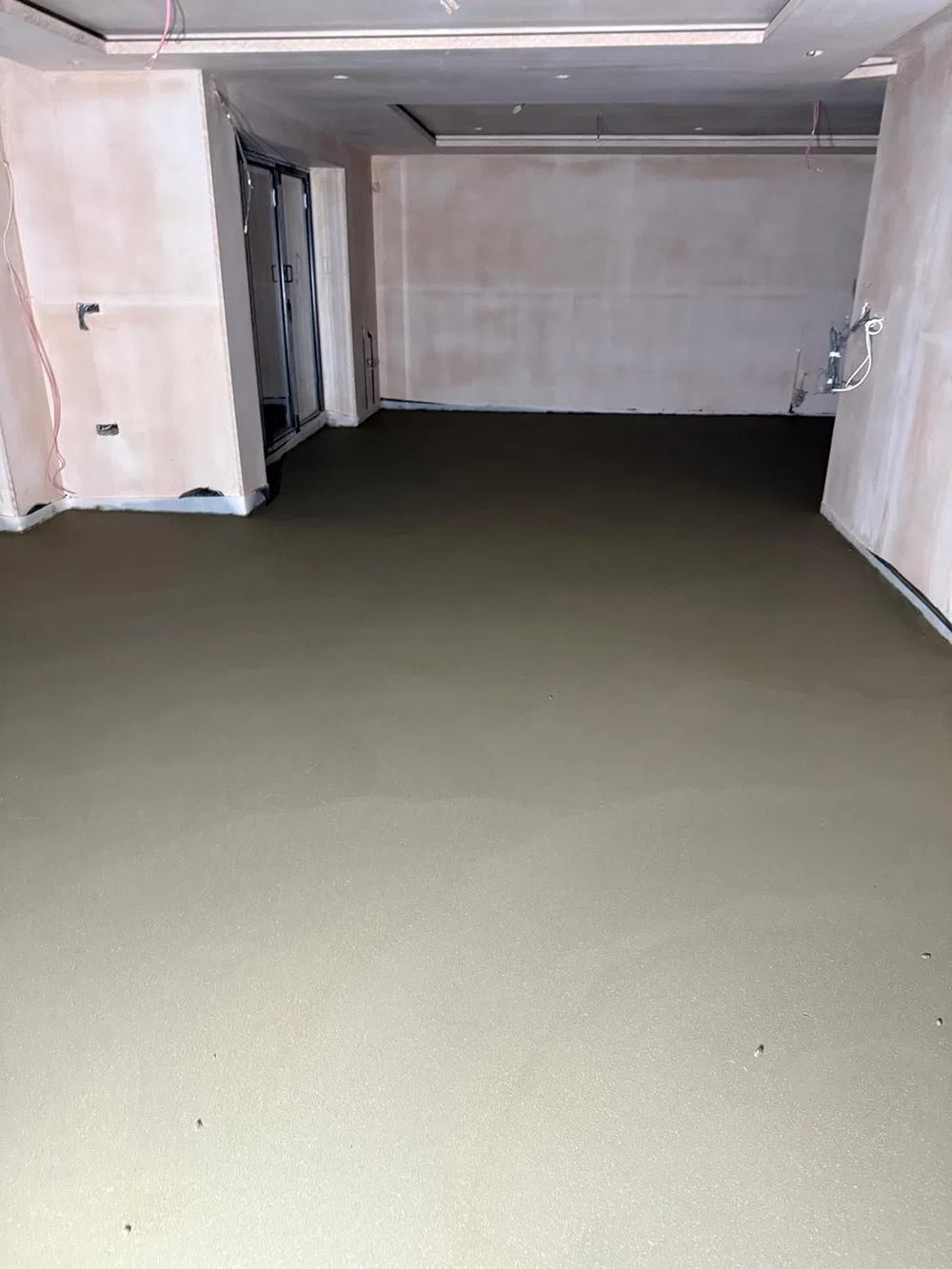
A shop or office floor that has carried two or three generations of carpet tile and vinyl rarely comes up flat. Old adhesive, patched screed and dips where fixtures once stood show straight through new sheet vinyl or LVT. A levelling coat solves that and keeps the fit out on its planned programme.
Bedworth's centre has floors like these. The precinct shops, and offices such as those used by Domestic & General and Warwickshire County Council, go through retail and office fit outs as tenants and layouts change. Fast drying compounds suit that work because the space can be back in use sooner.
The Bayton Road industrial estate in Exhall is different. Manufacturers there, including Premiere Group and Brose, run production floors where heavy use calls for concrete repair, grinding and high strength toppings rather than a thin compound. Floors like those start with grinding the concrete back.
Flatness is measured, not guessed. BS 8204 sets classes under a 2m straightedge: SR1 at 3mm, SR2 at 5mm and SR3 at 10mm. Thin sheet vinyl and similar finishes generally call for SR1. We survey with a straightedge, mark the high and low areas, and prime to suit the base, whether that is a power floated slab, a sand and cement screed or a sanded calcium sulphate floor. For a thin smoothing layer only, see latex screed.
Levelling the join between a Bedworth house and extension
When a 1950s or 1960s semi is extended, the new floor and the old one rarely meet exactly. There may be a small step at the old back wall, a slope in the original kitchen, or a crack along the joint. Before a single run of LVT or tiles goes across both, the two floors need one flat surface.
Compound is the right tool when the difference is small. A compound layer is normally somewhere between 2mm and 10mm, give or take, and a few products can be built thicker. The base must be clean, sound and primed, and the primer has to match the material: a cement screed in the old kitchen and a calcium sulphate screed in the extension may need different products either side of the joint. Any crack along the joint is checked for movement first, because a crack that is still moving will come back through the compound.
Some floors are past that, though. Poured deep to fill a big dip, or laid over a loose or hollow screed, compound can crack and debond, and the new flooring goes with it. If the old floor is failing, replacing it with a new sand and cement screed costs less in the end than levelling twice. Over in Kenilworth, the same assessment applies before any compound is poured.
How we price floor levelling in Bedworth
A fixed written price within 24 hours, once we know the area and the base. See our floor screeding cost guide.
Who levels your floor in Bedworth
K & B Screeding’s own team, led by director Donatas Bardisevicius. Founded 2019, company 12298780.
See what customers say in our Google reviews and on our testimonials page.
Floor Levelling from Slough to Bedworth
Bedworth is about 74.3 miles north-north-west of our Slough base as the crow flies, with postcodes including CV12 and CV7. The nearest towns to it are Nuneaton (3 miles), Coventry (5.1 miles), Hinckley (6 miles) and Earl Shilton (9.4 miles).
More on floor levelling, part of our screeding services. Not sure whether you need a thin compound or a full flowing screed? See self levelling screed explained.
