
Reading an anhydrite specification for Welborne and Fareham
Calcium sulphate screed is named under the European screed standard by two numbers. Read CA-C25-F5 as two strengths in N/mm2: C for compressive, F for flexural. The three grades usually seen on drawings are:
CA-C20-F4, for domestic floors with light traffic.
CA-C25-F5, which covers the bulk of homes, apartment blocks and offices.
CA-C30-F6, where floors take harder use.
On a new build plot at Welborne, the architect or developer normally sets the grade, and our job is to match it, then plan the bays and joints before the pour. It barely shrinks, so wide bays with few joints are possible, which suits open ground floors and heated rooms.
Alpha hemihydrate products are their own group. Specifiers pick them when the floor has to dry faster or be laid thinner, and each one follows its own data sheet rather than general rules, so we lay to the sheet named in the specification.
Flats are the other place this material turns up. 15% of Fareham's homes are purpose-built flats, and apartment floors often combine insulation, acoustic layers and a flowing calcium sulphate screed on top. The build-up under the screed matters as much as the grade, and our own team prepares it.
Not every area should get anhydrite. Any room that may see water, such as a bathroom or utility, takes a cement-based flowing screed in its place. There is more on the material in what anhydrite screed is.
Laitance, sanding and moisture tests on Fareham floors
As it cures, calcium sulphate screed grows a thin, weak surface skin known as laitance. It must come off. When drying has gone far enough, we sand that skin away to an open, sound surface, then prime with a calcium sulphate primer ahead of adhesive or levelling compound. Miss out either step and tiles or LVT are liable to come loose.
Moisture is the other difference from cement. On calcium sulphate, flooring makers often want a drier floor than they would accept on cement, so the moisture reading that clears a sand and cement floor may not clear this one. Use a hygrometer and compare the reading with your flooring maker's figure, rather than judging by eye or by the calendar. For rates, see how quickly screed dries.
Heating helps. Where there is underfloor heating, force drying can usually start at about 7 days on a gradual schedule. Our drying and laitance advice comes to you in writing, so the person laying the finished floor knows what was done.
If you want the pumping side explained, including how the hose reaches a Fareham flat, see pumped liquid screed in Fareham. For sanding, priming and making good before flooring, our floor preparation service covers it.
Anhydrite & Flow Screed prices in Fareham
Liquid flowing screed (which includes anhydrite): £24 to £31 per m² supplied and laid (MyJobQuote, August 2026), so £960 to £1,240 for 40 m². MyJobQuote does not say whether these figures include VAT. See our floor screeding cost guide or screed calculator.
Who lays your anhydrite and flow screed in Fareham
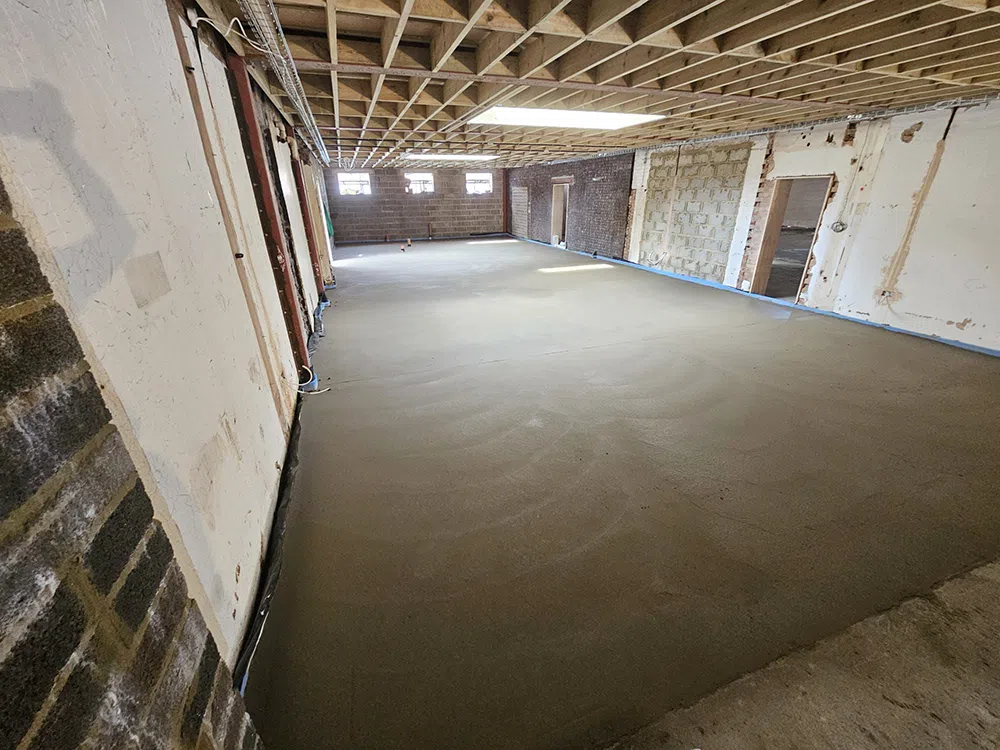
K & B Screeding’s own team, led by director Donatas Bardisevicius. Founded 2019, company 12298780.
See what customers say in our Google reviews and on our testimonials page.
Anhydrite & Flow Screed from Slough to Fareham
On the map, Fareham sits south-south-west of Slough, about 52.3 miles from our base in a straight line (postcodes including PO16, PO15 and PO14), next to Gosport (4.6 miles), Portsmouth (5.3 miles), Hedge End (7 miles) and Horndean (8.3 miles).
More on anhydrite screed, part of our screeding services.
