
Reading an anhydrite specification for Thame plots
Anhydrite screed is a calcium sulphate binder mixed with sand and water, and the specification names it by its strength. Each one is coded to the European standard for screeds with two figures, both in N/mm2: C for compressive strength and F for flexural strength.
For lightly used domestic floors, CA-C20-F4 is enough. Most houses, flats and offices are specified at CA-C25-F5. Heavier duty floors move up to CA-C30-F6. For a Thame new build or apartment block, that choice belongs to the architect or engineer, and we pump exactly what they have written rather than a substitute.
Alpha hemihydrate screeds sit in a group of their own. Designers pick them for quicker drying or a shallower floor, say in an apartment with little height to spare, and every one has its own product sheet setting depth, drying and heat-up.
Calcium sulphate has real advantages over cement. Because shrinkage is slight, big bays go down with hardly any joints and the surface holds its flatness while drying. Any joints that are needed, at doorways or where one heating zone meets another, are set out on a bay plan before we pump. With underfloor heating in, force drying can normally start at about 7 days.
The catch is water. It should not go anywhere the floor could get wet once the room is in use. Utility rooms, wet rooms and anywhere water might sit are better given a flowing screed with a cement binder, or hand-laid sand and cement. The chemistry behind it is set out in our guide to anhydrite screed.
Laitance, sanding and moisture tests in Thame
The work on a calcium sulphate floor does not end with the pour. While it cures, a weak, thin film known as laitance rises to the top. When the floor is dry that film is sanded away, because adhesive and levelling compound will not hold to it reliably. A primer made for calcium sulphate goes on next, since certain primers and cement based adhesives react badly with the material.
Moisture is the other trap. Flooring makers often allow less moisture in calcium sulphate than in cement screed, so a reading that would be fine for tiling a sand and cement floor may fail on this one. A hygrometer test settles it, and our written notes on drying and laitance keep the floor fitter working to the correct limit. On a new Thame home, that paper trail is useful at handover.
The screed itself is mixed and pumped by our own crew, as described on our screed pumping page. For developments further afield, the same work is available as anhydrite screed in Bicester.
Anhydrite & Flow Screed prices in Thame
Liquid flowing screed (which includes anhydrite): £24 to £31 per m² supplied and laid (MyJobQuote, August 2026), so £960 to £1,240 for 40 m². MyJobQuote does not say whether these figures include VAT. See our floor screeding cost guide or screed calculator.
Who lays your anhydrite and flow screed in Thame
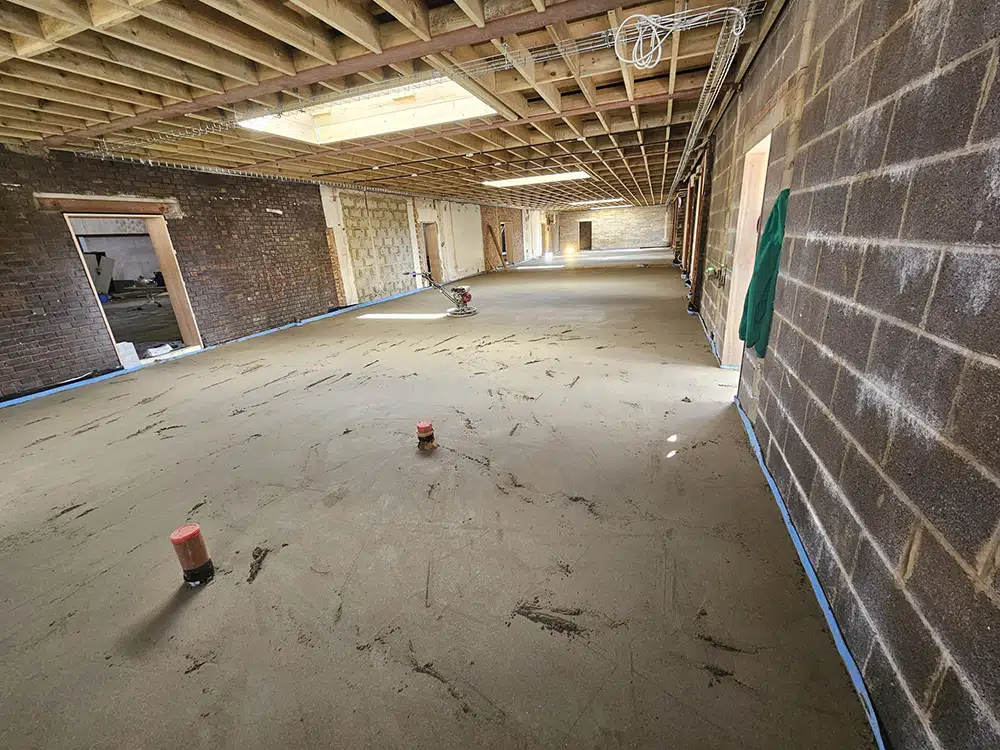
K & B Screeding’s own team, led by director Donatas Bardisevicius. Founded 2019, company 12298780.
See what customers say in our Google reviews and on our testimonials page.
Anhydrite & Flow Screed from Slough to Thame
Thame is about 20.7 miles north-west of our Slough base as the crow flies, with postcodes including OX9. The nearest towns to it are Aylesbury (8.7 miles), Oxford (11.9 miles), Bicester (12.6 miles) and High Wycombe (12.9 miles).
More on anhydrite screed, part of our screeding services.
