Choosing a calcium sulphate grade in Welwyn Garden City
Calcium sulphate screeds are labelled by strength with a short code. C is followed by the resistance to crushing and F by the resistance to bending, in N/mm2. Three grades cover nearly everything. CA-C20-F4 suits domestic rooms with light foot traffic, CA-C25-F5 is the everyday grade for houses, flats and office floors, and CA-C30-F6 is kept for harder wearing areas.
If the drawings name a grade, we pour exactly that one. Where they are silent, the choice follows the use: a house or a block of flats will usually sit at CA-C25-F5, and a floor carrying heavier loads, such as a plant room or storage area, moves up a class.
Alpha hemihydrate screeds are a separate group. Specifiers reach for them when time or floor height is short, since they dry faster and can be laid thinner; minimum depth, drying and heat-up then come from the product's own data sheet, not general rules.
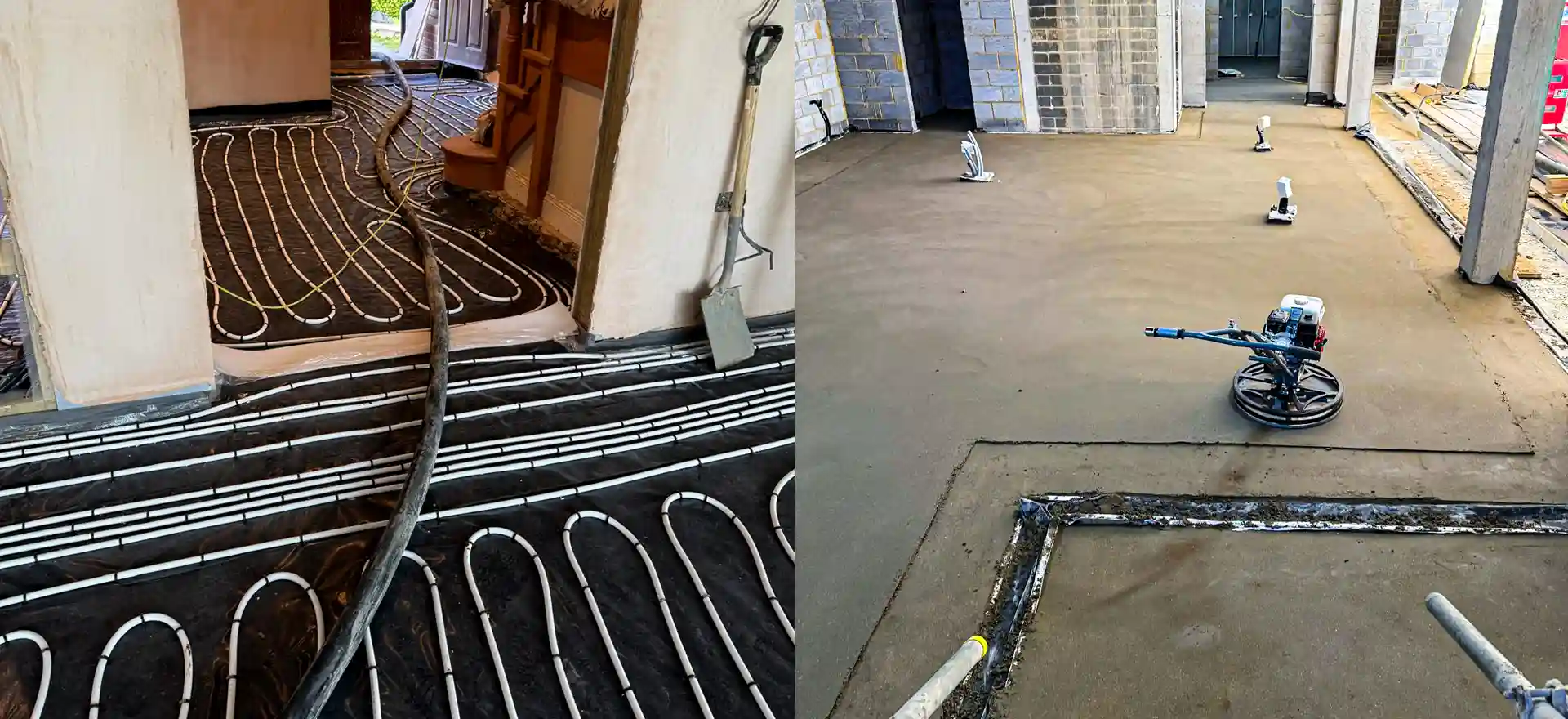
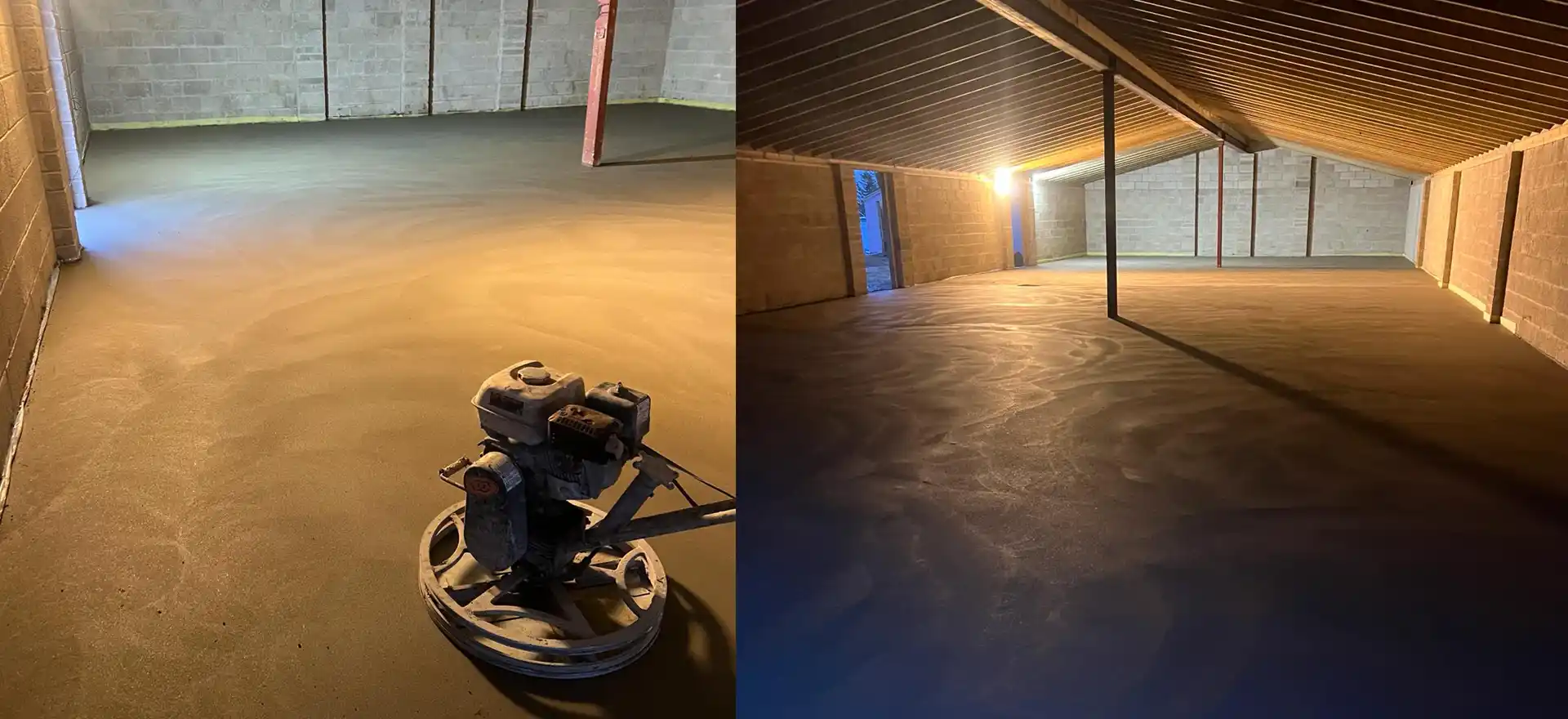
Big bays are possible because calcium sulphate shrinks so little. On an apartment floor or a new build plot, a calcium sulphate screed can often go down across a whole flat with few joints, but the bay and joint layout is still planned before the pour, especially at doorways and where the heating zones change. For the chemistry in plain words, read what anhydrite screed is; for pumping and access, see liquid screed in Welwyn Garden City.
Laitance, moisture and wet areas in Welwyn Garden City
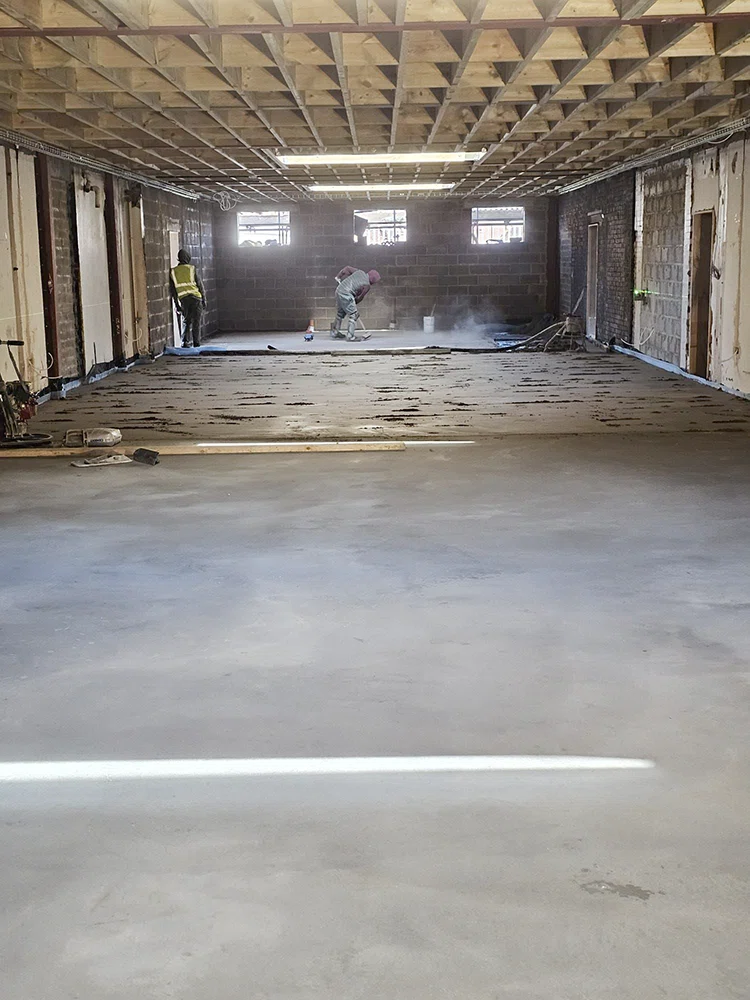
Every calcium sulphate floor needs two more steps after pouring. The first is sanding: a thin, weak skin called laitance comes up to the surface and must be removed when the floor has dried. Adhesives and levelling compounds bond poorly to it, so leaving it in place risks tiles or LVT lifting later.
Second, the floor must be tested before covering. Many flooring manufacturers set a tighter moisture limit for calcium sulphate, so a reading that would be fine on a cement floor can still mean waiting here. A hygrometer reading settles it. Underfloor heating speeds things up, since it can normally be used to force dry calcium sulphate from about 7 days. Our guide to drying times covers what affects the wait.
Before any cement based adhesive touches it, the dry, sanded surface gets a primer made for calcium sulphate.
Some rooms should not have calcium sulphate at all. Level access shower rooms, utilities and other floors that may get wet need a flowing screed with cement as the binder, or a sand and cement floor laid by hand. We will point out those rooms when we review the plans.
Grades for the homes, offices and shops of the Wheat Quarter
The Wheat Quarter scheme beside the railway has approval for 1,454 units, mainly homes, alongside office, retail and community uses. A mixed building like that rarely runs on one screed specification, because each use loads its floor differently. The drawings set the grade for each part and we pour to them: flats above may be CA-C25-F5 while a busier ground floor space is written up as CA-C30-F6.
Where those uses meet is where planning matters most. A shop floor at ground level and the flats above can differ in grade, depth and heating layout, so each pour is kept to its own zone, with joints set where the drawings place them rather than wherever a day's work happens to stop.
Some parts of a building like this should not be calcium sulphate at all. Bin stores, plant rooms, cleaners' stores and any floor that will be washed down get a cement based flowing screed, poured as a separate bay and finished to meet the calcium sulphate either side.
Moisture testing changes too. The limit depends on the flooring going down in each area, and a shop fit-out, an office and a flat may all use different products. On a multi-use building, readings are taken room by room before the fitters start, not once for the whole block, and each result is recorded against the area it came from.
Anhydrite and flow screed prices in Welwyn Garden City
Liquid flowing screed (which includes anhydrite): £24 to £31 per m² supplied and laid (MyJobQuote, August 2026), so £960 to £1,240 for 40 m². MyJobQuote does not say whether these figures include VAT. See our liquid screed cost per m² guide or screed calculator.
Who lays your anhydrite and flow screed in Welwyn Garden City
K & B Screeding’s own team, led by director Donatas Bardisevicius. Founded 2019, company 12298780.
See what customers say in our Google reviews and on our testimonials page.
Anhydrite and flow screed from Slough to Welwyn Garden City
On the map, Welwyn Garden City sits north-east of Slough, about 26.6 miles from our base in a straight line (postcodes including AL8, AL6, AL7 and AL9), next to Hatfield (2.7 miles), Hertford (5.6 miles), Harpenden (6.5 miles) and St Albans (6.7 miles).
Your quote will say whether the anhydrite delivery needs road space in Welwyn Garden City. If it does, a suspension or dispensation can be requested from Welwyn Hatfield Borough Council (parking exemptions and dispensations).
More on anhydrite screed, part of our screeding services. For every screed we lay locally, see floor screeding in Welwyn Garden City.
Further reading: calcium sulphate screed guide.