Rebuilding old ground floors in Edmonton and Ponders End
Older terraces in Edmonton and Ponders End may lack a damp proof membrane under the ground floor. Over the decades that can show as lifting tiles, a musty smell or a floor that has cracked and dropped. Patching the surface rarely lasts. The lasting fix is to break the floor out, lay a membrane and insulation, and put a new screed on top.
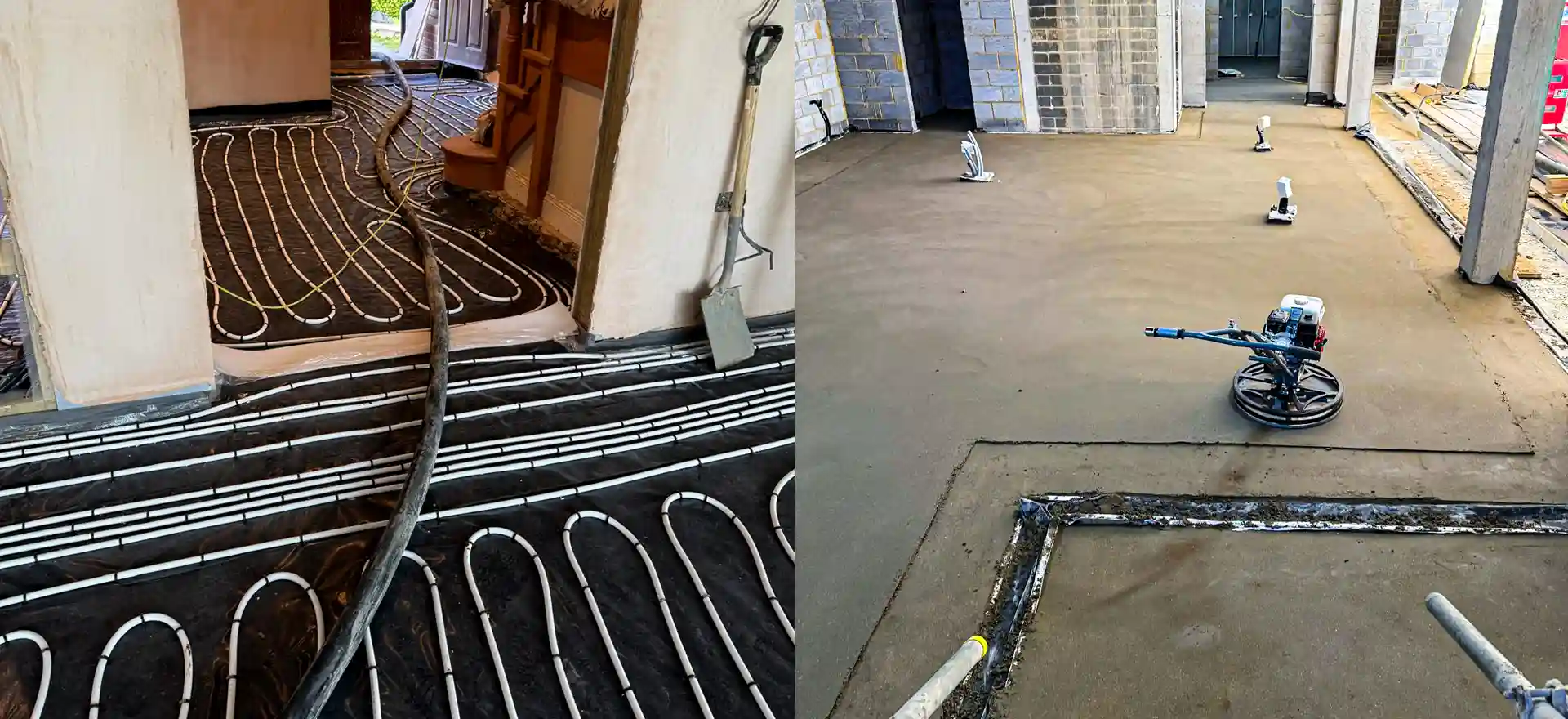
Sand and cement suits that work. It is mixed at the house to the depth each room needs, it copes with a narrow hallway, a back addition and a step down to a kitchen, and it can be laid in small batches where a pump would be excessive. On a floating floor over insulation, a domestic screed is laid at about 65mm, and commercial floors at about 75mm.
Where the existing slab is sound and only the topping has failed, a thinner bonded screed of 25 to 40mm can be fixed straight to the concrete instead, which keeps floor heights down. Our bonded screed service covers that approach.
Sand and cement is also the right base where water is part of the room's life. Wet rooms and walk-in showers need falls to a drain, and a cement screed tolerates moisture that would soften a calcium sulphate one.
The trade-off is time. A hand-laid screed dries more slowly than a pumped one, so flooring has to wait longer. If the programme is tight, a quick drying sand and cement mix helps, and fibres can be added for crack resistance.
Garages, workshops and heavier floors in Enfield
Garage conversions ask for a cement screed more often than not. The old slab is usually lower than the house floor, so the gap is made up with insulation, a membrane and a screed laid to meet the hallway threshold. The garage floor screed guide walks through the build-up and the depths involved.
A cement floor can also take early load. Where a room will carry heavy units, a workshop bench or stored materials soon after laying, a sand and cement screed, possibly in a higher strength mix, is a safer base than a softer product.
Across Enfield, 29% of homes are terraced, and those narrow plans are where hand-laid screed pays off: materials come through the front door in barrows and bags rather than down a long hose. We still need to know about parking and access, because sand, cement and a mixer have to be unloaded close by.
Plan for drying. At about a day per millimetre for the first 40mm, a 65mm floor needs several weeks before a moisture test will pass for timber or LVT. The flooring maker's moisture limit, not the calendar, decides when finishes go on. For a heated floor over pipes, the separate underfloor heating screed page covers pipe cover and first firing.
Unit floors on Brimsdown Industrial Estate and Great Cambridge
Warehouse and trade units on Brimsdown Industrial Estate, around the Great Cambridge Industrial Estate and at the Trafalgar and Centenary Trading Estates need level, durable floors. Sand and cement screed has its own place inside a unit, especially in the smaller areas that sit around the main warehouse floor.
Office, welfare and toilet areas built inside a unit can be floated over insulation at commercial depth, or bonded straight to a sound slab where the level has to stay close to the warehouse floor next to it. Kitchens, toilets and wash-down areas with floor drains need falls formed by hand, which a cement screed handles well and which can take water.
Units also carry loads sooner than homes do. Racking, pallet trucks and stored stock can arrive soon after a refit, so a higher strength sand and cement mix is often the better choice for any screeded area that will take wheeled traffic. Fibres can be added for crack resistance.
The practical issue on an estate is keeping the business running. Hand-laid screed can be done area by area, with each bay finished and protected before the next one starts, so a trade counter or loading bay is not shut for longer than needed. Flooring and racking must still wait for the screed to dry and gain strength, and the flooring maker's moisture limit decides when finishes go down.
Sand and cement screed prices in Enfield
Sand and cement screed: £18 to £25 per m² supplied and laid (MyJobQuote, August 2026), so £450 to £630 for 25 m². MyJobQuote does not say whether these figures include VAT. See our screed cost per m³ and per tonne guide or screed calculator.
Who lays your sand and cement screed in Enfield
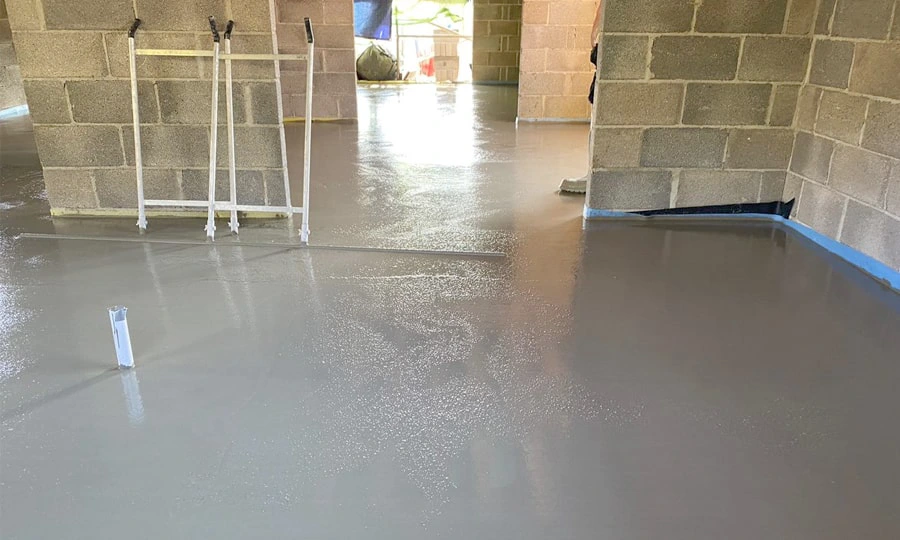
K & B Screeding’s own team, led by director Donatas Bardisevicius. Founded 2019, company 12298780.
See what customers say in our Google reviews and on our testimonials page.
Sand and cement screed from Slough to Enfield
On the map, Enfield sits east-north-east of Slough, about 25.5 miles from our base in a straight line (postcodes including EN2, N22, EN3 and EN1), next to Waltham Cross (3.3 miles), Cheshunt (4.1 miles), Haringey (4.5 miles) and Waltham Forest (5 miles).
Where the screed pump must stop where parking is restricted in Enfield, a dispensation from Enfield Council (temporary parking dispensations) allows it; the quote tells you if it is needed. The council building control service for Enfield is Enfield Council Building Control. A new extension floor usually needs building regulations approval, and Part L covers its insulation in England.
More on sand & cement screed, part of our screeding services. For every screed we lay locally, see floor screeding in Enfield.
Further reading: screed thickness guide and sand and cement screed mix ratio.