
Relaying tired floors in Chaulden and Bennetts End
Only 5% of homes were built before 1919 and 6% between the wars, so the typical old floor here is a post-war new town floor rather than a Victorian one. Those floors, in Chaulden, Bennetts End, Adeyfield and the other early neighbourhoods, have had around 70 years of use, and the screed on top of the slab can crack, go hollow or break up at the edges.
A small area can sometimes be cut out and patched, which is covered on our screed repairs page. When the damage is spread across the room, or the owner wants insulation under a new floor, the old floor is dug out and rebuilt: a membrane, insulation boards, an edge strip, then a floating sand and cement screed at 65mm for a house.
There are good practical reasons to do these floors by hand. Small batches mean the hallway, the cloakroom and the kitchen can each go down at their own depth. It can be bonded straight to a sound slab at 25 to 40mm where headroom is tight, or laid floating over insulation where it is not. It can also be dressed to fall towards a drain, something a flowing screed will not do.
If the floor is sound but simply out of level, it may not need a screed at all, and levelling compound for uneven floors is the cheaper route.
Wet rooms, garages and drying in Hemel Hempstead
Some rooms need a cement floor whatever else is used in the house. A walk-in shower or wet room in one of these houses goes down in sand and cement, sloped to the waste, because calcium sulphate screed is not suited to a floor that may get wet. The same material suits garage conversions, which need a new insulated floor raised to meet the house; our garage floor screed guide walks through the build-up.
Where a floor will take early load, such as a utility room with heavy appliances, fibres can be added for crack resistance; see fibre reinforced screed for when that is worth the extra £1 to £3 per m².
The trade-off is drying. At about one day for each millimetre through the first 40mm, then slower, a 65mm Hemel floor needs a matter of weeks before most finishes can go down. Line up the tiler and the kitchen units for after that point, not before it. Whether the house is in Piccotts End, Two Waters or Frogmore End, the depth sets the timetable, and a quick drying mix can shorten it where the programme is tight.
Sand and Cement Screed prices in Hemel Hempstead
Sand and cement screed: £18 to £25 per m² supplied and laid (MyJobQuote, August 2026), so £450 to £630 for 25 m². MyJobQuote does not say whether these figures include VAT. See our floor screeding cost guide or screed calculator.
Who lays your sand and cement screed in Hemel Hempstead
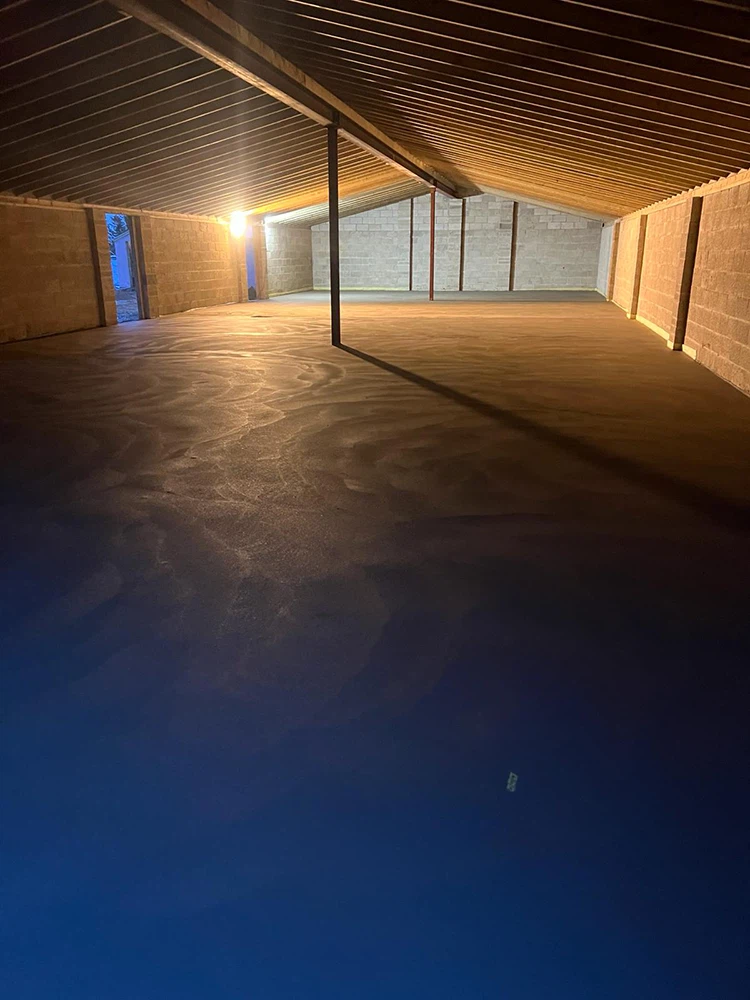
K & B Screeding’s own team, led by director Donatas Bardisevicius. Founded 2019, company 12298780.
See what customers say in our Google reviews and on our testimonials page.
Sand and Cement Screed from Slough to Hemel Hempstead
Hemel Hempstead is about 17 miles north-north-east of our Slough base as the crow flies, with postcodes including HP1, HP2 and HP3. The nearest towns to it are Berkhamsted (4.5 miles), St Albans (5.7 miles), Harpenden (6.6 miles) and Chesham (6.9 miles).
More on sand & cement screed, part of our screeding services.