
Relaying pre-1919 floors in Speenhamland and the centre
Houses built before 1919 account for 13% of Newbury's homes, and many have spent a century on a floor that was never designed to keep damp out. The signs are lifting tiles, a musty smell, salts along the skirting or a floor that has sunk in places. Patching rarely lasts, because the missing membrane is the real problem.
A repair that lasts means taking the old floor out, excavating to make room for a new build-up, and starting again. A membrane goes in, then insulation where the depth allows, then the screed. Floating over insulation like this, a house floor in sand and cement goes down at around 65mm, while a commercial one would be 75mm. We mix it on site to the right consistency, compact it and finish it flat.
In an old Speenhamland house, laying by hand simply makes practical sense. Rooms are small, doorways are narrow and the new level often has to match an existing hall or front step. A crew with a mixer and barrows can work round a chimney breast or an awkward alcove without fuss. The same approach fits a terraced house anywhere in town, and terraces make up 21% of Newbury's housing.
Before any of this, the old surface has to be broken out or ground back. Our floor preparation service covers that stage, and the screed thickness guide explains how depths are worked out.
Wet rooms, garages and falls in Newbury homes
Sand and cement has one clear advantage over calcium sulphate screed: water does not weaken it. So if you are fitting a wet room or a walk-in shower, with the floor sloping down to a drain, this is the screed to use. The slope is built into the screed as we lay it, giving your tiler an accurate fall to work to rather than one made up in thick adhesive.
Garages are another good fit. A garage conversion normally has its floor lifted to the house level, with a membrane and insulation added and a screed on top that can be loaded early. Converting a garage anywhere in RG14? Each layer, from membrane to screed, is covered in how a garage floor build-up goes together.
A screed can also be bonded straight onto sound concrete, typically 25 to 40mm thick, where there is no height for insulation. Unbonded and floating versions sit on a membrane or on insulation instead. The existing base and how much depth you have decide between them.
The trade-off is time. Laid 65mm deep, sand and cement takes longer to dry than a liquid screed, and most floor coverings have to wait a matter of weeks. Where the programme cannot stretch that far, quick drying screed shortens the wait.
Sand and Cement Screed prices in Newbury
Sand and cement screed: £18 to £25 per m² supplied and laid (MyJobQuote, August 2026), so £450 to £630 for 25 m². MyJobQuote does not say whether these figures include VAT. See our floor screeding cost guide or screed calculator.
Who lays your sand and cement screed in Newbury
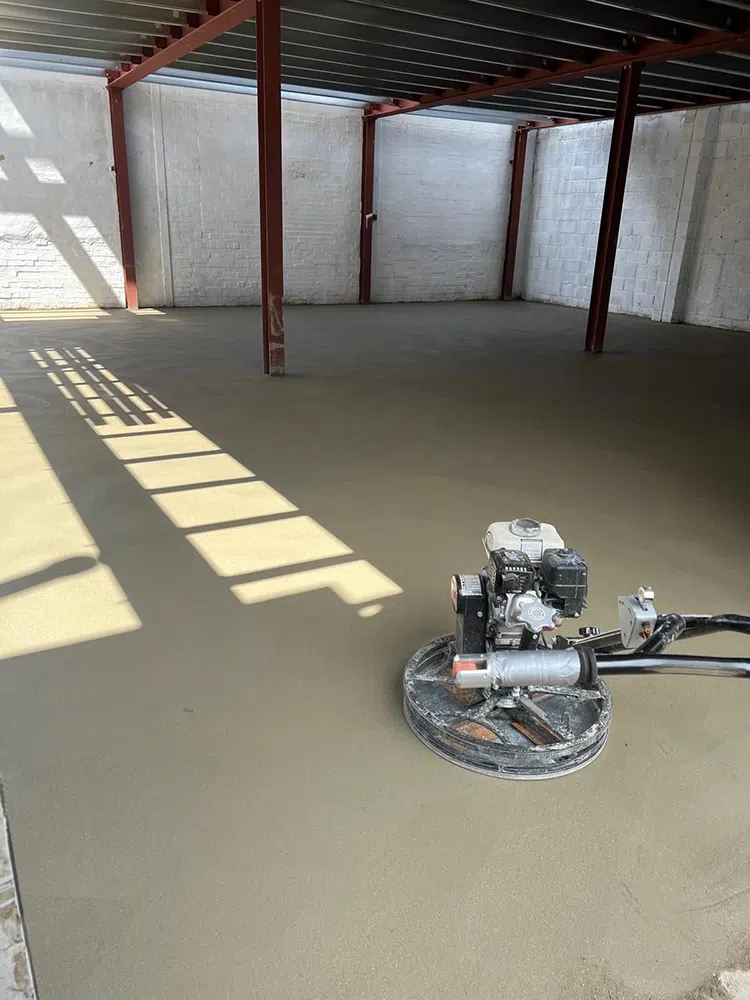
K & B Screeding’s own team, led by director Donatas Bardisevicius. Founded 2019, company 12298780.
See what customers say in our Google reviews and on our testimonials page.
Sand and Cement Screed from Slough to Newbury
On the map, Newbury sits west-south-west of Slough, about 30.7 miles from our base in a straight line (postcodes including RG14), next to Thatcham (2.8 miles), Tadley (8.1 miles), Basingstoke (13.7 miles) and Wantage (13.7 miles).
More on sand & cement screed, part of our screeding services.